Kitting Flow Racks

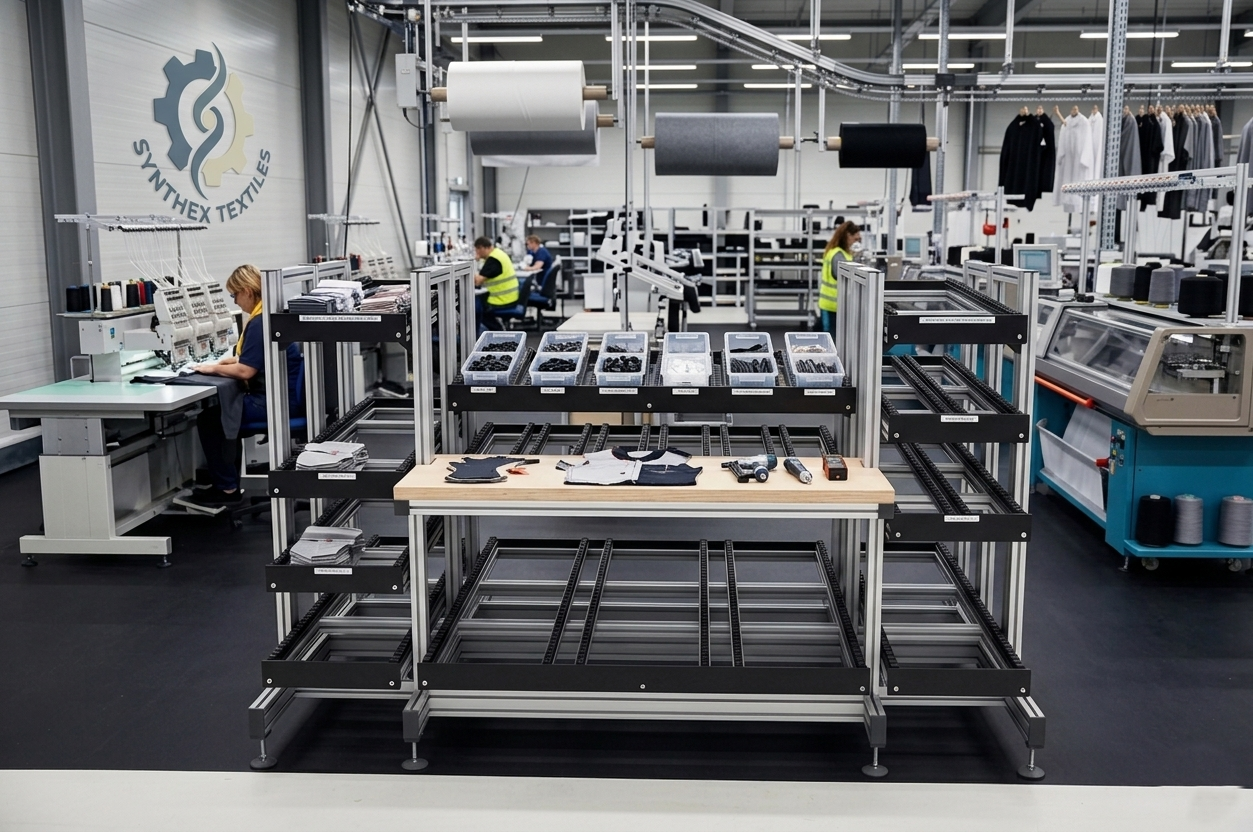
Kitting flow racks provide gravity-fed bin and tote lanes arranged in BOM component sequence for fast, accurate kit builds. Each rack is engineered around the kit BOM — lane width, depth, and tier height matched to each component's bin size and pick frequency — so kitters complete kits in a single left-to-right sweep without searching or backtracking.
Key Features

BOM-Sequenced Lane Layout

Lanes numbered and positioned in BOM assembly sequence — kitters complete kits in a single left-to-right sweep with zero search time.

Mixed Bin Compatibility

Adjustable T-slot lane dividers accommodate small hardware bins, medium cartons, and large sub-assembly totes in adjacent lanes within the same frame.

Kit Tote Staging Zone

Integrated flat staging shelf at working height holds the active kit tote while the kitter fills components from gravity-fed lanes above and below.

FIFO Component Rotation

Rear-load, front-pick lane architecture enforces FIFO rotation on all kit components — critical for date-coded and lot-controlled parts.

Poka-Yoke Lane Sizing

Lane width physically matches the designated bin footprint — wrong bin cannot fit in the lane, preventing component mix-ups at the kit build face.

Replenishment From Rear

Replenishment operator loads component bins from the rack rear without interrupting the kitter working at the front face.

Specifications

Lane Width Range 50 mm – 600 mm adjustable
Lane Depth 300 mm – 1800 mm
Tier Height 100 mm – 400 mm per tier
Number of Tiers 2 – 6
Track Type Plastic wheel or roller
Lane Pitch 3° – 8°
Kit Staging Shelf Integrated flat shelf
Frame Material 6063-T5 aluminum extrusion
Max Component Weight 30 kg per lane
Lane Sequence Marking BOM-numbered end-caps
Frame Finish Clear anodized or powder coat
Fasteners M6/M8 T-slot, Speedlock option

Applications & Use Cases

Automotive Assembly Kitting

Pre-kitted component sets delivered to assembly stations — all fasteners, clips, and sub-parts staged in BOM order for zero-search assembly.

Electronics Kit Assembly

ESD-safe kitting lanes for PCB, harness, and connector kits — components staged in soldering and assembly sequence.

Medical Device Kitting

Lot-controlled component kitting for medical device assembly under ISO 13485 — FIFO rotation and lane-level traceability.

Aerospace Component Kits

Controlled kitting for aerospace sub-assemblies — part number verified lane sizing prevents wrong-part inclusion in kits.

High-Mix Consumer Products

Rapid BOM changeover between product variants — T-slot lane repositioning between model runs without rack replacement.

Defence Assembly Kitting

Serialised component kitting for defence equipment — physical lane sequence enforces build order documented in assembly instructions.

Pharmaceutical Packaging Kits

Packaging component kitting (bottles, caps, inserts, cartons) staged in line-fill sequence for manual packing operations.

MRO Kit Assembly

Maintenance kit pre-staging — all consumables, fasteners, and replacement parts kitted and delivered to technicians before planned maintenance windows.

Frequently Asked Questions

How is the BOM sequence mapped to lane positions?

Modular Solutions receives the assembly BOM and maps each component to a lane position based on assembly sequence, pick frequency, and bin size. The lane layout drawing is provided with lane numbers matching BOM line numbers — physical rack position and BOM position are identical.

Can one rack serve multiple BOMs simultaneously?

Yes. High-mix kitting racks are designed with shared-component lanes in fixed positions and model-specific lanes in adjustable positions. Common fasteners occupy fixed lanes; model-specific components use adjustable-width lanes reassigned between models.

What happens when a component lane runs empty during kitting?

An empty lane stops the kitting operation for that component. Lane depth is designed to hold sufficient quantity for the replenishment cycle. Modular Solutions calculates lane depth from BOM quantity per kit, kitting rate, and replenishment frequency to minimise empty-lane events.

How are kit completeness checks integrated?

Physical kit tote staging shelves position the tote at the kitter's working height. PTL bar mounts (optional) light each lane as the component is added — lane light extinguishes on pick confirmation. Kit complete signal fires when all lane lights are extinguished.

Can kitting racks handle sub-assemblies as well as piece parts?

Yes. Wide lower-tier lanes accommodate sub-assembly trays and returnable containers. Narrow upper-tier lanes hold small parts and hardware. A single rack can serve a complete kit BOM from small hardware to large sub-assemblies.

What is the standard replenishment method for kitting lanes?

Replenishment is performed from the rack rear by a dedicated replenishment operator or tugger route driver. Component bins are loaded from the rear on the replenishment schedule — typically timed to one shift of kit supply per load.

Ready to Get Started?

Request a quote or contact our engineering team to discuss your kitting flow racks requirements.

Request a Quote Contact Engineering