Line-Side Part Presentation Racks

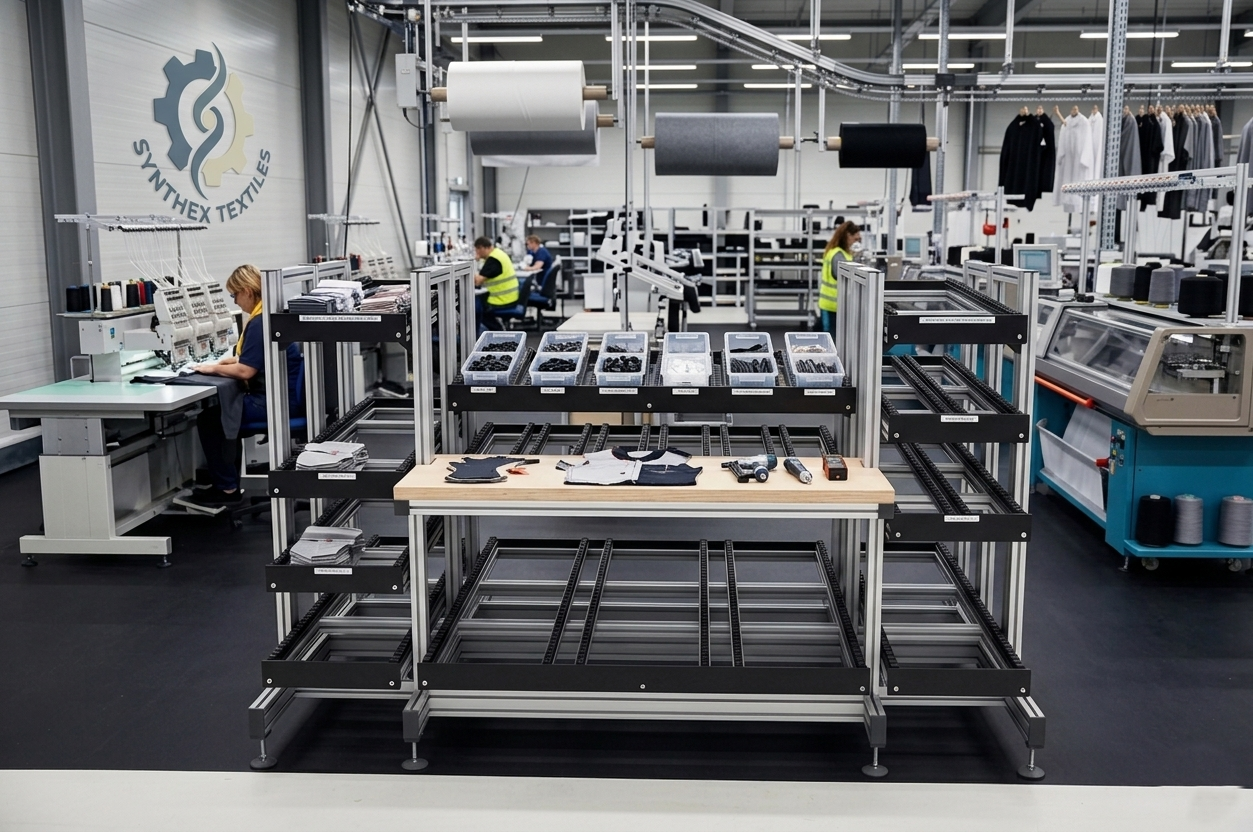
Line-side part presentation racks are fixed structures alongside the assembly line that present components, sub-assemblies, and consumables to assemblers in ergonomic gravity-fed lanes. Rack design is driven by the operator's reach zone, the component BOM, and the takt time — every component delivered to the exact ergonomic position at the exact moment of use.
Key Features

Ergonomic Presentation Height

All component lanes positioned within the operator's primary reach zone — lane heights set to NIOSH recommended lift zones for each component weight class.

Takt-Sized Lane Depths

Lane depth calculated from takt time and replenishment frequency — delivers exactly one replenishment cycle of supply without over-stocking the line side.

Carton, Bin, and Pallet Support

Wide lower-tier lanes support cartons and tote bins; upper tiers serve smaller bins and hardware — full BOM component range in a single structure.

Angled Presentation

Lane pitch angles components toward the operator at the optimal presentation angle — reduces reach distance and wrist deviation at the pick point.

Clear Sightline Design

Open-frame T-slot structure with no solid panels — operators maintain sightlines across the line and into adjacent cells at all times.

Label and Visual Management

Label holder extrusions on each lane face carry part numbers, bin quantities, and Kanban cards — all information at the point of consumption.

Specifications

Lane Width Range 75 mm – 800 mm adjustable
Lane Depth 300 mm – 1600 mm
Rack Height Up to 2000 mm
Number of Tiers 2 – 5
Track Type Plastic wheel or roller
Lane Pitch 3° – 10°
Presentation Angle Adjustable 0° – 15°
Frame Material 6063-T5 aluminum extrusion
Max Component Weight 50 kg per lane (roller)
Replenishment Access Rear-load, front-pick
Label Holders T-slot mounted, each lane
Frame Finish Clear anodized or powder coat

Applications & Use Cases

Automotive Trim Assembly

Line-side racks presenting interior trim panels, fastener bins, and clip trays to trim assembly operators — all parts within reach at takt time.

Engine Assembly Lines

Heavy component and hardware flow lanes alongside engine assembly lines — all BOM parts at ergonomic height for long-cycle precision assembly.

Appliance Assembly Lines

Mixed large-panel and small-hardware presentation racks alongside appliance final assembly lines — all components at operator reach.

Electronics System Assembly

Component cartons and hardware bins presented at electronics system assembly stations — all parts in assembly sequence at operator height.

Agricultural Equipment Assembly

Large sub-assembly and fastener presentation racks alongside agricultural equipment final assembly lines.

Aerospace Sub-Assembly Lines

Controlled-component presentation racks at aerospace sub-assembly stations — lane sequence matches build procedure step order.

Power Tool Assembly Lines

Small hardware and sub-assembly flow racks at power tool assembly stations — all BOM parts within reach for high-volume cycle assembly.

HVAC System Assembly

Large-component and hardware flow lanes at HVAC system assembly stations — all parts at ergonomic height for manual assembly operations.

Frequently Asked Questions

How is line-side rack depth determined?

Lane depth is calculated from takt time, component consumption rate per takt, and replenishment frequency. The goal is a lane depth that holds exactly one replenishment cycle — long enough to avoid frequent replenishment stops, short enough to prevent over-stocking on the line side.

Can line-side racks accommodate both small bins and large cartons?

Yes. Lower tiers with wider lane spacing and roller track handle large cartons and heavy bins. Upper tiers with narrower lanes and wheel track handle small bins and hardware. A single rack structure can cover the full BOM component size range.

How are racks positioned relative to the assembly line?

Standard positioning places the rack face 300–600mm from the assembly line to allow operator reach access and adequate aisle space for replenishment on the rack rear. Exact positioning is determined by the operator's reach envelope and the aisle width available.

What is the maximum component weight for line-side presentation?

Roller track lanes support up to 50 kg per lane for heavy cartons and large sub-assemblies. Wheel track lanes are rated to 30 kg per lane for medium-weight bins. Lane loading calculations are included in Modular Solutions engineering drawings.

Can presentation racks be moved for line rebalancing?

Freestanding racks on levelling feet reposition with standard material handling equipment. Line-attached racks detach from line frame brackets in minutes. Full rack repositioning for line rebalancing is supported without purchasing new hardware.

How are Kanban cards integrated into presentation racks?

Card holder extrusions mount to T-slot channels on each lane front face — one card holder per lane. Cards are visible to replenishment operators from the rack rear aisle. Two-bin divider stops are available as an option for physical two-bin Kanban on individual lanes.

Ready to Get Started?

Request a quote or contact our engineering team to discuss your line-side part presentation racks requirements.

Request a Quote Contact Engineering