Operator pick flow systems are engineered from the operator outward — starting with the reach envelope, cycle time, and standard work sequence, then building the rack structure around those constraints. The result is a material supply system where every component is in the right place, at the right height, in the right sequence, for every operator at every cycle.
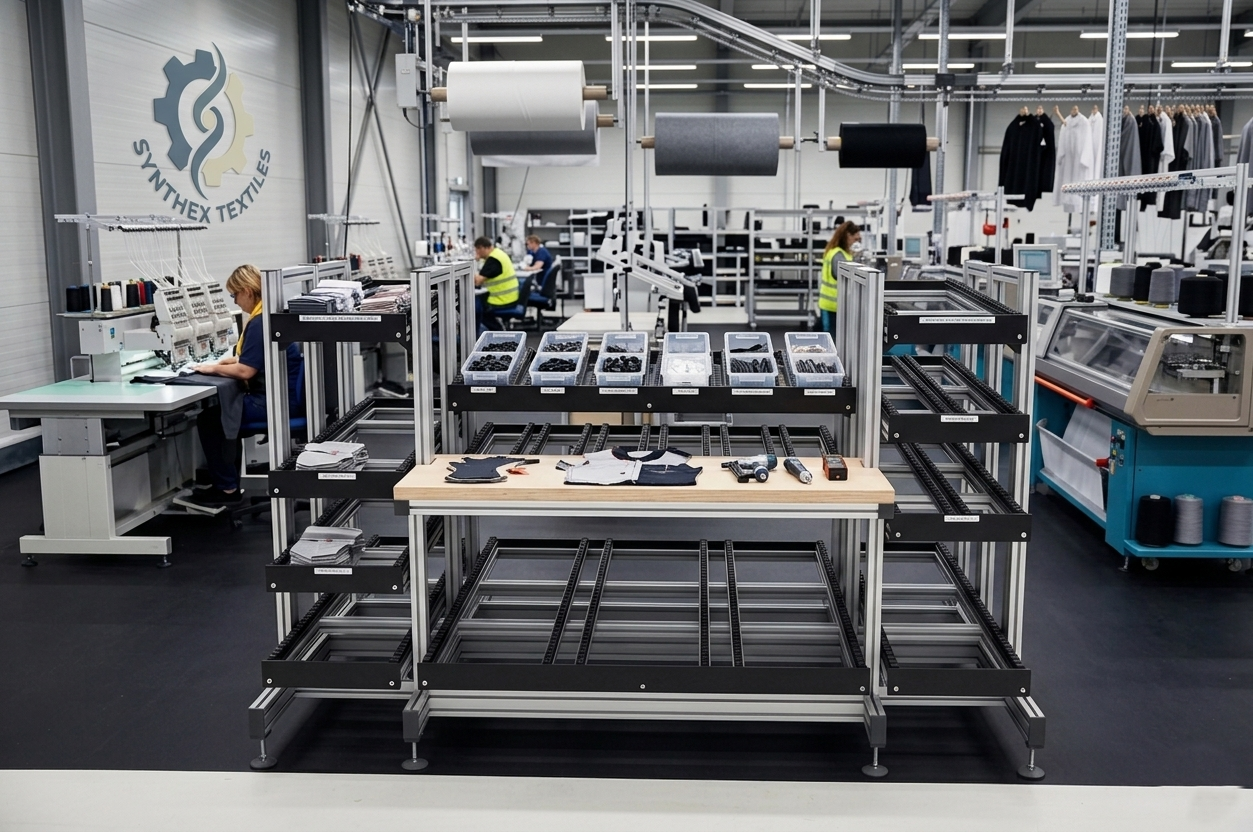
Rack layout engineered from NIOSH reach envelope data — high-frequency picks in primary zone, low-frequency in secondary, rare picks in tertiary.
Lane sequence ordered to minimise operator travel distance and motion between consecutive picks in the assembly sequence.
T-slot uprights allow tier heights to be adjusted for different operator height ranges — seated and standing configurations in the same frame.
High-velocity components assigned to primary reach zone; low-velocity to secondary — reduces average pick effort across the assembly cycle.
Physical rack layout mirrors standard work sequence diagrams — operators follow the rack layout as a physical standard work guide.
Bin presentation angles, lane heights, and grip positions engineered to minimise cumulative wrist, shoulder, and back load across full shifts.
Operator pick systems for assembly stations with cycle times under 60 seconds — every pick optimised to minimise motion time within the cycle.
Height-adjustable racks serving assembly lines where operators rotate between stations — each station adjustable to the current operator's reach zone.
Retrofit operator pick systems to existing workstations where ergonomic assessments have identified pick-related musculoskeletal risk.
Optimised pick systems for high-volume consumer electronics assembly — cycle time reductions of 10–20% typical versus standard shelving.
High-frequency fastener and clip pick systems at automotive trim lines — primary reach zone placement for the 20 highest-velocity components.
Operator pick systems for medical device assembly stations under ISO 13485 — ergonomic compliance and standard work alignment for auditable pick sequences.
Pick systems for pharmaceutical manual packaging lines — component sequence aligned to packaging BOM for zero-search pack operations.
Operator pick systems for defence equipment assembly — standard work alignment and component sequence matching build procedure documentation.
The primary reach zone is defined as the volume within 400mm of the operator's standing or seated elbow position, at heights between wrist and shoulder. Components picked more than 20 times per hour are positioned in this zone. Secondary zone (400–700mm radius) holds 5–20 picks/hour; tertiary (> 700mm) holds < 5 picks/hour.
Modular Solutions receives the assembly BOM and production rate, then calculates pick frequency per component per hour. Lane positions are assigned from primary zone inward for high-frequency, outward for low-frequency. The resulting heat map is reviewed with the customer before finalising the rack layout.
Yes. T-slot upright height adjustment allows tier heights to be repositioned with a hex key in approximately five minutes per tier — practical for shift changeovers where different operators are significantly different in height. Spring-loaded height adjustment options are available for stations with frequent operator rotation.
Customers typically report 10–25% cycle time reductions from converting flat shelving to optimised operator pick flow systems. The primary sources are: elimination of bin searching, reduced reach distance, and elimination of bin repositioning after each pick. Actual results depend on baseline conditions and operator compliance with new standard work.
Modular Solutions provides 3D reach envelope simulations and cardboard mock-up kits for customer validation before fabrication. Mock-up validation sessions confirm lane heights, reach distances, and pick sequences with actual operators on the production line before manufacturing the final rack.
Yes. T-slot frames accept wearable device charging stations and barcode/RFID scan confirmation mounts. Integration with ergonomic monitoring systems (e.g., Soter Analytics, StrongArm) is supported via standard mounting hardware — no modifications to the rack structure required.
Request a quote or contact our engineering team to discuss your operator pick flow systems requirements.