Aerospace Component Flow Racks

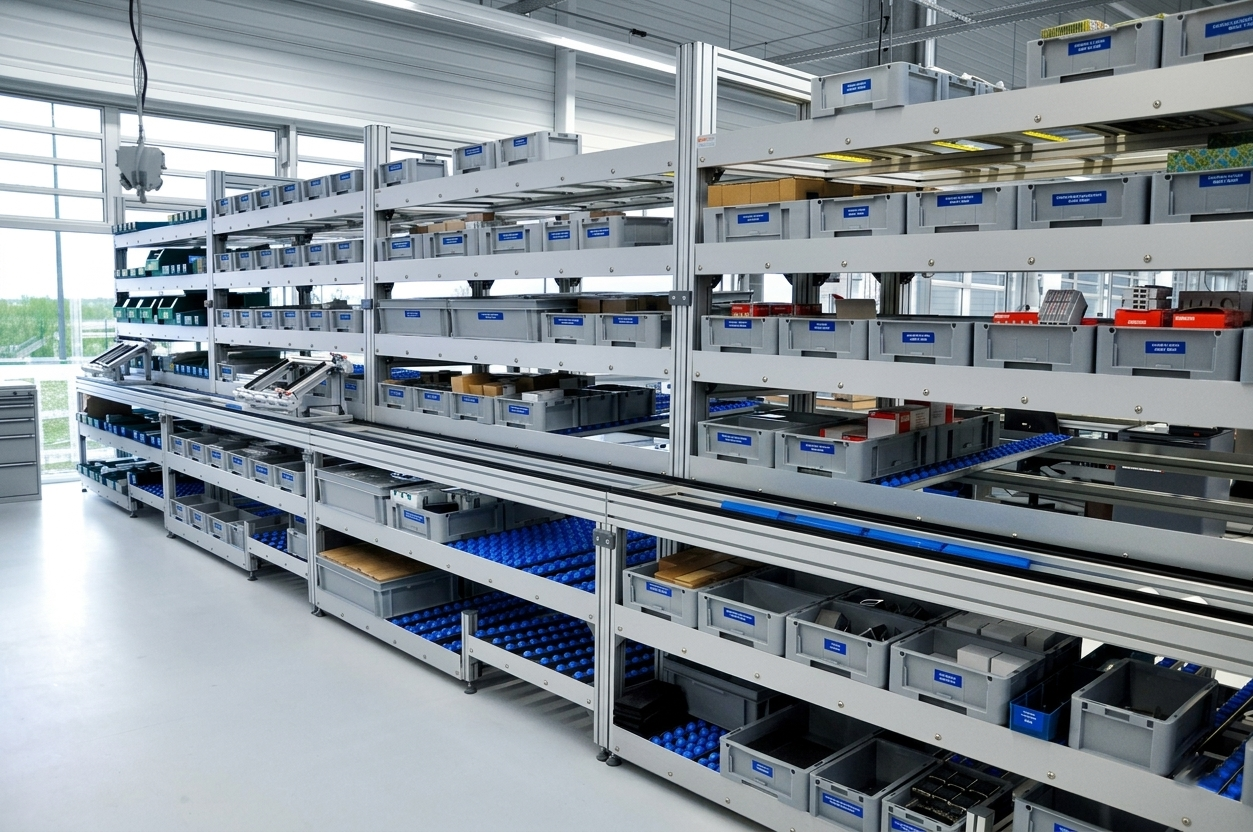
AS9100-compatible gravity flow racks for aerospace component kitting, flight-critical part staging, and traceability-controlled material handling — engineered to protect high-value components, maintain lot traceability through the supply chain, and support AS9100 quality system records.
Why Choose Aerospace Component Flow Racks

AS9100 Quality System Compatible

Rack design documentation, material certifications, and traceability records are formatted for inclusion in AS9100 quality management system records. Design drawings, material declarations, and first article inspection records are supplied with every aerospace rack system.

Flight-Critical Part Protection

Lane surfaces and container contact points are padded, coated, or fitted with protective inserts to prevent marking, scratching, or impact damage to flight-critical components. Surface hardness and material compatibility assessments are performed for each component family.

Lot and Serialized Traceability

Per-lane RFID antenna mounts and barcode scanner brackets support container-level lot and serial number tracking at every pick event. Traceability data integrates with MRB, discrepancy reporting, and AS9100 non-conformance systems.

Kitting Lane Configuration

Kitting-specific lane layouts present all components for a single assembly kit in one rack bay, organized by assembly sequence. The operator picks each component in sequence from left to right, reducing kitting errors and cycle time.

Controlled Environment Options

For components requiring humidity control, temperature stability, or nitrogen purge storage, rack frames integrate with environmental enclosure panels and controlled environment cabinets while maintaining gravity-feed FIFO lane function.

Shelf Life and Expiry Management

Date-coded aerospace materials including sealants, adhesives, lubricants, and O-rings require guaranteed FIFO rotation through shelf life compliance. Rear-load front-pick lanes enforce FIFO without operator discipline or system verification.

Specifications

Frame Material

Anodized aluminum or 316 SS; per component requirement

AS9100 Documentation

Design drawings, material certs, FAI records supplied

Component Protection

Padded lane inserts; contact surface compatibility review

Traceability

RFID/barcode scan point at lane front; per-pick records

Kitting Configuration

Assembly-sequence lane layout; single-kit bay design

FIFO Enforcement

Rear-load front-pick; shelf life and lot sequence

Environmental Option

Panel integration for humidity/temperature control

Load Capacity

Up to 500kg per bay; adjustable per component weight

Standards

AS9100 Rev D; NADCAP-compatible documentation format

Applications

Aircraft Component Kitting

Kitting racks presenting all fasteners, fittings, and brackets for a single aircraft assembly in one bay, organized by assembly sequence and zone.

MRO Parts Staging

Maintenance, repair, and overhaul component staging racks with lot traceability and shelf life management for time-life and life-limit aerospace parts.

Engine Component Flow

Precision engine component staging racks with component protection inserts and serialized traceability at each lane pick point for engine assembly lines.

Avionics Assembly

ESD-safe, cleanroom-compatible avionics component supply racks combining ESD protection, particulate control, and AS9100 traceability in a single rack system.

Frequently Asked Questions

What AS9100 documentation is supplied with aerospace flow racks?

Modular Solutions supplies an AS9100-compatible documentation package including material certifications (aluminum alloy, surface finish), design drawings with tolerance annotations, first article inspection records, and a configuration control record listing all components used in the rack build. Documentation is formatted for inclusion in the customer AS9100 quality management system and supplier qualification records.

How are flight-critical components protected from contact damage in flow racks?

Contact protection is engineered specifically for each component family. Options include UHMWPE lane insert pads, silicone-tipped front stops, foam-lined lane bottoms, and component-specific cradle inserts that present each part in its correct orientation. Surface hardness compatibility assessments confirm that the contact material will not mark, scratch, or contaminate the component surface.

Can aerospace flow racks support FIFO for shelf-life-controlled materials?

Yes. Rear-load, front-pick lane geometry enforces FIFO rotation by physical rack design. For shelf-life-controlled materials including sealants, adhesives, O-rings, and lubricants, the rack geometry guarantees that the oldest material always reaches the pick face first — no operator verification required, and no system cross-check needed for basic FIFO compliance.

How does lot traceability work at the rack lane level?

A barcode scanner or RFID reader mounted at the front of each lane records the lot number or serial number of the container at each pick event. The scan data is sent to the MES or quality system, creating a pick record that ties the lot number to the work order consuming that container. This provides complete container-level lot traceability through the rack without manual data entry.

Are aerospace flow racks available for use in controlled humidity environments?

Yes. Racks designed for moisture-sensitive device (MSD) storage and other humidity-controlled environments use frame structures that integrate with dry cabinet or nitrogen purge enclosure panels. The gravity-feed FIFO lane function is maintained inside the controlled environment, and the enclosure door design ensures that humidity control is not broken during normal pick operations.

Build Your Aerospace Component Flow Rack

Share your component list, AS9100 documentation requirements, traceability system, and environmental requirements — we will design a rack system that meets your aerospace quality program requirements.

Request a Quote