Food-Grade Flow Systems

FDA-compliant, hygienic-design gravity flow racks for food processing and packaging environments — open-frame construction for complete drainage, food-grade lane materials, and USDA-compatible accessories that meet 3-A Sanitary Standards for line-side material handling.
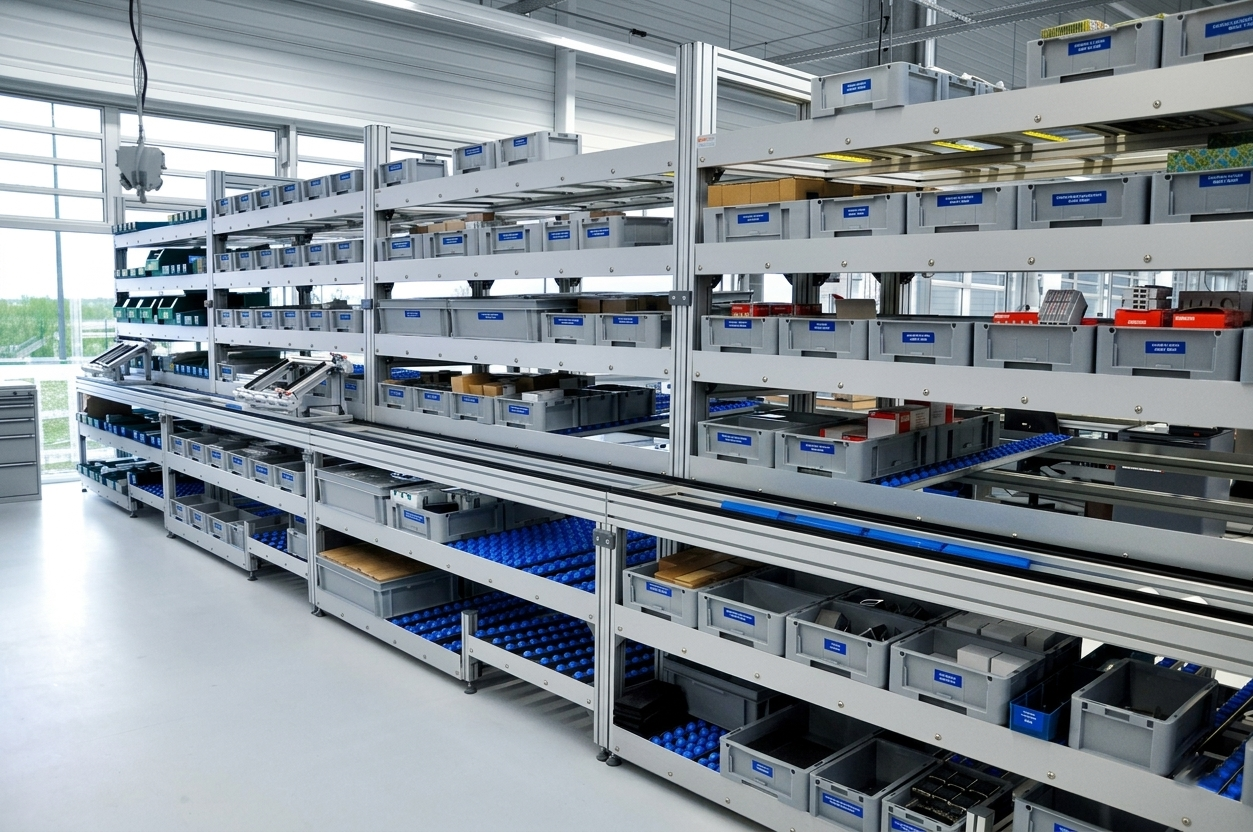
Why Choose Food-Grade Flow Systems

FDA-Compliant Materials

All food-contact materials including lane surfaces, roller covers, and label holders are FDA 21 CFR-compliant. No materials prohibited by FDA food contact regulations are used in any component that can contact food packaging or food products.

Hygienic Open-Frame Design

Frames are designed with no horizontal ledges, no closed box sections, and no upward-facing channels. All structural members slope or drain to the floor, and all joints are flush-welded or gasketed to eliminate crevices where bacteria can harbor.

Sanitary Lane Surfaces

Lane rollers and rail surfaces are UHMWPE or 316 stainless steel — non-porous, non-absorbent materials that do not harbor bacteria and can withstand CIP cleaning agents without degrading.

3-A Sanitary Standards Accessories

Label holders, kanban card holders, and zone dividers are available in 3-A Sanitary Standards-compliant materials for facilities subject to USDA inspection or operating to 3-A dairy and food processing standards.

CIP/SIP Compatible

Racks designed for clean-in-place or steam-in-place environments use electropolished 316L stainless steel with a minimum Ra 0.8µm surface finish and no dead legs or stagnant zones in the frame structure.

FSMA Compliance Support

Documentation packages include material declarations, allergen risk assessments, and design drawings for inclusion in FSMA preventive control plans and food safety plan records.

Specifications

Frame Material

304/316L SS or FDA-compliant coated aluminum

Lane Surfaces

UHMWPE, HDPE, or 316 SS roller/rail

FDA Compliance

21 CFR food contact material compliance

3-A Standards

Accessories available to 3-A Sanitary Standards

Surface Finish

Electropolished min Ra 0.8µm (CIP systems)

Drainage

Open-frame; no horizontal ledges; self-draining

Cleaning Compatibility

CIP, SIP, high-pressure water, alkaline/acid CIP

Load Capacity

Up to 800kg distributed per bay

Documentation

Material declarations, FSMA support package

Applications

Food Processing Lines

Ingredient and packaging material staging racks in daily-washdown food manufacturing environments.

Beverage Packaging

Label, cap, and closure supply racks adjacent to bottling and canning lines with regular foam and spray cleaning.

Bakery & Confectionery

Allergen-zoned component supply racks where cross-contamination prevention requires dedicated lanes per ingredient family.

Frozen Food Processing

Cold-rated food-grade racks for frozen food packaging lines where condensation and temperature cycling are continuous conditions.

Frequently Asked Questions

What food contact regulations apply to food-grade flow racks?

Food-grade flow racks must comply with FDA 21 CFR regulations for food contact materials. Specifically, 21 CFR 177 (polymers), 21 CFR 178 (adjuvants), and 21 CFR 174 (indirect food additives) govern the materials used in lane surfaces, roller covers, and plastic accessories. Modular Solutions supplies material declarations confirming compliance with the applicable CFR sections for each material used in a food-grade rack build.

Are food-grade racks required in all food manufacturing environments?

FDA food contact material compliance is required for any component that can contact food product or primary packaging. Structural frame members that do not contact food may use standard materials. Modular Solutions assesses the food contact exposure of each rack component and applies FDA-compliant materials only where required, reducing cost while maintaining compliance.

Can food-grade racks be validated for FSMA preventive controls?

Yes. Modular Solutions supplies documentation packages that support FSMA preventive control plan development, including material declarations, allergen risk assessment input, and design drawings showing food contact zone identification. These documents are formatted for inclusion in the facility food safety plan.

What is the difference between a washdown rack and a food-grade rack?

A washdown rack is designed to survive high-pressure water and chemical cleaning cycles. A food-grade rack additionally requires FDA-compliant food contact materials and hygienic design principles that eliminate bacteria harboring points. A washdown rack built from standard materials is not necessarily food-grade. Modular Solutions builds racks that are both washdown-rated and food-grade when both attributes are required.

How are food-grade flow racks cleaned in a CIP environment?

In a CIP (clean-in-place) environment, the rack is designed as part of the cleaning circuit. 316L electropolished stainless steel with no dead legs and minimum Ra 0.8µm surface finish allows CIP solution to contact all surfaces and drain completely. The rack design documents the cleaning circuit path and confirms no stagnant zones exist in the frame structure.

Design Your Food-Grade Flow System

Share your food contact zone layout, cleaning protocol, FDA compliance requirements, and container specifications — we will design a food-grade rack system that supports your FSMA and USDA compliance program.

Request a Quote