Stainless steel and coated aluminum flow racks engineered to survive high-pressure water and chemical washdown cycles — open-frame design for complete drainage, no horizontal ledges that trap water, and all hardware rated for repeated chemical exposure.
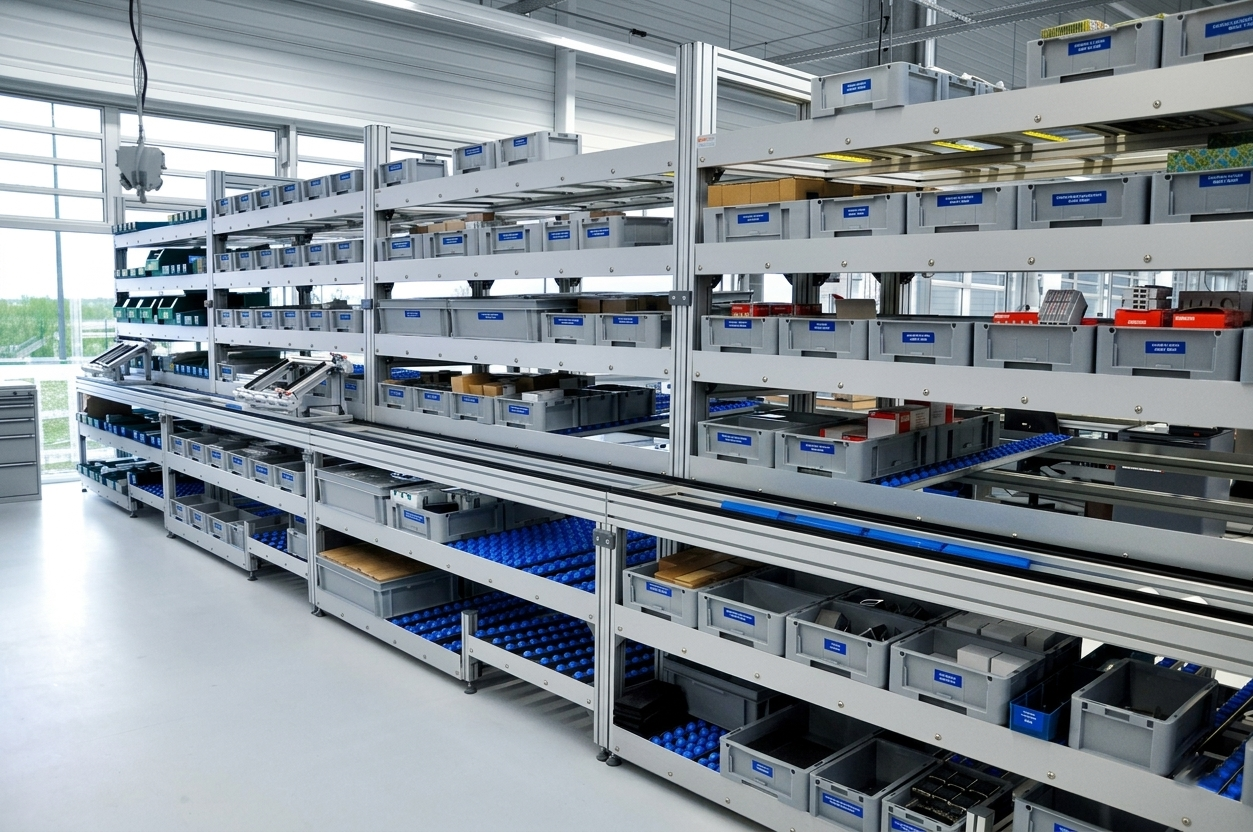
Frames, uprights, and cross members are welded or bolted stainless steel. 316L is specified for chloride-heavy chemical environments; 304 for standard water and detergent washdown applications.
No horizontal surfaces, closed box sections, or upward-facing channels that trap standing water. All joints, rails, and frame sections are oriented to drain completely after washdown without disassembly.
Roller track, wheel rails, and lane guides are specified from HDPE, polypropylene, or stainless steel materials that resist the detergent and sanitizer chemistry used in the facility.
Lane rollers use sealed stainless steel bearings that exclude water ingress during washdown and do not require re-lubrication after cleaning cycles.
Sensor mounts, andon brackets, and electronic accessories (where specified) are rated to IP69K for high-pressure, high-temperature washdown jet compatibility.
Stainless steel label holders, card holder mounts, and zone tags in USDA and 3-A Sanitary Standards-compatible materials are available for food processing environments requiring hygienic accessory compliance.
304 SS standard; 316L SS for chloride environments
Welded or bolted; open drainage geometry
Mill finish, brushed (2B/4), or electropolished
HDPE, polypropylene, or stainless steel roller rail
Sealed stainless steel; no re-lubrication required
316 SS; torque-sealed to prevent water ingress
IP69K compatible hardware available
Up to 1000kg distributed per bay
Material certs, weld inspection records, finish spec
Flow racks for ingredient staging, packaging component supply, and WIP buffering in daily-washdown food processing environments.
High-pressure, high-temperature washdown-rated racks for raw meat and poultry processing lines where chemical sanitization cycles are continuous.
Label and cap component supply racks positioned near bottling lines where foam and spray washdown is part of the hourly cleaning routine.
Any industrial process area subject to wet floors, steam cleaning, or chemical degreaser spray where standard aluminum racks would corrode or trap contamination.
304 stainless steel is the standard grade for water and general detergent washdown environments. 316L stainless steel adds molybdenum to the alloy, which significantly improves resistance to chloride-induced corrosion (pitting and crevice corrosion). For environments using chlorinated cleaning agents, bleach, or saline brines, 316L is the correct specification. Modular Solutions can assist in selecting the correct grade based on the cleaning chemistry used in the facility.
Yes. Washdown racks are designed for floor-level installation in wet production areas. Legs are supplied with adjustable stainless steel feet that allow leveling on uneven floors. Floor anchoring holes are provided in each leg base for bolt-down installation where required by the facility's safety standards.
Washdown racks are designed for high-pressure water jet cleaning (up to 80 bar) and chemical detergent application. The open drainage geometry ensures complete water evacuation. Brushed stainless steel surfaces are cleaned by wiping in the direction of the grain with a non-scratch pad to prevent cross-contamination of grain direction marks that can trap bacteria.
Yes. Washdown racks support all standard flow rack lane configurations including rear-load front-pick FIFO lanes, two-bin kanban depth, and adjustable lane pitch. The washdown specification applies to the materials and construction method, not the lane function.
Electropolished 316L stainless steel is the preferred finish for food contact surfaces. Electropolishing removes surface imperfections and creates a smooth, corrosion-resistant surface that is easier to clean and less likely to harbor bacteria. For non-contact structural members, a brushed 2B or 4 finish is acceptable and more cost-effective.
Share your cleaning protocol, chemical agent list, container specifications, and lane requirements — we will specify the correct stainless grade, finish, and hardware for your environment.
Request a Quote