Assembly Line Platforms
Assembly line platforms give operators elevated, ergonomic access to large products as they move down the line — vehicles, machinery, appliances, aircraft components, and other assemblies too tall or deep to build efficiently from the floor. When workers stretch, climb, or lean over product to reach upper and interior work zones, quality and cycle time suffer and injury risk rises. A line-side platform positions each operator at the correct height and reach for their station's tasks, with guarding, decking, and tool and parts staging integrated into the structure. Modular Solutions engineers these platforms from T-slot aluminum, matching deck height and setback to the product and line, and repeating station modules along the line for consistent ergonomics at every position. Because the frame is bolted, platform height and layout adjust when the product changes or the line is rebalanced — a decisive advantage over welded steel in a mixed-model or fast-changing assembly environment. Integrated tool boards, torque-tool balancers, lighting, and parts presentation turn each platform into a complete elevated assembly station. The result is better ergonomics, more consistent quality, faster cycle times, and a line that adapts as products and takt times evolve.
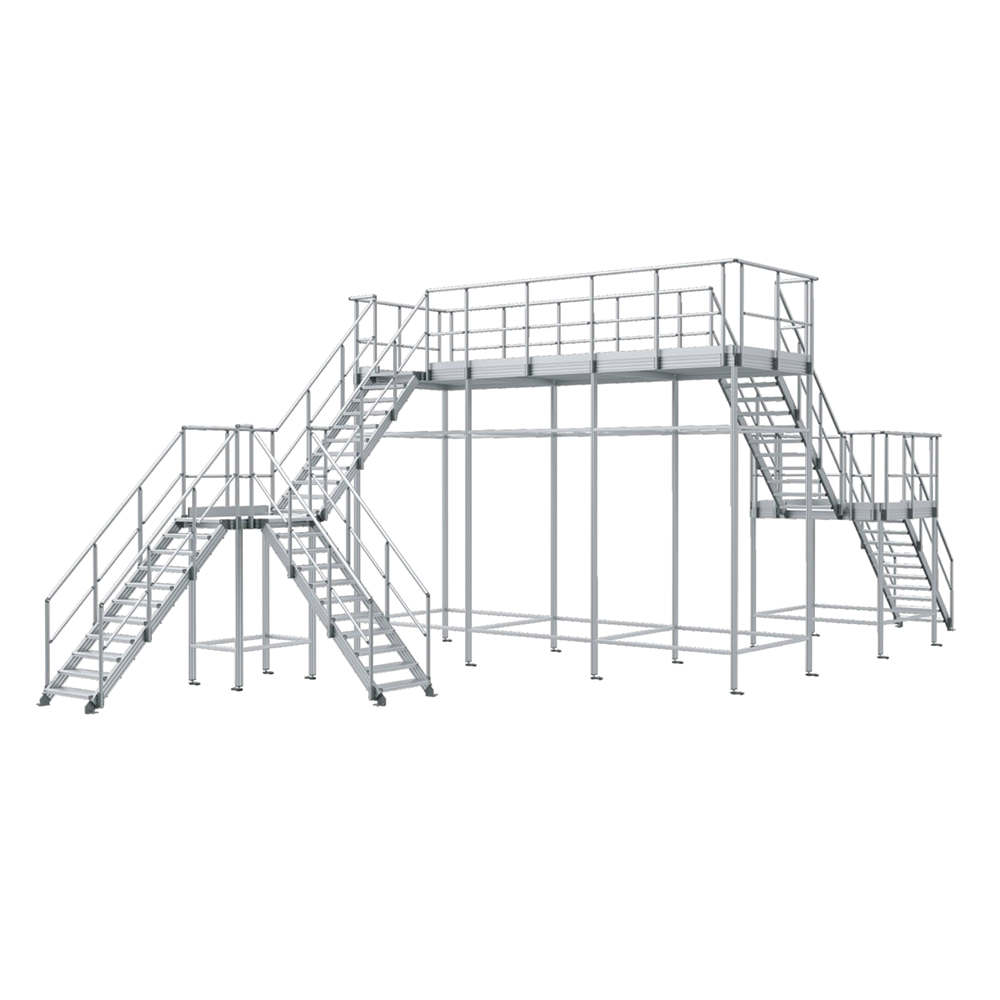
What Are Assembly Line Platforms?
An assembly line platform is a fixed or repeated elevated work structure positioned line-side to give operators ergonomic access to large assemblies as they move down the line. It places each operator at the correct height and reach for upper and interior work zones on products like vehicles, machinery, and appliances — replacing floor-level stretching, climbing, and leaning over product.
Modular Solutions engineers each platform from the product profile and line layout, building from 45 Series aluminum T-slot extrusion with guarding, decking, and integrated tool and parts staging. Station modules repeat along the line for consistent ergonomics, and the bolted structure adjusts when the product changes or the line is rebalanced.
Key Features
Engineered around your equipment, process, and facility — not a catalog template.
Product-Height Ergonomics
Deck elevation and setback are engineered to the assembly so operators reach upper and interior work zones without stretching or climbing.
Repeatable Station Modules
Consistent platform modules along the line deliver the same ergonomics and layout at every operator position.
Integrated Tooling
Torque-tool balancers, tool boards, air and electrical drops, and monitor mounts bolt into the structure at each station.
Line-Side Parts Presentation
Bin rails, flow racks, and staging shelves present components within ergonomic reach at the platform level.
Full Guarding & Gates
42-inch guardrails, mid-rails, toe boards, and gates engineered to align with OSHA 1910.29 on all exposed sides.
Model-Change Flexibility
The bolted T-slot frame adjusts height and layout when the product changes or the line is rebalanced — no welding.
Common Applications
Configured for the specific access demands of your equipment and environment.
- Vehicle & Equipment Assembly - Elevated access to upper body, roof, and interior work zones on cars, trucks, and machinery.
- Large Appliance & Cabinet Lines - Height-matched stations for building tall appliances and enclosures.
- Aerospace & Large Structures - Guarded access to elevated sections of airframes, engines, and large weldments.
- Engine, Powertrain & Sub-Assembly - Line-side platforms for decking, dressing, and sub-assembly operations.
- Heavy Machinery Build - Elevated positions around large equipment during progressive assembly.
- Final Trim & Inspection - Repeatable stations for finishing, trim, and end-of-line inspection at height.
Benefits
What a purpose-engineered access platform delivers on the plant floor.
- Improves ergonomics at every station by matching deck height to the product and task.
- Raises quality consistency with repeatable station layouts and correct-height access.
- Shortens cycle time by putting tools and parts within reach at the working level.
- Reduces injuries from stretching, climbing, and leaning over product.
- Adapts to new models because the bolted frame adjusts height and layout without scrapping.
- Standardizes the line for consistent operation across shifts and stations.
Industries Served
Trusted for elevated access across demanding industrial and commercial environments.
Customization Options
Every platform is engineered to your equipment, floor space, and access requirements.
- Deck height and setback engineered to the product profile and each station's tasks.
- Single-side, both-side, or straddle configurations along the line.
- Repeated station modules for consistent ergonomics across positions.
- Integrated torque-tool balancers, tool boards, parts presentation, lighting, and utility drops.
- Stepped or contoured decking to follow the product shape where needed.
- Adjustable-height or reconfigurable modules for mixed-model lines.
Why Choose Modular Aluminum T-Slot Construction
Modular aluminum T-slot construction bolts together without welding and reconfigures without cutting — giving you a purpose-engineered access structure today that adapts through every equipment change, line re-lay, and facility expansion without scrapping steel. The anodized frame will not rust, flake, or require repainting, presents a clean professional appearance, and integrates directly with our accessory ecosystem for guarding, gates, lighting, tool staging, and utility drops. It is lighter to relocate, faster to install with minimal floor disruption, and engineered and manufactured in-house in Auburn Hills, MI so the platform fits your equipment exactly rather than forcing your process to fit a catalog.
Design & Engineering Considerations
How our engineers approach each access-platform project.
- Product and task mapping - We set deck height and setback from the assembly profile and the reach required at each station.
- Station standardization - Repeatable modules are engineered so every operator position shares the same ergonomics and layout.
- Tooling integration - Balancers, tool drops, and parts presentation are designed into each station from the start.
- Load and traffic - Structure and walkways are sized for operators, tooling, and parts flow with design margins.
- Model-change planning - Modular connections allow height and layout changes for new products and rebalancing.
Safety & Compliance Considerations
Platforms are engineered to align with OSHA 1910.29 walking-working-surface and guardrail criteria; installed compliance is verified with your safety authority.
- Guardrails, mid-rails, and toe boards engineered to align with OSHA 1910.29 on all exposed platform sides.
- Self-closing gates and defined access points along the line.
- Slip-resistant decking selected for the assembly environment, including fluids and debris.
- Managed edge protection where the platform meets the product to balance access and fall protection.
- Stair geometry per recognized industrial standards; installed compliance verified with your team.
Specifications & Configurations
Representative configurations — all dimensions and options are custom-engineered to your requirements.
| Specification | Detail |
|---|---|
| Frame Profile | 45 Series T-slot aluminum extrusion; heavy-duty profiles where load requires |
| Configuration | Single-side, both-side, straddle, or repeated station modules |
| Deck Options | Serrated aluminum plank, bar grating, perforated plank, or solid diamond plate |
| Guardrail Height | 42-inch top rail with mid-rail and 4-inch toe board |
| Station Accessories | Torque-tool balancers, tool boards, parts rails, lighting, utility drops |
| Access | Fixed stairs and self-closing gates at each module |
Frequently Asked Questions
Common questions about assembly line platforms design, configuration, and compliance.
What is an assembly line platform?
It is a fixed or repeated elevated work structure positioned line-side to give operators ergonomic access to large assemblies as they move down the line. It places each operator at the correct height and reach for upper and interior work zones on products like vehicles, machinery, and appliances — replacing floor-level stretching and climbing.
How does it improve quality and cycle time?
By positioning operators at the correct height with tools and parts within reach, the platform removes awkward postures and reaching that cause errors and slow work. Repeatable station modules give every position the same ergonomics and layout, which improves consistency across the line and shifts.
Can tooling and parts presentation be integrated?
Yes. Torque-tool balancers, tool boards, air and electrical drops, monitor mounts, bin rails, and flow racks bolt into the T-slot structure at each station, turning the platform into a complete elevated assembly station.
Can platforms adapt to new product models?
Yes. This is a key advantage over welded steel: the bolted T-slot aluminum frame adjusts deck height and layout with hand tools when the product changes or the line is rebalanced, so the platform serves mixed-model and evolving lines without being scrapped.
Can the platform run on both sides of the line?
Yes. We provide single-side, both-side, and straddle configurations, and repeat station modules along the line so operators have consistent, guarded access wherever the work occurs on the assembly.
Are the platforms OSHA compliant?
Platforms are engineered to align with OSHA 1910.29 guardrail and walking-working-surface criteria, including 42-inch rails, mid-rails, toe boards, and compliant stair geometry. Edge protection at the product interface is managed to balance access and fall protection; installed compliance is verified with your safety authority.
Build Your Assembly Line Platform
Share your product profile and line layout — our engineers will return an ergonomic, repeatable line-side platform design with a quote.