Adjustable Height Platforms
Adjustable height platforms let operators set the working height to the task — raising and lowering the deck to reach different elevations, match varying workpiece heights, or dial in the ergonomic position for the job. Where a fixed platform serves one height and a ladder serves none safely, an adjustable platform adapts: the same structure works at a low setting for one task and a higher setting for the next, keeping operators at the correct, comfortable height throughout. Modular Solutions builds each adjustable platform from T-slot aluminum with a manual crank, screw, or powered actuator height mechanism sized to the load and travel required, integrating 42-inch guardrails, slip-resistant decking, and a stable base. Height adjustment lets one platform cover a range of elevations, improving ergonomics and reducing the need for multiple fixed platforms. Mobile versions add locking casters so the platform both adjusts and repositions. Because the structure bolts together, it reconfigures as needs change. Engineered to align with recognized platform and guardrail standards, adjustable height platforms deliver flexible, ergonomic elevated access from a single guarded structure.
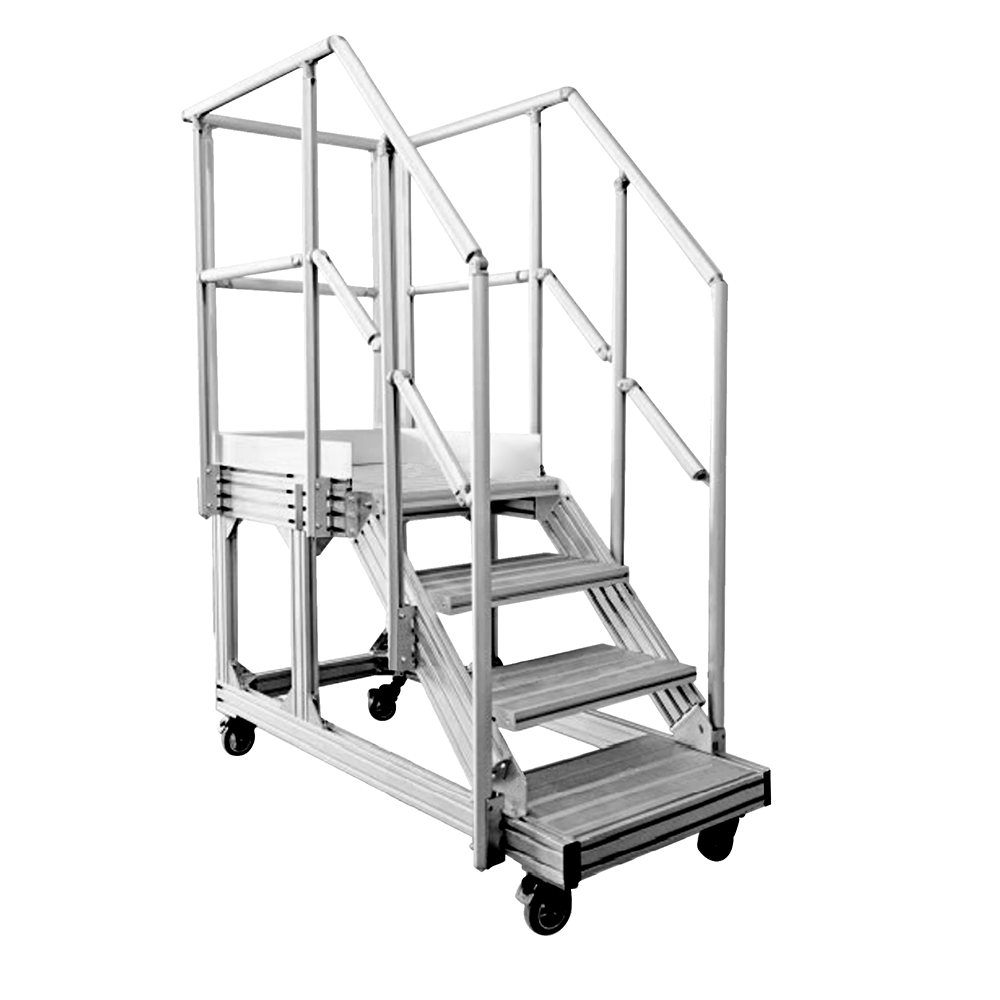
What Are Adjustable Height Platforms?
An adjustable height platform is a work platform whose deck raises and lowers — by manual crank, screw, or powered actuator — so operators can set the working height to the task, match varying workpiece heights, or dial in an ergonomic position. One structure covers a range of elevations instead of a single fixed height.
Modular Solutions builds each adjustable platform from T-slot aluminum with a height mechanism sized to the load and travel required, integrating 42-inch guardrails, slip-resistant decking, and a stable base. Mobile versions add locking casters so the platform both adjusts and repositions, and the bolted structure reconfigures as needs change.
Key Features
Engineered around your task, height, and floor — not a catalog template.
Variable Working Height
The deck raises and lowers to set the working height to the task or workpiece.
Manual or Powered Adjustment
Manual crank, screw, or powered actuator height mechanisms sized to the load and travel.
Ergonomic Positioning
Operators work at the correct, comfortable height across a range of tasks and elevations.
Guarded Deck
42-inch guardrails, toe boards, and slip-resistant decking engineered to align with OSHA 1910.29.
Stable at Every Height
The base and mechanism are engineered for stability throughout the adjustment range.
Optional Mobility
Locking casters let the platform both adjust height and reposition across the floor.
Common Applications
Configured for the specific mobile-access demands of your operation.
- Variable-Height Tasks - Work that requires different elevations across the job.
- Ergonomic Work Positioning - Setting the deck to the ideal ergonomic height for operators.
- Varying Workpiece Heights - Matching the platform to different product or assembly heights.
- Assembly & Build Support - Adjustable access around assemblies that change height.
- Inspection & Finishing - Height-adjustable positions for inspection and finishing tasks.
- Shared Multi-Task Stations - One platform serving tasks at several elevations.
Benefits
What a purpose-engineered mobile platform or stair delivers on the plant floor.
- One platform covers a range of heights instead of multiple fixed platforms.
- Improves ergonomics by setting the deck to the correct height.
- Adapts to varying workpieces and tasks.
- Guarded and stable throughout the adjustment range.
- Optional mobility to both adjust and reposition.
- Reconfigures as needs change because the bolted frame adapts.
Industries Served
Trusted for mobile elevated access across demanding industrial environments.
Customization Options
Every structure is engineered to your task, height, floor, and mobility requirements.
- Height range and travel engineered to the tasks and elevations.
- Manual crank, screw, or powered actuator adjustment mechanism.
- Fixed-base or mobile (locking caster) configuration.
- Deck materials: serrated aluminum, bar grating, or perforated plank.
- Guarding and access configured for the adjustment range.
- Bolt-on tool trays, lighting, and utility provisions.
Why Choose Modular Aluminum T-Slot Construction
Modular aluminum T-slot mobile platforms and stairs bolt together without welding and reconfigure without cutting — giving you a purpose-engineered mobile access structure today that adapts through every task change and layout revision without scrapping steel. Lightweight aluminum is decisive for mobility: it lets one person reposition the unit while staying strong and stable, will not rust or require repainting, and presents a clean professional appearance. Locking casters hold the structure steady in use, integrated 40mm round handrails and guardrails keep personnel protected, and the T-slot frame accepts bolt-on tool trays, lighting, and utility provisions. Every mobile platform and stair is engineered and manufactured in-house in Auburn Hills, MI so the structure fits your task, height, and floor exactly rather than forcing your operation to fit a catalog.
Design & Engineering Considerations
How our engineers approach each mobile platform and stair project.
- Height and task study - We set the adjustment range and travel from the tasks and elevations to cover.
- Mechanism selection - Manual or powered adjustment is specified for the load, travel, and use frequency.
- Stability engineering - The base and mechanism are engineered for stability throughout the range.
- Guarding and access - Guardrails and access are designed to stay compliant across the adjustment range.
- Adaptability - Modular connections let the platform reconfigure as needs change.
Safety & Compliance Considerations
Every structure is engineered to align with OSHA 1910.29 guardrail criteria and recognized mobile platform and stair standards (OSHA 1910.23 / ANSI-ASC A14.7); stability and installed compliance are verified with your safety authority.
- 42-inch guardrails, mid-rails, and toe boards engineered to align with OSHA 1910.29 across the range.
- Height mechanism and base engineered for stability at every setting with design margins.
- Powered adjustment with appropriate controls and safety provisions where specified.
- Slip-resistant decking and, on mobile versions, locking casters.
- Engineered to align with recognized platform criteria; installed compliance verified with your safety authority.
Specifications & Configurations
Representative configurations — all dimensions and options are custom-engineered to your requirements.
| Specification | Detail |
|---|---|
| Frame Profile | 45 Series T-slot aluminum extrusion |
| Height Adjustment | Manual crank/screw or powered actuator; range engineered to task |
| Base | Fixed or mobile with locking casters |
| Deck Options | Serrated aluminum plank, bar grating, or perforated plank |
| Guardrail | 42-inch top rail with mid-rail and 4-inch toe board |
| Standards | Aligned to OSHA 1910.29 and recognized platform criteria |
Frequently Asked Questions
Common questions about adjustable height platforms design, mobility, stability, and compliance.
What is an adjustable height platform?
It is a work platform whose deck raises and lowers — by manual crank, screw, or powered actuator — so operators can set the working height to the task, match varying workpiece heights, or dial in an ergonomic position. One structure covers a range of elevations instead of a single fixed height.
Is adjustment manual or powered?
Both are available. We specify a manual crank or screw mechanism for lighter, less frequent adjustment and a powered actuator for heavier loads or frequent height changes, sized to your load and travel.
How does it improve ergonomics?
By letting operators set the deck to the correct working height for each task, it keeps them in a comfortable, safe posture instead of reaching or stooping — reducing fatigue and improving quality across varied tasks.
Is it stable at every height?
Yes. We engineer the base and adjustment mechanism for stability throughout the full adjustment range, with design margins, and confirm stability to recognized platform criteria.
Can it also be mobile?
Yes. Mobile versions add locking casters so the platform both adjusts height and repositions across the floor, then locks in place for use.
Are adjustable height platforms OSHA compliant?
They are engineered to align with OSHA 1910.29 guardrail criteria and recognized platform standards across the adjustment range. Installed compliance and stability are verified with your safety authority.
Design Your Adjustable Height Platform
Tell us the height range and tasks — our engineers will return a guarded adjustable height platform design with a quote.