Heavy-Duty Load Platforms
Heavy-duty load platforms are engineered for the demanding structural applications where standard platforms are not enough — carrying high uniform loads, concentrated point loads, heavy equipment, and dynamic forces on a stable, reinforced aluminum structure. When a platform must support heavy machinery, dense storage, large assemblies, or significant live loads, the structure has to be sized to the loads with real engineering, not assumed. Modular Solutions designs each heavy-duty platform from reinforced T-slot aluminum, using larger and heavier profiles, reinforced framing, additional columns, and engineered footings to carry the specified loads with appropriate design margins. Deck, beams, and supports are all calculated to the application, whether the load is distributed storage, a concentrated equipment mount, or a moving load. Because the structure bolts together, it installs and reconfigures without welding while still carrying serious loads. Aluminum keeps the structure lighter than equivalent steel, easing installation and reducing foundation demands. For applications that push beyond standard platform capacities, heavy-duty load platforms deliver engineered structural capacity in a reconfigurable aluminum system.
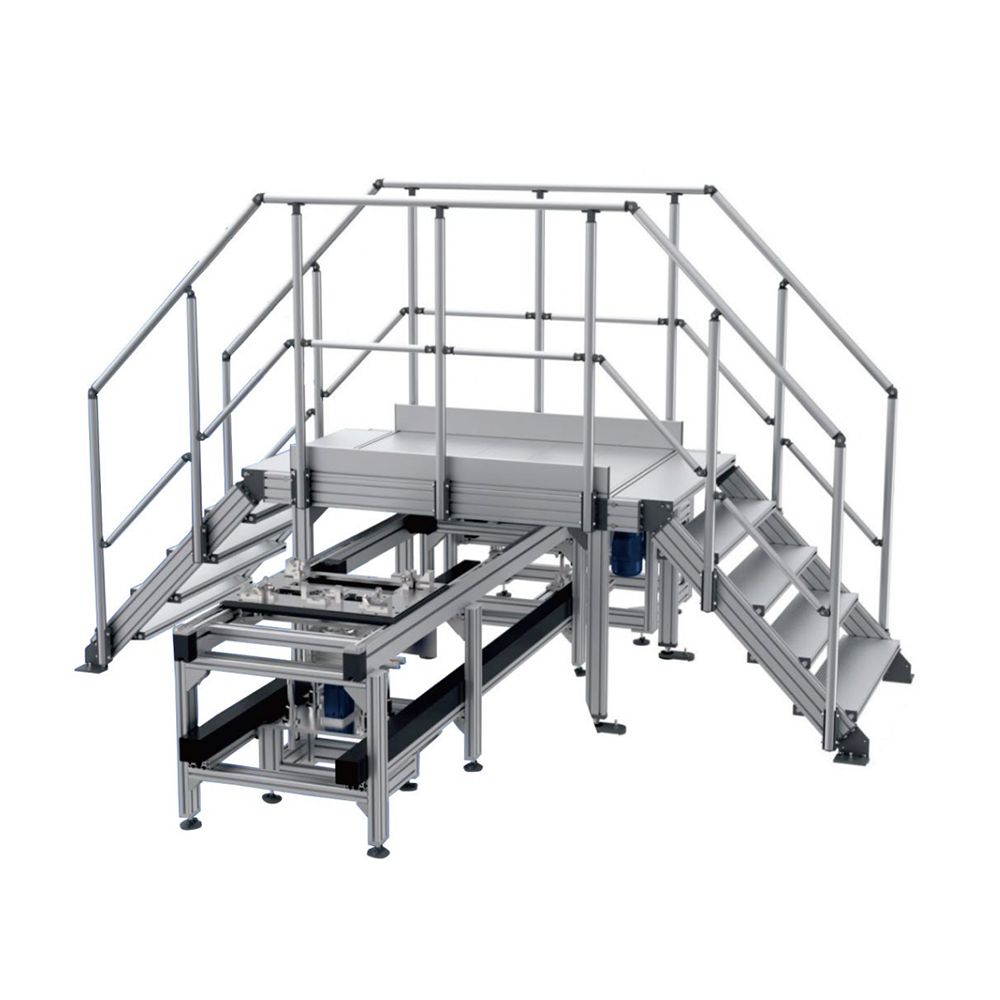
What Are Heavy-Duty Load Platforms?
A heavy-duty load platform is an elevated structure engineered for high uniform loads, concentrated point loads, heavy equipment, and dynamic forces — sized with real structural engineering to carry demanding loads on a stable, reinforced aluminum frame. It serves applications beyond standard platform capacities.
Modular Solutions designs each heavy-duty platform from reinforced T-slot aluminum, using larger profiles, reinforced framing, additional columns, and engineered footings sized to the specified loads with appropriate design margins. Because it bolts together, it installs and reconfigures without welding while carrying serious loads.
Key Features
Engineered around your application, environment, and constraints — not a catalog template.
Engineered for High Loads
Structure is sized to high uniform, concentrated point, and dynamic loads with real structural engineering.
Reinforced Construction
Larger profiles, reinforced framing, and additional columns carry demanding loads.
Engineered Footings
Footings and supports are sized to transfer heavy loads to the floor with design margins.
Heavy Equipment Support
Decks and mounts engineered to carry heavy machinery and equipment.
Lighter Than Steel
Aluminum reduces structure weight, easing installation and foundation demands versus steel.
Bolted & Reconfigurable
Carries serious loads while still installing and reconfiguring without welding.
Common Applications
Configured for the specific demands of your specialty application and environment.
- Heavy Equipment Mounts - Platforms carrying heavy machinery and equipment.
- Dense Storage Decks - High-load storage platforms for heavy inventory.
- Large Assembly Support - Platforms supporting large, heavy assemblies.
- Concentrated-Load Positions - Structures for concentrated point loads and mounts.
- Dynamic & Moving Loads - Platforms engineered for dynamic and moving load conditions.
- High-Capacity Work Decks - Heavy-duty elevated work surfaces for demanding tasks.
Benefits
What a purpose-engineered specialty platform delivers on the plant floor.
- Carries demanding loads beyond standard platform capacities.
- Engineered, not assumed, with real structural calculation.
- Reinforced for heavy equipment and concentrated loads.
- Lighter than steel for easier install and lower foundation demand.
- Reconfigures without welding because the bolted frame adapts.
- Backed by in-house engineering in Auburn Hills, MI.
Industries Served
Trusted for specialty elevated access across demanding industrial environments.
Customization Options
Every structure is engineered to your application, environment, and requirements.
- Structure sized to your high uniform, point, and dynamic loads.
- Larger and reinforced profiles, framing, and additional columns.
- Engineered footings and supports for the load and floor.
- Deck materials rated for heavy loads and equipment.
- Equipment mounts and load-specific detailing.
- Free-standing, building-tied, or equipment-integrated configuration.
Why Choose Modular Aluminum T-Slot Construction
Modular aluminum T-slot platforms bolt together without welding and reconfigure without cutting — giving you a purpose-engineered specialty structure today that adapts through every process, environment, and layout change without scrapping steel. Aluminum is the material advantage for specialty applications: it will not rust or shed, resists corrosion in chemical, coastal, washdown, and cleanroom environments, is lighter for heavy-duty and rooftop installations, and anodizes for further protection. Built from 45 Series T-slot extrusion with an integrated 40mm round handrail system, guardrails, decking, and accessories are engineered to the application, and the structure ties into our stair, platform, and guarding ecosystem. Every specialty platform is engineered and manufactured in-house in Auburn Hills, MI so the solution fits your exact requirement rather than forcing your operation to fit a catalog.
Design & Engineering Considerations
How our engineers approach each specialty platform project.
- Load definition - We capture the uniform, concentrated, and dynamic loads the platform must carry.
- Structural engineering - Profiles, framing, columns, and footings are sized to the loads with design margins.
- Deck and mount design - Decking and equipment mounts are engineered for the heavy loads.
- Foundation coordination - Footings and floor-load transfer are coordinated with your slab or structure.
- Adaptability - Modular connections let the heavy-duty platform reconfigure as needs change.
Safety & Compliance Considerations
Every structure is engineered to align with OSHA 1910.28 walking-working-surface and 1910.29 guardrail criteria; installed compliance is verified with your safety authority.
- Structure engineered to the specified high loads with appropriate design margins.
- Guardrails, toe boards, and access engineered to align with OSHA 1910.28 and 1910.29.
- Footings and supports engineered to transfer heavy loads to the floor.
- Deck materials rated for the load and equipment.
- Installed compliance and load ratings verified with your safety and structural authorities.
Specifications & Configurations
Representative configurations — all dimensions and options are custom-engineered to your requirements.
| Specification | Detail |
|---|---|
| Frame Profile | Reinforced 45 Series and heavy-duty T-slot aluminum profiles |
| Design Basis | High uniform, concentrated point, and dynamic loads |
| Structure | Reinforced framing, additional columns, engineered footings |
| Deck Options | Heavy-rated bar grating, serrated aluminum, or solid deck |
| Guarding | 42-inch guardrails, toe boards, and gates as required |
| Configuration | Free-standing, building-tied, or equipment-integrated |
Frequently Asked Questions
Common questions about heavy-duty load platforms design, environment, and compliance.
What is a heavy-duty load platform?
It is an elevated structure engineered for high uniform loads, concentrated point loads, heavy equipment, and dynamic forces — sized with real structural engineering to carry demanding loads on a stable, reinforced aluminum frame, for applications beyond standard platform capacities.
How much load can it carry?
The structure is engineered to your specific loads — high distributed storage loads, concentrated equipment mounts, or dynamic loads — with appropriate design margins. We size profiles, framing, columns, and footings to the defined loads rather than to a fixed catalog rating.
Is aluminum strong enough for heavy loads?
Yes. Reinforced structural aluminum, engineered with larger profiles, additional columns, and proper framing, carries heavy loads while remaining lighter than equivalent steel — easing installation and reducing foundation demands.
Can it support heavy machinery?
Yes. We engineer decks and mounts to carry heavy machinery and equipment, with the structure and footings sized to the concentrated loads and any dynamic forces the equipment imposes.
Does it still bolt together?
Yes. Even heavy-duty platforms use bolted construction, so they install and reconfigure without welding while carrying serious loads — a key advantage for future changes.
Are the load ratings verified?
We engineer and document the structure to the specified loads with design margins. Final load ratings and installed compliance are confirmed with your structural and safety authorities.
Design Your Heavy-Duty Load Platform
Tell us the loads and equipment the platform must carry — our engineers will return a load-rated heavy-duty platform design with a quote.