Modular Machine Bases with Work Surface
Modular aluminum machine bases that combine a rigid machine mounting pedestal with an integrated operator work surface. The machine mounts to the base at its required height and alignment; the work surface provides a dedicated area for tooling, documentation, and part staging adjacent to the machine — in a single unified structure.
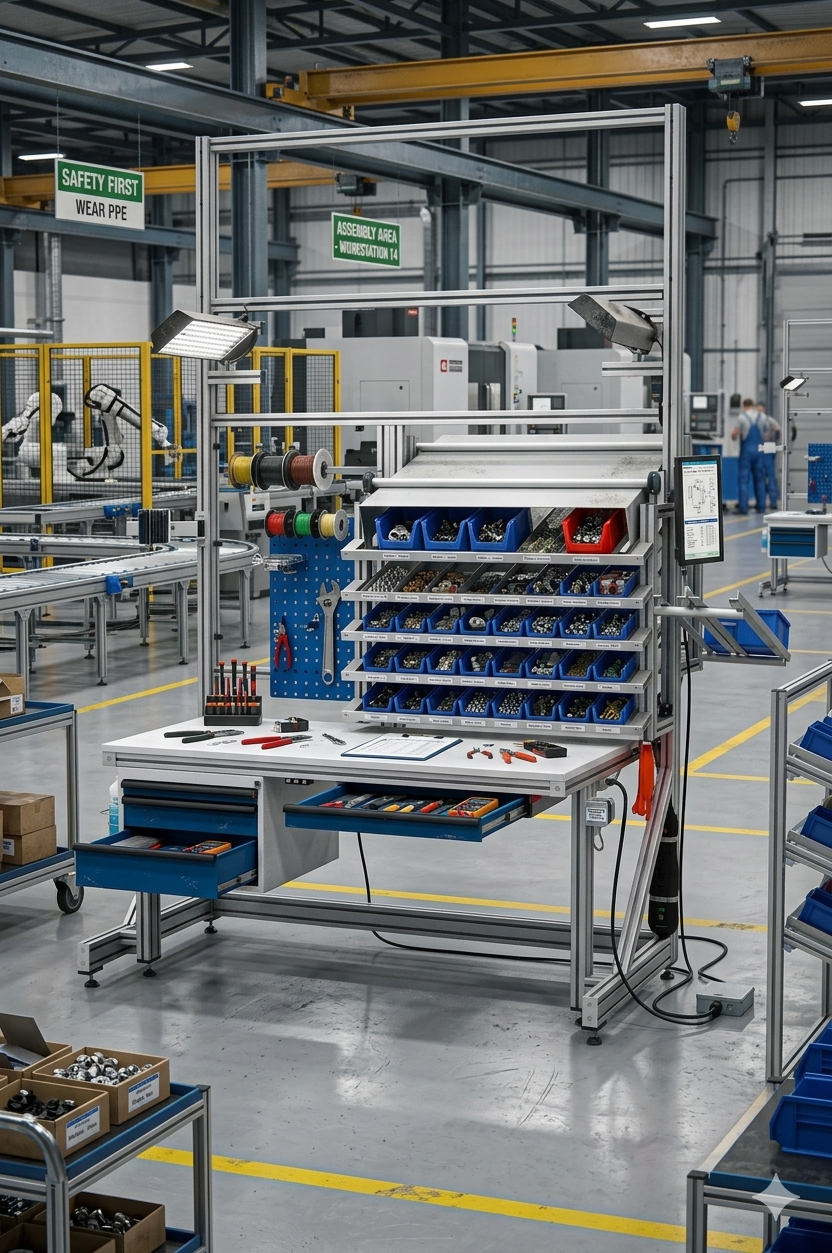
Why Choose Modular Machine Bases with Work Surface?
Combining the machine base and the operator work surface in one modular structure eliminates the floor space, alignment complexity, and structural redundancy of two separate installations.
Modular aluminum T-slot structural tables bolt together without welding and reconfigure without tools — delivering the rigidity and load capacity of a dedicated machine base with the flexibility to adapt through every process change, equipment upgrade, and facility reorganization without replacing the structure.
Integrated Machine Pedestal
Primary machine mounting zone with precision leveling pads, anchor bolt provisions, and isolation mount options at the required equipment height.
Adjacent Work Surface
Secondary work surface positioned at ergonomic height adjacent to the machine for tooling, documentation, and part staging.
Shared Frame Structure
Machine pedestal and work surface share a single T-slot frame structure, reducing total floor footprint versus two separate installations.
Cable and Utility Management
In-frame routing channels manage machine power, signal, coolant, and air lines from the service entry point to the machine mount.
Configurable Layout
Work surface position (left, right, rear, or wrap-around) and height are set during design to match operator work pattern.
Service Access Design
Removable panel provisions provide access to machine undercarriage and frame utilities for maintenance without moving the machine.
Applications
Modular machine bases with work surfaces are deployed where machine mounting and operator work access must share a compact, integrated footprint.
- CNC lathe and mill operator consoles
- Laser marking and engraving machine bases
- Press and punch operator staging bases
- Welding robot cell operator stations
- Vision inspection system bases
- Bench-top CMM and measurement system bases
- Dispensing and coating machine bases
- Electronic assembly machine operator stations
Specifications
Standard specifications for modular machine base with integrated work surface configurations.
| Parameter | Detail |
|---|---|
| Frame Profile | 90mm T-slot aluminum extrusion for machine pedestal; 45mm for work surface |
| Machine Mount Height | Custom to equipment installation height requirement |
| Work Surface Height | 34"–36" standard; height-adjustable option available |
| Work Surface Depth | 24"–30" standard; custom depths available |
| Leveling Pads | M24–M30 precision pads; sub-mm level control; jam-nut lock |
| Cable Management | In-frame channels from floor entry to machine connection points |
| Layout Options | Left-side, right-side, rear, or wrap-around work surface position |
| Lead Time | 5–7 weeks from approved drawings |
Frequently Asked Questions
Common questions about combined machine base and work surface design, layout, and specifications.
How is the machine mounting height determined for a combined base and work surface?
The machine mounting height is determined by the ergonomic requirements of the machine operation — specifically the height at which the primary operator interaction (load/unload port, control panel, viewing window) should be positioned. For machines with a fixed footprint height, the pedestal raises the machine to the required interaction height. The integrated work surface is then positioned adjacent at 34 to 36 inches for standing operator access.
Can the machine and work surface be at different heights on the same frame?
Yes. This is the primary advantage of the combined base design. The machine pedestal section is built to the machine installation height requirement (which may be 18", 30", or 48" depending on the machine). The work surface section is built to the ergonomic standing work height (34"–36"). Both sections share the same base frame cross-members for a unified, stable structure.
How does the service access design work for machine maintenance?
Removable T-slot panel sections on the machine pedestal sides and front allow access to the machine undercarriage, cable connections, and utility hookups without moving the machine or disassembling the base frame. Panels secure with T-bolt fasteners that release in seconds with a hex key. For machines with scheduled maintenance access requirements, designated panels are labeled and the access procedure is documented in the base design package.
Can a combined base and work surface be relocated after installation?
Yes, with planning. A combined base with precision-leveled machine installation requires relevel after any move. The T-slot frame disconnects from floor anchors and any utility connections, rolls on casters or is lifted by forklift (fork tube provisions are standard), relocates, and re-anchors. Relevel to original specification is accomplished with the built-in leveling pads. Full relocation typically takes 2 to 4 hours for a single technician.
Are combined machine bases available with a sit-stand work surface?
Yes. The work surface section of the combined base can include a powered electric lift column that adjusts the work surface independently from the fixed-height machine pedestal. This allows the operator to sit, stand, or transition between postures on the work surface while the machine remains at its fixed installation height. The lift column and work surface are on a separate structural section connected to the main base frame.
Ready to Configure Your Modular Machine Bases with Work Surface?
Contact our structural engineering team for a no-obligation quote. We design, engineer, and manufacture heavy duty modular tables from our Auburn Hills, MI facility — typically shipping in 3–6 weeks from approved drawings.
Request a Quote