Reinforced Assembly Benches
Reinforced modular aluminum assembly benches engineered for heavy subassembly, engine and drivetrain build, large structural assembly, and other operations requiring work surface load ratings of 1,000 to 5,000 lb. Crossbraced 90mm T-slot frame construction with heavy-gauge surface materials delivers the strength without sacrificing T-slot flexibility.
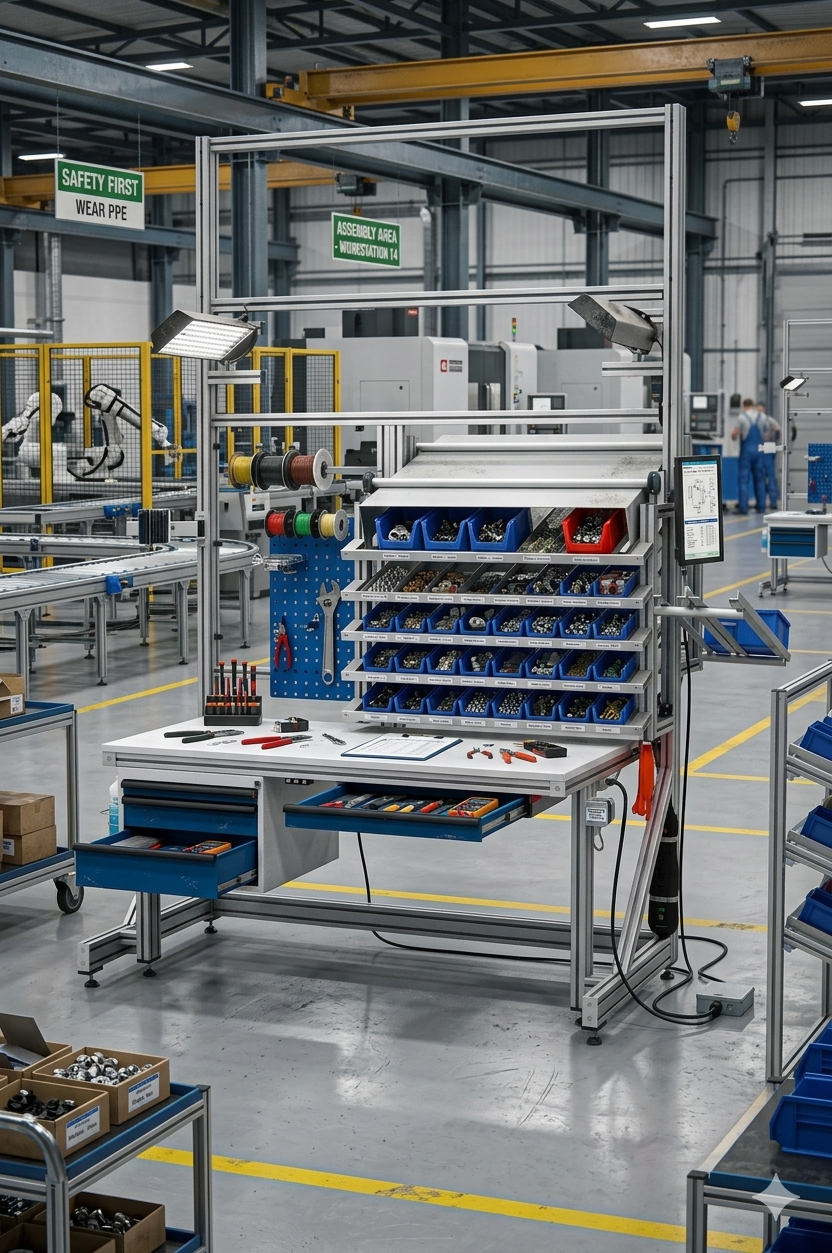
Why Choose Reinforced Assembly Benches?
Heavy subassembly work demands a bench that does not flex under load, does not tip under offset weight, and does not limit what can be built on it. Reinforced modular benches deliver all three.
Modular aluminum T-slot structural tables bolt together without welding and reconfigure without tools — delivering the rigidity and load capacity of a dedicated machine base with the flexibility to adapt through every process change, equipment upgrade, and facility reorganization without replacing the structure.
1,000–5,000 lb Load Rating
90mm T-slot extrusion frames with reinforced cross-members and corner gussets support heavy subassemblies without surface deflection.
Cross-Braced Base Frame
X-braced lower frame provides torsional rigidity against rocking and racking from asymmetric loads and assembly forces.
Heavy-Duty Surface Options
1/4" steel plate, 1.5" phenolic, or 2" hardwood butcher block surfaces rated for heavy impact and concentrated point loads.
Caster or Fixed-Foot Options
Heavy-duty 6-inch swivel casters (1,200 lb rated per caster) or fixed leveling feet for both mobile and stationary configurations.
Under-Bench Crane Rail
Optional under-bench monorail crane provisions allow heavy subassemblies to be moved on and off the bench surface without overhead cranes.
Adjustable Height
Manual gear-crank height adjustment lowers the bench for access to the top of tall assemblies and raises for ergonomic standing work.
Applications
Reinforced assembly benches support the heaviest subassembly and build operations in manufacturing.
- Engine and drivetrain assembly
- Transmission and gearbox build
- Large hydraulic cylinder assembly
- Structural steel subassembly staging
- Heavy pump and compressor assembly
- Industrial valve and actuator assembly
- Defense and military equipment assembly
- Mining and construction equipment subassembly
Specifications
Standard specifications for reinforced modular assembly bench configurations.
| Parameter | Detail |
|---|---|
| Frame Profile | 90mm T-slot aluminum extrusion; double-wall option for 5,000 lb+ |
| Surface Load Rating | 1,000 lb (standard); 2,000 lb (heavy); 5,000 lb (extra heavy) |
| Surface Material | 1/4" steel plate, 1.5" phenolic, or 2" hardwood butcher block |
| Leveling / Casters | Fixed M24 leveling feet or 6" heavy-duty swivel casters with locks |
| Cross-Bracing | X-brace lower frame standard; welded steel base option for 5,000 lb+ |
| Standard Sizes | 48"×96" to 72"×144" — custom footprints available |
| Surface Height | 34"–36" fixed; 28"–44" manual crank option |
| Lead Time | 4–6 weeks from approved drawings |
Frequently Asked Questions
Common questions about load ratings, surface materials, and heavy assembly bench configurations.
How is the load rating of a reinforced assembly bench determined?
Load rating is calculated for the worst-case combination of uniformly distributed load (total subassembly weight) plus point loads (clamping forces, jack placements, assembly tool reactions). Frame cross-member deflection under rated load must not exceed L/360 (length in inches divided by 360). Surface material must not deflect more than 0.010" at midspan under the rated point load. Both calculations are documented and available upon request.
What surface material is best for heavy engine assembly?
1/4" steel plate is the preferred surface for engine and drivetrain assembly. Steel withstands impact from heavy part placement, abrasion from metal-on-metal contact, and oil and fluid exposure without damage. Leveling screws thread directly into steel inserts in the surface for engine mounting and alignment operations. Butcher block surfaces are an alternative for assembly operations that require a softer landing surface to prevent part damage.
Can reinforced assembly benches be moved with a forklift?
Yes. Fork tube provisions are integrated into the lower frame cross-members at 16" and 20" fork spacings — compatible with standard counterbalanced and reach forklifts. Fork tube openings are 4" high x 6" wide to accept standard fork tines. The bench must be empty (no assembly on surface) before forklift movement. Fixed-foot configurations use forklift tubes; caster configurations roll under their own power.
How is an overhead crane avoided when loading heavy parts onto the bench?
An optional under-bench monorail crane provision integrates a 1/2-ton or 1-ton capacity I-beam rail into the lower bench frame. A trolley and manual chain hoist or electric hoist rides the rail, allowing parts to be lifted and positioned on the bench surface without an overhead bridge crane. The rail extends 24" beyond the bench end for loading and unloading operations.
Are reinforced assembly benches available with built-in rotation or tilt?
Yes. Rotating top provisions (360-degree indexing with lock positions) and tilt mechanisms (0–90 degrees with lock) are available as options. Rotating tops are specified for assembly operations that require access to multiple faces of the subassembly without repositioning. Tilt mechanisms are used for access to the underside of assemblies during final torque and inspection steps.
Ready to Configure Your Reinforced Assembly Benches?
Contact our structural engineering team for a no-obligation quote. We design, engineer, and manufacture heavy duty modular tables from our Auburn Hills, MI facility — typically shipping in 3–6 weeks from approved drawings.
Request a Quote