R&D Workstations
Modular aluminum R&D workstations for research and development laboratories where the experiment changes faster than the furniture can — T-slot frames that reconfigure in hours, mixed surface options for different research phases, and instrument integration provisions that adapt to every new setup. Every R&D station is built to change as fast as your research. Designed and manufactured in Auburn Hills, MI.
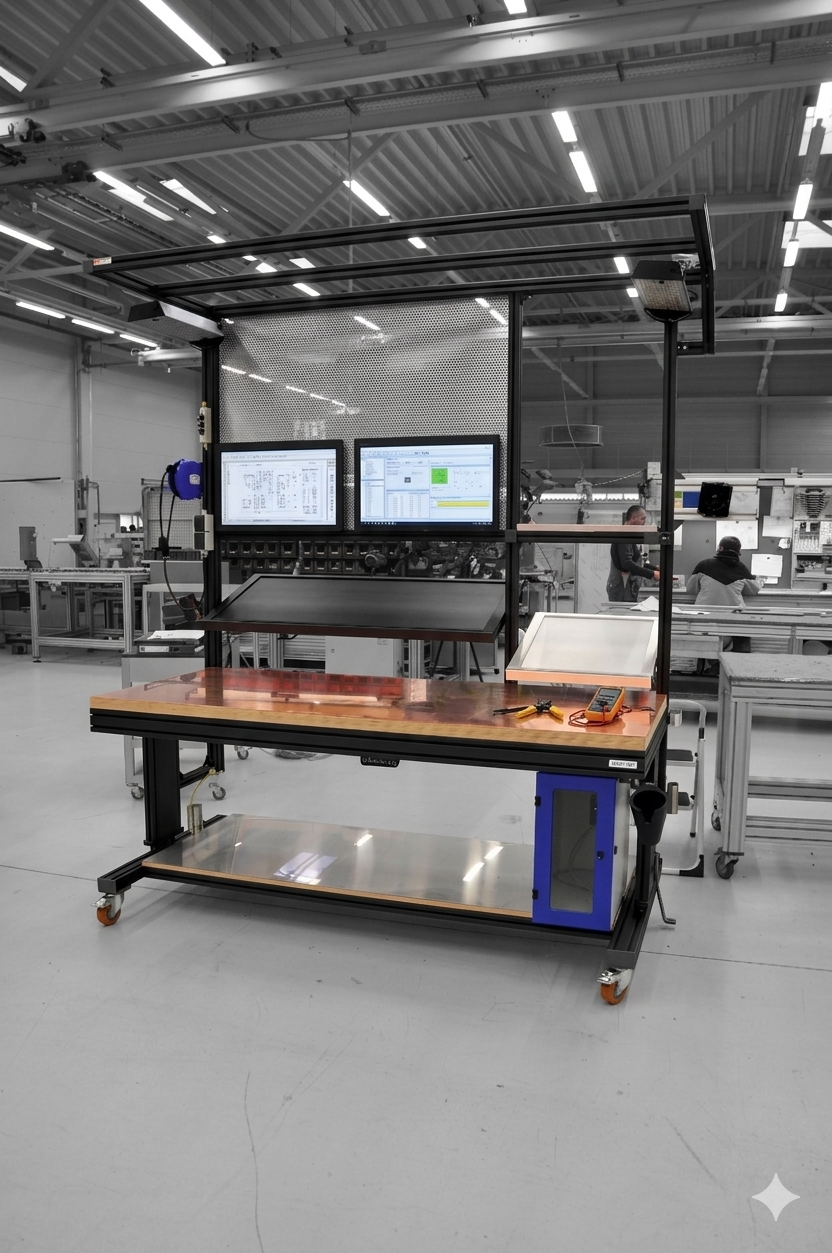
Why Choose Modular Solutions for R&D Workstations?
R&D workstations designed to reconfigure as fast as the research changes — without renovation budgets or lead times.
Modular aluminum T-slot benches bolt together without welding and reconfigure without tools — giving you a purpose-built technical station today that adapts through every process change, instrument upgrade, and compliance revision without capital reinvestment in new furniture.
Rapid Reconfiguration
T-slot aluminum frames with bolt-together construction allow complete workstation reconfiguration in hours — new surface, new instrument layout, new utilities — without welding, drilling, or construction.
Mixed Surface Configurations
Different surface sections on one bench frame — chemical-resistant epoxy for wet chemistry adjacent to ESD-safe laminate for electronics, or steel for prototype assembly adjacent to phenolic for solvent work.
Instrument Integration
19-inch rack sections, adjustable instrument shelf rails, overhead bridge provisions, and cable management systems accommodate any instrument configuration — add new instruments without redesigning the bench.
Prototype Assembly Provisions
T-slot work surface top plates with fixture mounting provisions for prototype assembly, test fixture positioning, and product development jigs — reconfigurable for each new prototype iteration.
Mobile R&D Stations
Rolling R&D workstations on locking casters deliver the bench to the experiment — across labs, to pilot plant areas, or to manufacturing for process validation setups.
Multi-Discipline Compatibility
Single frame system compatible with chemistry, electronics, mechanical, and biological R&D requirements — one infrastructure standard across your entire R&D facility.
R&D Workstations Applications
Configured for the rapid-change, multi-discipline demands of research, development, and pilot operations.
- Product Development Labs - Flexible benches for new product development where the process, instruments, and requirements change with every development phase.
- Pilot Plant and Scale-Up Stations - Configurable benches for pilot-scale process development positioned adjacent to pilot plant equipment with utility integration.
- Electronics and Hardware R&D - Mixed ESD-safe and mechanical assembly benches for electronics hardware development combining PCB work, mechanical prototype assembly, and functional test.
- Materials Research Labs - Adaptable lab benches for materials characterization, sample preparation, and testing where instrument configurations change between research programs.
- University and Institutional Research - Flexible research benches that serve multiple research groups with different instrument and surface requirements from the same configurable frame.
- Process Development Laboratories - Chemical process development benches with adjustable utility provisions and mixed surface options for formulation and process chemistry work.
Specifications & Configurations
Standard configurations available — all surface, utility, and compliance options custom-engineered to your requirements.
| Specification | Detail |
|---|---|
| Frame | 45mm T-slot aluminum — designed for rapid reconfiguration without tools |
| Surface Options | Mixed sections available: epoxy, phenolic, ESD laminate, steel, stainless, T-slot plate |
| Instrument Integration | 19" rack sections, adjustable shelf rails, overhead bridge provisions |
| Mobility | Fixed leveling feet or 4" locking casters for mobile configurations |
| Utilities | In-frame power, air, data — reconfigurable outlet positions |
| Lead Time | 2–4 weeks standard; expedited available for active R&D programs |
Frequently Asked Questions
Common questions about r&d workstations design, compliance, and configuration.
How quickly can an R&D workstation be reconfigured for a new experiment?
T-slot aluminum frames with standard hardware allow complete bench reconfiguration in 2 to 4 hours by one person — relocating surfaces, repositioning instrument shelves, moving utility drops, and changing accessory positions. No welding, drilling, or construction trades required. This makes same-day reconfiguration between research phases practical.
Can R&D workstations accommodate both chemistry and electronics work?
Yes. Mixed surface configurations place an epoxy or phenolic section for wet chemistry adjacent to an ESD-safe laminate section for electronics — on the same continuous bench frame. Each section is rated for its specific chemistry or ESD requirement. Utility drops (power, air, vacuum) are positioned at each section independently.
How are R&D workstations designed to accommodate new instruments?
R&D workstation frames include overhead T-slot bridge provisions for new instrument mounting, adjustable shelf rails that reposition for different instrument heights, and 19-inch rack sections for standard rack-mount instruments. New instruments integrate into the existing frame — no new bench required.
Are mobile R&D workstations practical for research environments?
Yes. Mobile R&D workstations on 4-inch locking casters move between laboratory areas, to pilot plant locations, and to manufacturing for process validation setups. Retractable power cord reels provide utility connection at any position. Mobile stations are particularly valuable for research programs that require the bench to go to the experiment rather than the experiment to the bench.
What is the difference between an R&D workstation and a standard laboratory bench?
Standard laboratory benches are optimized for a defined, stable process. R&D workstations are optimized for change — with modular surface sections, reconfigurable utility positions, instrument rail systems, and mobile provisions. The frame is the constant; everything else is variable. This distinction matters in R&D environments where the process changes faster than a standard bench can be replaced.
Configure Your R&D Workstation
Tell us your current research phase, instrument list, and surface requirements — we'll design a station that adapts as fast as your R&D program.