Lab Equipment Carts
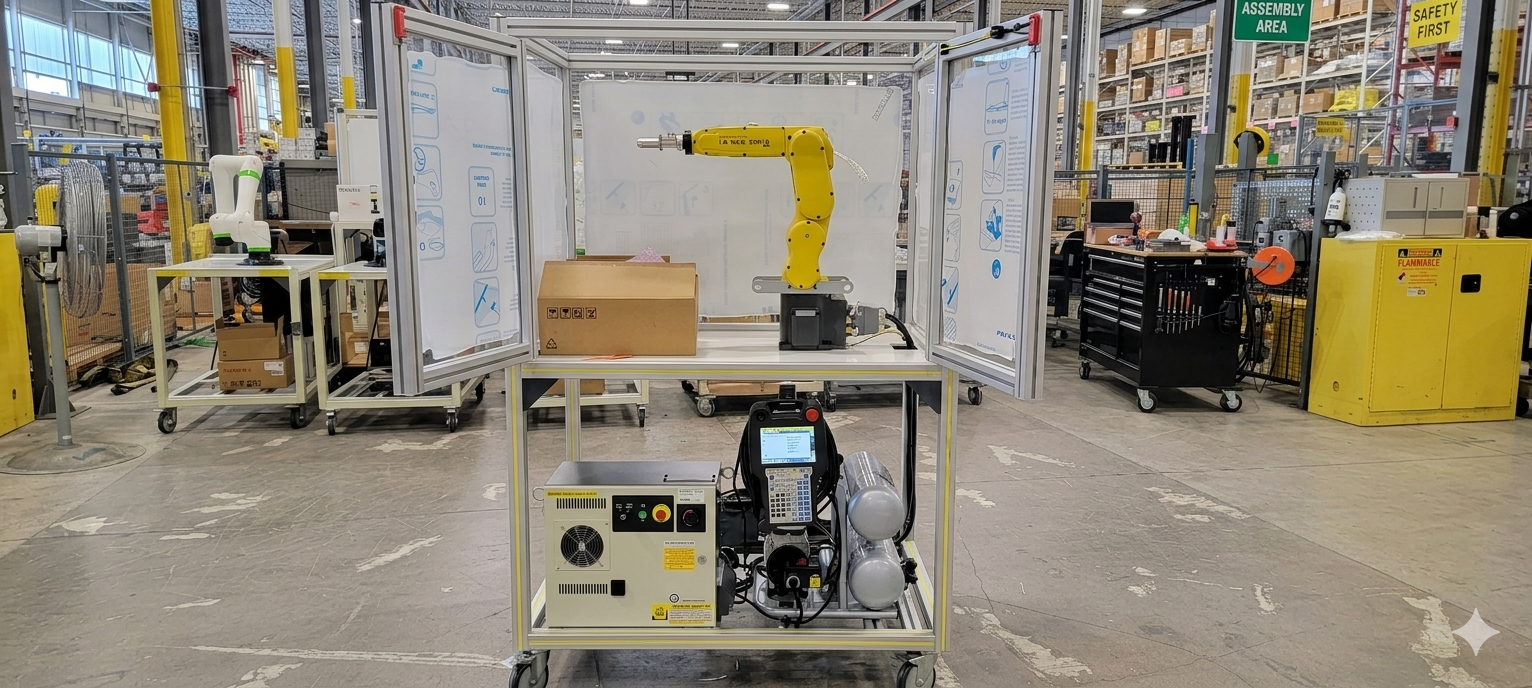
T-slot aluminum carts designed for laboratory instrument mobility, staging, and deployment. Infinitely adjustable shelf heights for any instrument footprint, integrated cable management channels, power strip mounting provisions, anti-vibration surface options, and cleanroom or ESD-safe configurations for regulated analytical environments. Reconfigure as your instrument inventory evolves — no new cart required.
Why Choose Modular Solutions for Lab Equipment Carts?
Laboratory instrument carts need to do more than hold instruments — they need to adapt as your lab configuration changes, manage cables cleanly, and survive the chemical environment of your specific lab.
Adjustable to Any Instrument Height — Without Tools
T-slot shelf brackets slide to any position along the upright and lock in place with a quarter-turn hex key adjustment. Shelf positions can be changed in minutes to accommodate a new instrument acquisition, equipment swap, or lab reconfiguration. No welding, no drilling, no ordering a new cart — the same frame adapts to every instrument configuration change in the life of the lab.
Cable Management Built Into the Structure
T-slot channels on upright faces accept cable tie-down blocks, cable clip accessories, and conduit channels without additional drilling or brackets. Power cords, instrument data cables, and signal connections are routed clean and accessible rather than creating a tangled hazard around the cart perimeter. Power strips mount to dedicated T-slot positions at mid-height or base level for short, clean power cord runs from each instrument.
Chemical Resistance for Lab Environments
Analytical laboratories use solvents, acids, bases, and cleaning agents that attack painted steel quickly. Anodized aluminum is resistant to common lab chemicals including IPA, acetone, methanol, dilute hydrochloric acid, and dilute sodium hydroxide at working concentrations. Shelf surfaces are specified for your specific chemical environment — polished stainless for aggressive chemicals, anodized aluminum for general lab use.
Cleanroom and ESD Options for Regulated Labs
Analytical laboratories in pharmaceutical, semiconductor, and medical device facilities operate under cleanroom classifications. Lab equipment carts for these environments use anodized framing, sealed channels, stainless fasteners, and cleanroom-grade casters — the same construction standards used for manufacturing environment carts, applied to the analytical lab setting.
Anti-Vibration Provisions for Sensitive Instruments
Mass spectrometers, atomic absorption spectrometers, and scanning electron microscopes are sensitive to vibration during both transport and operation. Lab equipment carts can be configured with anti-vibration mount pads between the instrument and the shelf surface to dampen vibration during cart movement. For instruments operated on the cart, vibration-isolation feet replace casters for the stationary operating configuration.
Leveling Adjusters for Instrument Stability
Many analytical instruments require a leveled surface to operate correctly. T-slot cart uprights accept threaded leveling feet with lock nuts that allow the cart platform to be precisely leveled at any location in the lab. Bubble level accessories mount to the T-slot frame for visual level verification. Leveling feet engage after caster positioning to lift the casters and stabilize the cart platform for instrument operation.
Key Features & Benefits
The design details that make T-slot aluminum lab carts more functional than catalog metal utility carts or welded lab furniture.
Instrument Hold-Down Rails
Instruments mounted on lab carts must be secured during transport between lab benches, rooms, or floors. T-slot-mounted instrument hold-down rails provide a front stop, side stop, and optional retention strap anchor point for each instrument position. Hold-down rails are positioned to the exact instrument footprint and are repositioned when instruments change.
Integrated Power Strip Mounting Position
Most lab instruments require AC power. A dedicated T-slot mounting bracket for a standard 6- or 8-outlet power strip is positioned on the cart frame at a convenient height. Power cable from the lab outlet runs to the strip; individual short power cords from each instrument reach the strip without spanning the full cart height. This eliminates the loose power cord tangle common on catalog lab carts.
Chemical-Resistant Surface Options
Lab instrument shelf surfaces are available in anodized aluminum (general lab use), polished 316 stainless steel (aggressive solvent and acid environments), and HDPE (biological and wet chemistry labs). Surface selection is matched to the worst-case chemical that will contact the cart surface, whether from instrument drainage, reagent bottle storage, or cleaning agent application.
Monitor and Display Mounting Brackets
Lab stations increasingly use computer monitors, touchscreen displays, or tablet mounts as part of the instrument station. T-slot upright faces accept VESA monitor mount brackets and tablet holder accessories at any height position. Monitor position height and tilt are adjustable using the T-slot bracket rather than requiring permanent hardware in the upright.
Modular Expansion as Lab Grows
Initial lab setups often expand as instrument inventory grows or lab workflow changes. T-slot carts can be extended with additional shelves, upright extensions, and side accessory panels as needed. The same modular system that builds the first cart can expand it later — without ordering a new design or returning to the original fabricator.
Locking Casters for Mobile and Stationary Use
Lab equipment carts are used in both mobile and stationary configurations. High-quality swivel casters with positive-lock wheel brakes allow the cart to be moved easily between positions and locked in place for stationary operation. Precision-bearing casters minimize vibration transmission during movement for sensitive instrument transport.
Common Applications
Lab equipment carts from Modular Solutions are used across pharmaceutical, chemical, biotech, semiconductor, and industrial analytical laboratories.
- Analytical Instrument Staging and Mobility — Carts for HPLC, GC-MS, ICP-MS, UV-Vis, FTIR, and other benchtop analytical instruments that are moved between lab areas or shared between multiple analytical stations.
- Pharmaceutical QC Laboratory — Carts for dissolution apparatus, HPLC stacks, dissolution-to-HPLC automated systems, and Karl Fischer titrators in pharmaceutical incoming and release testing labs with cGMP documentation requirements.
- Biotech and Life Sciences Research — Carts for centrifuges, PCR thermocyclers, plate readers, and cell counting instruments in research labs where instrument configuration changes frequently with evolving research protocols.
- Semiconductor Process Chemistry Analysis — Cleanroom-compatible carts for ICP-MS, ion chromatography, and total organic carbon analyzers in semiconductor process control labs with ISO Class 7 or 8 controlled environments.
- Environmental and Water Testing Labs — Carts for portable or bench-moveable instruments in environmental testing laboratories, field sampling support, or mobile laboratory deployments.
- Industrial Quality Control Laboratories — Carts for spectrophotometers, coordinate measurement reference instruments, hardness testers, and material analysis equipment used in production quality control labs adjacent to manufacturing areas.
- University and Research Institution Labs — Flexible carts for research instrument configurations that change frequently as projects evolve, with adjustable shelving that accommodates different instrument sizes without furniture replacement.
Specifications & Configurations
Standard design parameters for lab equipment aluminum carts. All specifications are available custom to your instrument inventory, lab environment, and regulatory requirements.
| Specification | Detail |
|---|---|
| Frame Profile | 45 Series T-slot aluminum; anodized finish; infinite shelf height adjustment |
| Shelf Surface Options | Anodized aluminum sheet, polished 316 stainless steel, HDPE; chemical resistance per application |
| Cable Management | T-slot cable tie-down blocks; conduit channels; power strip mounting bracket standard |
| Instrument Hold-Down | T-slot-mounted front and side rails; adjustable to instrument footprint; retention strap anchors |
| Leveling | Threaded leveling feet with lock nuts; bubble level accessory available |
| Anti-Vibration Options | Vibration-damping mount pads; vibration-isolation feet for stationary use |
| Casters | Swivel with positive-lock wheel brakes; precision-sealed bearings; corrosion-resistant frames |
| Cleanroom Option | Sealed channels, stainless fasteners, cleanroom-grade casters; ISO Class 7-8 compatible |
| ESD Option | ESD-dissipative deck; grounding path; wrist strap receptacle; resistance test report |
| Monitor Mount | VESA and tablet mount brackets available; adjustable position on T-slot upright face |
| Lead Time | 3 to 5 weeks from approved configuration |
Frequently Asked Questions
Common questions about lab equipment carts from Modular Solutions.
Can T-slot aluminum carts support heavy analytical instruments?
Yes. T-slot aluminum framing is structurally capable of supporting heavy analytical instruments — benchtop mass spectrometers, high-performance liquid chromatographs, and gas chromatograph-mass spectrometer systems can weigh 50 to over 200 lbs. The framing profile size (45 Series cross-section) and shelf span are selected to support the actual instrument load with appropriate deflection limits. Heavy instruments typically require a reinforced lower shelf position and may need additional cross-members to manage the point load.
How do T-slot lab carts manage instrument cable routing?
T-slot framing provides multiple cable management options. Cable tie-down blocks snap into any T-slot channel and provide an anchor for tie-wraps or cable clips. Conduit channels and cable trays mount to T-slot upright faces. Horizontal cable routing bars can be positioned between uprights at any height to guide power cords, signal cables, and instrument data connections from the shelf level to the upright face and downward to a power strip mounted at a lower position.
Are lab equipment carts available for cleanroom analytical labs?
Yes. Analytical laboratory cleanrooms — used for trace element analysis, pharmaceutical incoming QC, and semiconductor process chemistry analysis — have the same particle control requirements as production cleanrooms. Lab equipment carts for these environments use anodized aluminum framing, sealed T-slot channels, stainless steel fasteners, and cleanroom-grade casters. Surface materials for instrument shelves are selected for chemical resistance to the solvents and reagents used in the lab.
What anti-vibration options are available for sensitive instrument carts?
Anti-vibration provisions for lab carts include vibration-damping mounting pads between the instrument and the shelf surface, vibration-isolation feet on the cart uprights (replaces standard caster configuration for stationary use), and heavy-duty casters with precision-sealed bearings that minimize vibration transmission when the cart is moved. For instruments requiring ISO Class vibration environments, we discuss the specific vibration specification and the laboratory vibration baseline before specifying the cart mounting approach.
Can lab equipment carts accommodate instruments of different heights and footprints?
Yes. This is one of the primary advantages of T-slot aluminum lab carts over welded or catalog options. Shelf height is adjustable at any position along the upright without tools — loosen the bracket fastener, slide to the new position, retighten. Multiple instruments with different heights can share a single cart at different shelf positions. When instrument configuration changes with a new purchase, shelf positions are repositioned rather than replacing the cart.
Need a Cart for Your Lab Instrument Configuration?
Share your instrument list, lab environment type, and any specific requirements for cable management, cleanroom compatibility, or ESD protection. Our engineering team will design a lab cart that organizes your instruments and survives your lab environment.
Modular Solutions — 4280 Giddings Rd, Auburn Hills, MI 48326