Testing Equipment Carts

T-slot aluminum carts engineered for mobile test station deployment, automated test equipment (ATE) staging, and end-of-line functional test. Structured cable management, equipment hold-down systems, monitor mounting, power strip integration, caster locking for stationary testing, and ESD-safe configurations for sensitive device-under-test handling — designed to function as a complete mobile test station, not just a cart.
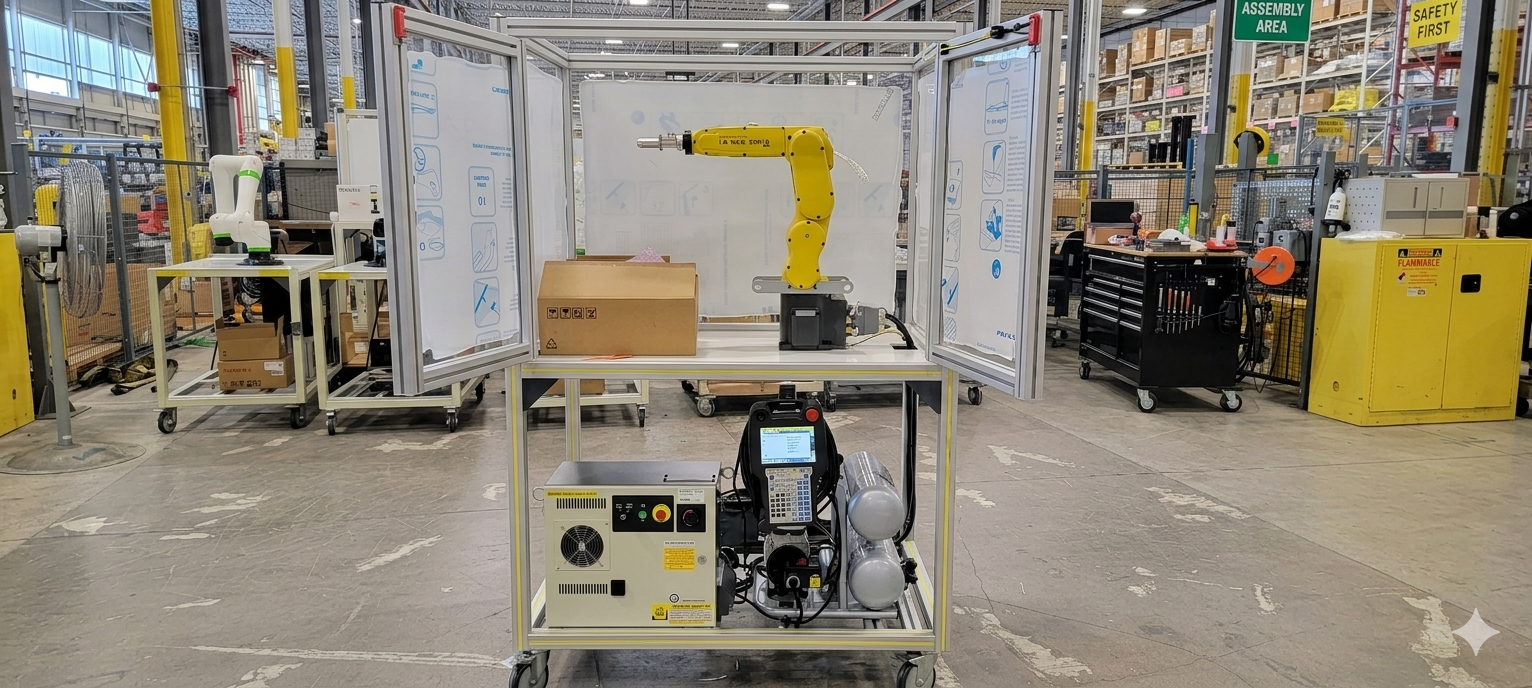
Why Choose Modular Solutions for Testing Equipment Carts?

A testing equipment cart that is not purpose-designed creates ergonomic problems, cable hazards, and equipment drop risk. We design the cart around your specific test system.

Designed Around Your Test System Geometry

ATE mainframes, oscilloscope stacks, power supply arrays, and signal conditioning racks all have specific dimensions, ventilation requirements, and access needs. We design the cart around your specific test system — shelf height to the exact rack unit count, equipment ventilation clearances, front panel access depth, cable connection access from the test side, and maintenance access from the rear.

Structured Cable Management for Test Reliability

Test cable tangle is a leading cause of test system unreliability in high-volume production environments. T-slot upright faces provide organized cable routing for probe harnesses, RF cables, signal cables, and power cords at every height position. Cable tie points, conduit channels, and cable tray accessories route cables from instrument to device-under-test in a predictable, repeatable path that minimizes measurement error from cable position variation.

ESD-Safe Configuration for Sensitive DUT Handling

When the device under test (DUT) is an ESD-sensitive assembly — PCBs, power electronics, avionics — the test station surface must be ESD-controlled. Testing equipment carts can be configured with ESD-dissipative DUT staging surfaces, verified grounding paths, and wrist strap connection points for test operators. This integrates ESD protection into the test station without requiring a separate ESD mat that moves and loses ground contact.

Locking Position for Stationary Testing

Testing requires the cart to stay put during operation. High-quality positive-lock wheel brakes on all swivel casters hold the cart position during test execution. For precision measurement applications, leveling feet disengage the casters entirely and set the cart platform level on the floor, eliminating any caster flex or vibration contribution to measurement uncertainty.

Reconfigurable for New Test Programs

Test programs change when products are revised, new products are introduced, or test system upgrades replace existing equipment. T-slot framing allows shelf positions, cable management routes, monitor mounts, and equipment hold-down configurations to be updated with hex tools when the test system changes. The cart investment extends across multiple product generations rather than being scrapped with each program change.

Ergonomic Position Design for Operator Efficiency

Test operator ergonomics directly affect test throughput and error rates. Cart height, monitor position, keyboard position, and DUT interface height are all designed to the ergonomic working position of the test operator. Operator fatigue from poorly positioned test equipment accumulates across a shift — a well-designed test cart reduces this source of test yield and quality loss.

Key Features & Benefits

The specific design features that make a testing equipment cart function as a purpose-built test station rather than a general-purpose shelf cart with equipment placed on it.

Equipment Hold-Down Rail System

Test equipment mounted on carts must be physically secured to prevent movement during transport and to maintain fixed positions during test. T-slot-mounted equipment hold-down rails are configured to the exact footprint of each instrument. Hold-down rails include front stop, rear stop, and side capture configurations. Individual rails are repositioned with hex tools when the instrument configuration changes.

Integrated Power Distribution

Power strip mounting brackets are integrated into the cart frame at a position that allows short power cord runs from each instrument — typically mid-frame between instrument stack and lower service area. Power entry panel provisions for hardwired power connection are available for test stations requiring permanent power connections rather than plug-in strips. UPS mounting provisions are available for test stations requiring power conditioning.

Monitor and Display Mounting

VESA monitor brackets, articulating arm mounts, and multi-monitor rail systems mount to T-slot upright faces. Single, dual, or triple monitor configurations are supported without external monitor stands that add footprint and create cable routing complications. Monitor position height, tilt, and rotation are adjusted by repositioning the T-slot bracket for each new test configuration or operator preference.

Connector Panel Mounting Positions

Test cables connecting the cart-mounted test equipment to the DUT interface point benefit from a fixed connector panel position on the cart frame. T-slot mounting provisions for connector panels — D-sub connector arrays, BNC panels, RF connector panels, and custom interface panels — are integrated at ergonomic access height on the cart front face. This provides a consistent cable connection reference point for all DUT interfaces.

Rear Service Access Design

Test systems require periodic maintenance access to rear panel connections, cooling fans, and internal components. Cart designs with open rear access — no back panel obstruction — and flip-down or removable rear access panels allow service access without removing equipment from the cart. Rear access requirements are documented in the cart drawing and designed into the initial configuration.

DUT Staging Position at Ergonomic Interface Height

The device-under-test interface — where the operator connects the DUT to the test fixture — is designed at ergonomic elbow height for the standing operator. This minimizes the reach distance and viewing angle required for test operations. Where multiple operators of different heights use the same cart, an adjustable DUT staging platform position using T-slot height adjustment provides a simple ergonomic accommodation.

Common Applications

Testing equipment carts from Modular Solutions are deployed across electronics manufacturing, automotive test, aerospace MRO, and industrial product testing.

Specifications & Configurations

Standard design parameters for testing equipment aluminum carts. All specifications are engineered to your test system configuration and production environment requirements.

SpecificationDetail
Frame Profile45 Series T-slot aluminum; anodized finish; load-rated per actual ATE system weight
Equipment Hold-DownT-slot front stop, rear stop, and side capture rails; configured to instrument footprint
Cable ManagementT-slot cable tie-down blocks; conduit channels; connector panel mounting provisions
Power IntegrationPower strip bracket standard; UPS mounting provision available; hardwired power entry panel option
Monitor MountingVESA bracket, articulating arm, or multi-monitor rail on T-slot upright face; adjustable height
CastersHeavy-duty swivel with positive-lock brakes; precision-sealed bearings; rated to system load
LevelingThreaded leveling feet with lock nuts; disengages casters for precision stationary testing
ESD OptionESD-dissipative DUT staging surface; verified grounding path; wrist strap receptacle
Rear AccessOpen rear standard; removable or fold-down rear access panel available
Surface OptionsAnodized aluminum, stainless steel, ESD-dissipative laminate per DUT and instrument requirements
Lead Time4 to 6 weeks from approved drawings

Frequently Asked Questions

Common questions about testing equipment carts from Modular Solutions.

How do T-slot testing carts manage test probe and cable harness connections?

T-slot framing allows cable harnesses and probe wiring to be routed along the upright faces and secured with T-slot cable clip accessories or tie-down blocks at regular intervals. This keeps test leads organized and accessible at the test interface height. Dedicated connector panel mounting positions on the cart frame allow harness connections to be made at a consistent location each time the cart is used, reducing test setup time and connection error risk.

Can testing equipment carts be used with ESD-sensitive devices under test?

Yes. End-of-line test, functional test, and ICT test for ESD-sensitive assemblies require ESD-safe test station design. Testing equipment carts with ESD-dissipative deck surfaces, verified grounding paths, and wrist strap connection points provide the ESD protection required when test personnel handle bare PCBs or sensitive assemblies at the test interface. The same cart serves as both the equipment transport vehicle and the ESD-controlled test surface.

How are test monitors and displays mounted on testing equipment carts?

VESA monitor mounting brackets and articulating arm mounts attach to T-slot upright faces at any height position. Monitor height, tilt, and orientation are adjusted by repositioning the T-slot bracket and the articulating arm angle. Multiple monitors can be mounted on a single cart for test applications that require simultaneous display of measurement data, test procedures, and pass/fail status. Tablet and touchscreen interface mounts are also available on the same T-slot upright faces.

Can the same cart be used for both transport and stationary testing?

Yes. Caster locking brakes allow the cart to be moved to the test position and locked down for stationary testing. For applications requiring high positional stability during precision measurement, leveling feet can be engaged to lift the cart off the casters entirely, eliminating caster flex as a source of movement during the test. The cart transitions between mobile (casters down) and stationary (leveling feet down) in under a minute.

What is the maximum weight a testing equipment cart can support?

Testing equipment cart capacity is engineered to the actual load. Automated test equipment (ATE) chassis can weigh 50–200 lbs for a single mainframe. Multi-slot ATE with loaded instrument cards can weigh 300 lbs or more. Power supply racks, oscilloscope stacks, and analyzer frames all have specific weight requirements that we calculate in the engineering process. Heavy ATE applications use reinforced 45 Series T-slot framing with heavy-duty casters rated for the total cart and load weight.

Need a Cart Engineered Around Your Test System?

Share your test equipment list, instrument dimensions, cable management requirements, and production environment. Our engineering team will design a test cart that organizes your system, protects your equipment, and improves test throughput.

Request a Test Equipment Cart Quote Call 248-625-1864

Modular Solutions — 4280 Giddings Rd, Auburn Hills, MI 48326