Warehouse Carton Flow Systems
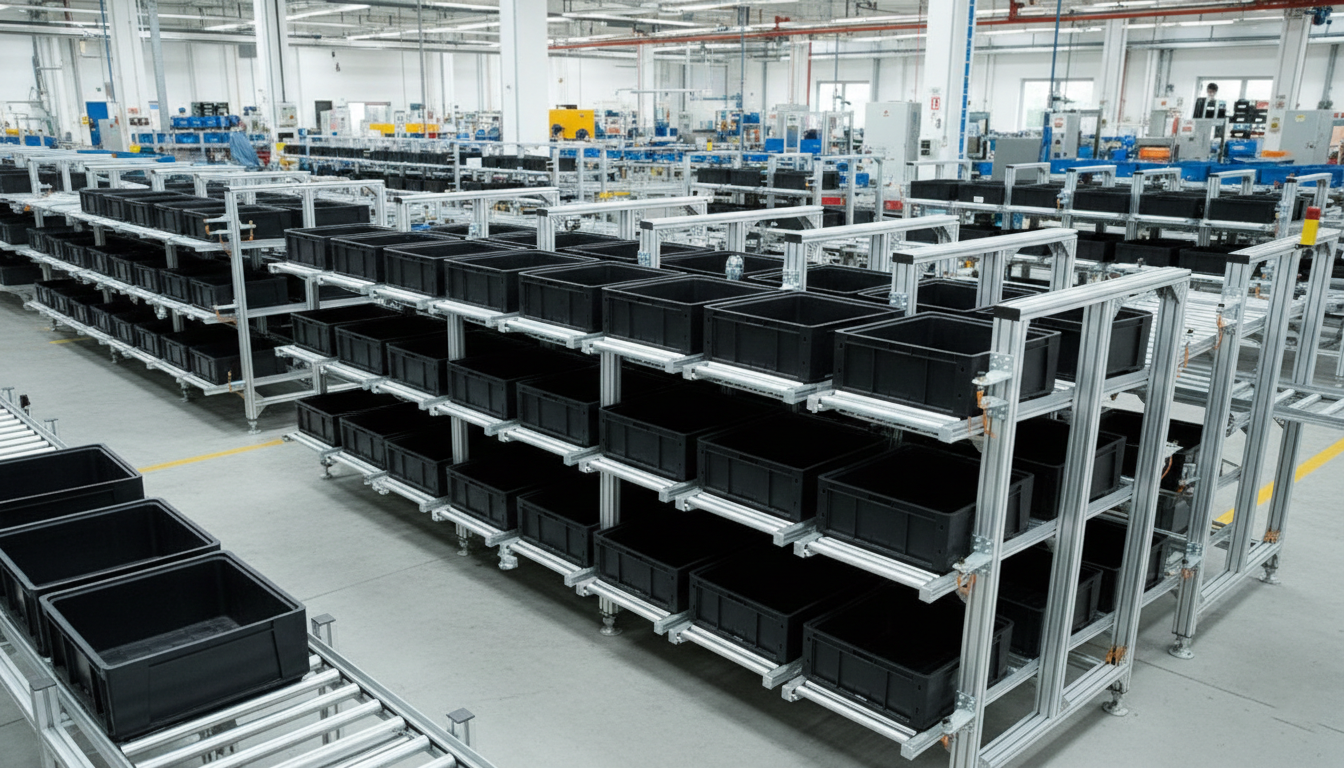
Bay-and-row carton flow installations sized for full distribution center operations — hundreds of pick lanes, multiple product categories, and high-throughput order picking. Engineered for ambient, refrigerated, and frozen warehouse environments with full compliance to racking and fire codes.
Warehouse Carton Flow Systems Features
Modular aluminum carton flow rack systems engineered for reliability, flexibility, and lean material flow in any production or distribution environment.
Full Distribution Center Scale
Warehouse carton flow systems span full DC aisles with hundreds of pick lanes per row, multiple product category zones, and velocity-segmented pick face layouts. Design integrates with the DC slotting strategy, replenishment frequency plan, and order picking methodology.
Velocity-Based Slotting Layout
High-velocity A-items in the ergonomic golden zone at standing pick height. Medium-velocity B-items in adjacent tiers. Low-velocity C-items at floor or overhead levels. Slotting layout design is included in the system engineering package.
Category Zone Configuration
Separate carton flow aisle zones for ambient dry goods, refrigerated product, frozen product, HBC, and general merchandise. Each zone uses temperature-rated components and is laid out for the replenishment vehicle and operator workflow appropriate to that category.
NFPA Fire Code Compliance
Warehouse carton flow rack systems are designed to NFPA 13 and NFPA 230 rack storage sprinkler requirements. In-rack sprinkler drops, flue space clearances, and maximum storage height calculations are included in the engineering package for AHJ submission.
Replenishment System Integration
Rear-lane replenishment aligns to the forklift, reach truck, tugger, or conveyor replenishment method used in the facility. Replenishment aisle widths, lane load heights, and forklift approach clearances are specified per the facility's material handling equipment.
WMS & Pick Technology Ready
Label holders, pick-to-light bracket mounts, RF scanner positioning, and voice pick headset station brackets are integrated into the front frame structure of each bay. Technology integration is coordinated with the WMS vendor and DC technology team.
Technical Specifications
Standard configurations for warehouse carton flow systems systems. Custom lane widths, depths, heights, and track types available for any carton size or facility requirement.
Applications & Industries
Warehouse Carton Flow Systems systems deliver reliable carton flow performance across a wide range of manufacturing, distribution, and fulfillment environments.
- Grocery Distribution Centers — Dry grocery, HBC, and GM carton flow aisles for store replenishment DC operations. Velocity-slotted pick faces, FIFO rotation for date-coded products, and high-throughput order pick rates.
- General Merchandise DCs — Large-scale carton flow pick faces for omnichannel retail DC operations. Mixed case and each-pick configurations by category zone. Full slotting and replenishment plan included.
- Pharmaceutical Distribution — Multi-zone pharmaceutical warehouse carton flow — controlled, refrigerated, and ambient zones. Lot-controlled FIFO rotation; PTL and RF scan integration for order accuracy.
- E-Commerce Fulfillment Warehouses — High-SKU carton flow systems for B2C each-pick fulfillment. Dense pick face by product category. Velocity-segmented slotting for fast and efficient pick path.
- Beverage & Liquid Distribution — Heavy-duty carton flow racks for high-weight beverage cases. Roller track rated to 80 kg per lane. Temperature-zone layouts for ambient and refrigerated product.
- Consumer Electronics DCs — Secure carton flow pick faces for high-value electronics. Enclosed or screened lane options for asset protection. PTL integration for accuracy on high-value SKUs.
- Apparel Distribution — Multi-level carton flow racks for polybag and folding carton pick faces. Date-code FIFO for seasonal apparel. Dense SKU configuration for high-SKU style/size/color matrix.
- 3PL Warehouse Operations — Multi-client carton flow infrastructure with modular reconfiguration between client transitions. Standard bay and aisle layouts allow rapid relayout for new client profile.
Frequently Asked Questions
Common questions about warehouse carton flow systems specification, configuration, and deployment.
How is a warehouse carton flow system designed?
Warehouse carton flow system design starts with the SKU velocity profile (A/B/C classification), carton size distribution, and daily order throughput. Slotting design places A-items in the ergonomic golden zone and lower-velocity items in extended reach positions. Lane count, bay configuration, aisle layout, and replenishment plan are developed in a design package that includes layout drawings, structural engineering, fire code compliance calculations, and WMS integration data.
How many SKUs can a carton flow warehouse system hold?
A single standard pick aisle (40 m long, 3 levels, 1 m bay width) typically holds 200–400 active SKUs depending on lane width and tier configuration. A full DC with multiple parallel aisles holds thousands of active SKUs. The number of active pick lanes equals the number of active SKUs in the pick zone, with additional lanes for reserve flow depth on high-velocity items.
What slotting methodology is used for carton flow systems?
Velocity-based slotting places A-items (top 20% by pick frequency) in the ergonomic golden zone (600–1800 mm from floor). B-items (next 30%) are placed in adjacent tier and aisle positions. C-items occupy outer positions. Within velocity bands, physical proximity slotting groups items that are frequently ordered together to minimize pick path travel. Modular Solutions provides slotting analysis and layout optimization as part of the design engagement.
How are carton flow pick faces replenished?
Replenishment method depends on the reserve storage system. Pallet storage reserve uses a reach truck or counterbalance forklift to bring a full pallet to the rear of the lane for hand or mechanical transfer. Conveyor-fed systems replenish from upstream sortation directly into lane rears. AGV and cart-based replenishment systems require rear-lane access widths and cart positioning guides coordinated in the rack design.
What is the ROI on a warehouse carton flow system?
ROI is typically driven by reduced pick labor (fewer steps per pick), reduced order error rates (organized pick face, PTL support), and improved inventory accuracy (FIFO rotation, visible stock levels). Projects typically achieve 20–40% pick productivity improvement versus flat shelf picking, with payback periods of 18–36 months depending on labor cost and throughput volume.
Can existing warehouse racking be converted to carton flow?
Selective pallet rack can be converted to carton flow by installing carton flow track on existing pallet beam levels. The track mounts to the existing beam flanges and creates gravity flow lanes within the existing rack bay. This conversion approach leverages existing rack investment and is significantly lower cost than new carton flow rack installation.
Design Your Warehouse Carton Flow System
Full-scale DC carton flow systems with slotting design, structural engineering, fire code compliance, and WMS integration. Engineered for your throughput target and product profile.
Request a Quote Email Our Team