Dock-to-Line Flow Carts

Pre-loaded gravity flow carts that travel directly from the receiving dock to the production line — eliminating intermediate staging, re-handling, and the warehouse supermarket pick for parts on a direct delivery schedule. Engineered in Auburn Hills, MI.
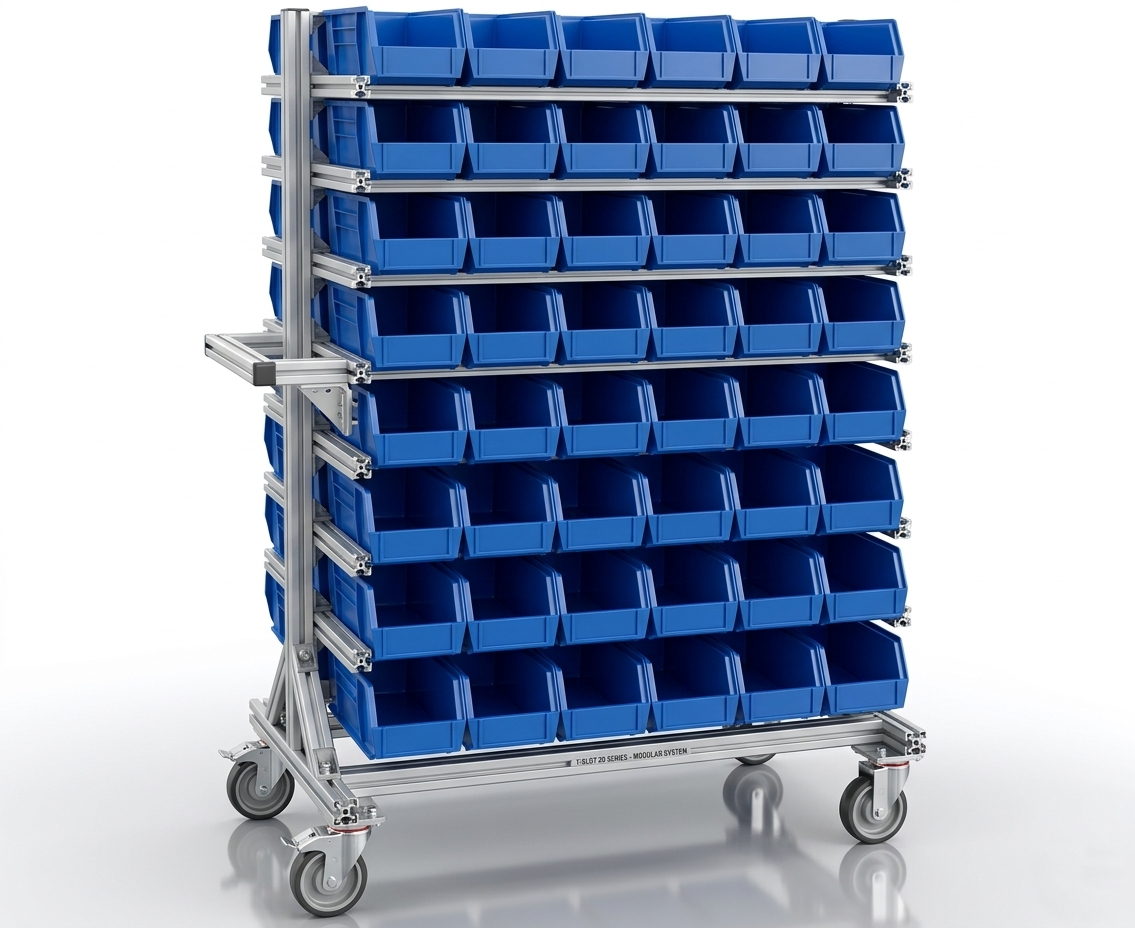
Why Choose Dock-to-Line Flow Carts

Dock-to-line carts compress the receiving-to-line delivery process into a single cart move — cutting touch points, reducing dock-to-line lead time, and eliminating the storage and retrieval cycle for parts on a regular delivery schedule.

Zero Intermediate Staging

Parts loaded at the dock door go directly to the line-side station in the same cart. No put-away to a warehouse location, no pull from a supermarket, no re-staging on a secondary cart — one move from dock to pick face.

Supplier-Load Compatible

Carts can be loaded by the supplier at their facility and delivered full. The cart is secured in the delivery vehicle, unloaded at the dock, and rolled directly to the line. The first handling touch is the operator's pick from the flow lane.

Dock-Height Roll-On / Roll-Off

Caster height and base profile are matched to the dock leveler range and delivery vehicle floor height — the cart rolls on and off without any lifting equipment, reducing dock unload time to seconds per cart.

Full-Cart Exchange at Line Side

An empty cart is exchanged for the full incoming cart at the line-side station. The empty is returned to the dock on the next tugger or delivery vehicle run. The station is never without supply during the exchange.

RFID Cart Tracking

RFID tags on the cart frame are scanned at the dock door and the line-side station — providing real-time cart location, part content, and delivery timestamp without paper travelers or manual check-in steps.

Fleet Sized to Delivery Frequency

Cart fleet size is calculated from the delivery schedule, transit time, and line consumption rate — so the dock-to-line system runs with the minimum number of carts needed to guarantee continuous supply.

Specifications

Frame Profile

45mm or 90mm aluminum T-slot extrusion

Caster Diameter

125mm–200mm swivel; dock-leveler roll-on compatible

Tow Coupling

Pin-and-hook standard; AGV coupling available

Lane Track Types

Roller track, skate wheel, or poly-wheel rail

Container Retention

Anti-rattle clips and bungee bars for transit security

Load Capacity

Up to 1000kg total distributed load

Tracking

RFID tag mount; barcode label holder standard

Tier Count

1–4 tiers; mixed container types per tier supported

Finish

Natural anodized aluminum; galvanized hardware for dock environments

Applications

Dock-to-line flow carts support direct delivery programs where eliminating intermediate staging reduces lead time, space, and handling cost.

JIT Direct Delivery

Supplier delivers parts directly to the production line on a just-in-time schedule with zero internal handling between dock and line.

Sequenced Supplier Delivery

Supplier loads cart lanes in production sequence; cart arrives at the line in build order without any internal sequencing step.

High-Frequency Delivery Routes

Multiple daily deliveries where the speed and simplicity of a roll-on cart exchange outperforms any warehouse staging and retrieval process.

Cross-Dock Operations

Inbound containers are transferred directly from the delivery vehicle to dock-to-line carts without entering the warehouse storage system.

Frequently Asked Questions

How does a dock-to-line flow cart eliminate double-handling?

In a traditional receiving flow, parts are unloaded from the delivery truck onto a dock staging area, then re-picked and placed on internal transport vehicles for delivery to the line. A dock-to-line flow cart eliminates the intermediate staging step: parts are loaded directly into the cart lanes at the dock door (or at the supplier), and the cart is transported directly to the line-side station. The first pick from the flow lane is the only handling touch after unloading the delivery vehicle.

Can dock-to-line carts be loaded by the supplier before delivery?

Yes. In a supplier-loaded dock-to-line system, the supplier loads containers into the flow cart lanes at their facility. The loaded cart is secured in the delivery vehicle and unloaded at the receiving dock. Modular Solutions designs the cart to match the supplier's loading equipment and the delivery vehicle floor height, and provides the supplier with loading instructions and cart specifications.

How are dock-to-line carts handled at the receiving dock?

Dock-to-line carts are designed with dock height compatibility in mind. The cart base height and caster configuration allow the cart to roll directly from the delivery vehicle deck to a dock leveler and onto the plant floor without any lifting or handling equipment. Cart collection at the empty-return point uses the same roll-on, roll-off process in reverse.

What is the minimum delivery frequency to justify dock-to-line carts?

Dock-to-line carts are most cost-effective when the same part numbers are delivered on a regular schedule — daily or multiple times per week. For less frequent deliveries, the cart fleet size needs to accommodate the transit and return cycle. Modular Solutions calculates the required cart fleet size from the delivery frequency, transit time, and line consumption rate during the quoting process.

How are dock-to-line carts tracked and controlled?

Cart tracking uses RFID tags on the cart frame, scanned at the dock door and at the line-side station. This provides real-time cart location, part number content, and delivery timestamp without paper-based packing slips. Empty cart returns are tracked by scanning the cart at the dock return point. Modular Solutions supplies the RFID mount hardware; the customer supplies or specifies the scanning infrastructure.

Design Your Dock-to-Line System

Share your delivery schedule, container types, dock setup, and line consumption rate — we will design a cart fleet that eliminates staging and keeps your line running on schedule.

Request a Quote