Mobile Flow Racks
Repositionable gravity flow systems on heavy-duty casters — built for milk-run delivery, lean line-side replenishment, kanban pull systems, and production layouts that change. Custom-engineered in Auburn Hills, MI.
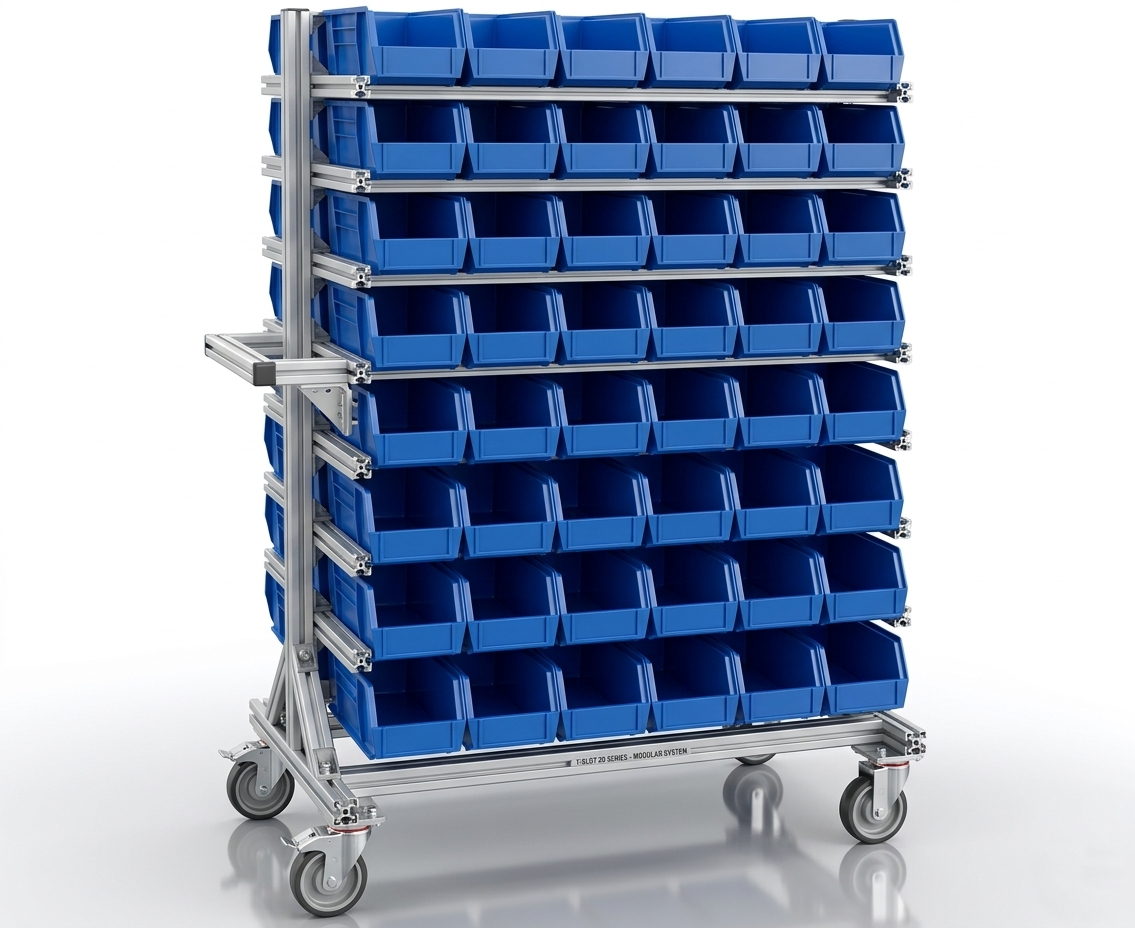
Repositionable gravity flow systems on heavy-duty casters — built for milk-run delivery, lean line-side replenishment, kanban pull systems, and production layouts that change. Custom-engineered in Auburn Hills, MI.
Seven mobile gravity flow system configurations — select a category to explore specifications, features, and applications for your line-side delivery, kanban, or transport requirements.
Caster-mounted gravity flow racks for repositionable line-side material staging.
Mobile flow racks with integrated kanban card slots and visual signal systems.
Wheeled multi-lane carts for scheduled milk-run delivery to assembly lines.
Mobile WIP staging racks for routing sub-assemblies through production cells.
Ergonomic push-pull carts with gravity-fed lanes for manual and tugger tow operations.
High-capacity mobile racks with multiple gravity-fed shelf tiers for parts variety.
Pre-loaded exchange carts for direct receiving dock to production line delivery routes.
Heavy-duty caster bases let operators relocate full racks between workstations, cells, or lines without unloading material — eliminating the idle time and ergonomic risk of carrying parts by hand during layout changes.
Gravity-feed lanes maintain first-in, first-out material rotation regardless of how many times the rack is repositioned — critical for date-coded parts, kanban sequences, and assembly line kitting accuracy.
T-slot frames accept kanban card holders, signal flags, color-coded lane tags, and electronic indicator lights without drilling or welding — plug-in visual management that takes minutes to configure.
Designed for full-rack exchange cycles — a loaded cart replaces an empty one in seconds, keeping line-side inventory small and replenishment predictable without operator downtime at the pick face.
Low-profile frames, ergonomic push bars, and swivel-lock casters are specified for one-person operation — reducing the force required to start, stop, and steer loaded racks on production floor surfaces.
Lane width, shelf height, and inclination angle all adjust via T-slot hardware with a hex key — the same rack that runs small cartons today can run larger containers tomorrow with zero capital outlay.
Mobile flow racks are fitted with heavy-duty swivel casters, typically 125mm or 150mm diameter, rated for the full loaded rack weight plus a safety factor. Two of the four casters include locking brakes to hold the rack in position at a workstation. For smooth epoxy or tile floors, polyurethane wheels are standard. For rough concrete, cast iron or rubber-treaded casters are specified. Non-marking wheels are available for cleanroom and food-grade environments.
Two of the four casters include locking brakes that engage with a foot-operated pedal. For higher-traffic docking positions, a fixed docking pin or floor-mounted receiver bracket can be added so the rack clicks positively into place and cannot shift when an operator leans against it. This is especially important in assembly line applications where the rack is positioned flush against a workbench.
Yes. Kanban card holders, signal flag mounts, and lane-empty indicator clips are standard T-slot accessories that attach directly to the extrusion frame without drilling. Color-coded lane tags indicate product type and reorder point. Electronic kanban signal lights can also be wired to a central andon board using standard DIN rail components mounted on the rack frame.
Standard mobile flow rack frames handle 500kg to 1000kg total distributed load depending on the extrusion profile (45mm or 90mm T-slot). The caster assembly is rated to match the frame capacity. For loads above 1000kg, additional casters or a heavier-duty base frame are specified. Modular Solutions calculates the load per tier and confirms the caster and frame specification before manufacture.
In a milk run system, mobile flow racks are preloaded in the warehouse and delivered as full exchange units to line-side stations on a fixed schedule. The empty rack is removed and returned to the warehouse for reloading at the same time the full rack is dropped. This decouples the warehouse picking cycle from the line consumption rate and eliminates partial replenishment trips. The rack gravity-feed lanes ensure that the line operator always works from a fully presented, FIFO-ordered pick face.
Tell us your part sizes, lane count, delivery route, and floor type — our engineers will specify the right caster, frame, and lane configuration for your operation.