Multi-Shelf Flow Carts

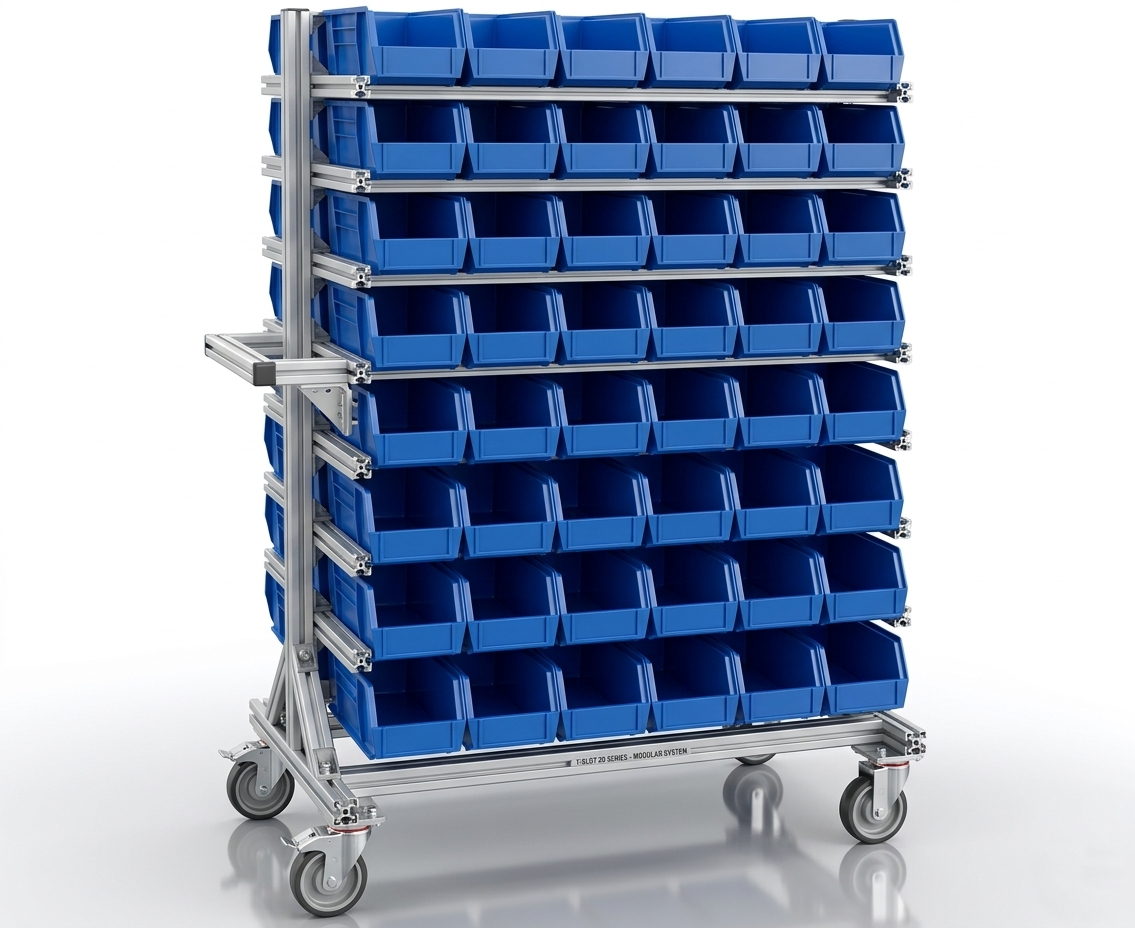
Mobile flow carts with two to five independent gravity-fed tiers — each tier configured for a different container type, lane width, and part number group — delivering high-SKU line-side replenishment and kitting capacity in a single repositionable unit.
Why Choose Multi-Shelf Flow Carts

Multi-shelf flow carts consolidate multiple container types and part number groups into a single cart — reducing the number of carts per station and the number of trips per delivery cycle.

Mixed Container Types Per Cart

Each tier is independently configured — top tiers run narrow cartons in four lanes while lower tiers run wide totes in two lanes. One cart serves the full part variety of a complex workstation without requiring separate carts per container type.

Ergonomic Tier Placement

Tier heights are set within the ergonomic reach envelope for the operator role. Heaviest containers go in the lowest tiers; most-frequently picked items go in the optimal reach zone. Top tier is kept below 1600mm to avoid overhead reach.

Per-Lane Label System

Every lane has a printed insert label holder in the T-slot rail showing part number, container type, and kanban quantity. Label swaps take seconds and require no tools — changeover between product models is managed at the label level, not the hardware level.

Kitting-Ready Configuration

Each tier or lane maps to one kit component. The assembler picks one item per lane in a defined sequence to complete the kit — no supermarket walk, no part number search, no missed components.

Stability Designed for Load Height

Center of gravity is calculated for the fully loaded cart at design stage. Caster base width and outrigger options are specified to maintain stability on the floor slopes and caster transitions present on the delivery route.

Adjustable Tier Spacing

Tier spacing adjusts on the T-slot frame by repositioning the shelf brackets with a hex key. Tier heights can be changed in the field as container profiles change — without cutting, welding, or ordering new components.

Specifications

Frame Profile

45mm or 90mm aluminum T-slot extrusion

Tier Count

2–5 tiers; independently configurable per tier

Maximum Height

1800mm standard; outrigger option for taller configurations

Caster Diameter

125mm–150mm swivel with 2 locking brakes

Lanes per Cart

8–20 total lanes across all tiers

Lane Track Types

Skate wheel, roller track, or poly-wheel per tier

Load Capacity

Up to 1000kg total distributed load

Label System

Per-lane T-slot clip-in label holders; A5 or A6 inserts

Finish

Natural anodized aluminum; color-coded tier tags

Applications

Multi-shelf flow carts serve high-SKU workstations, kitting operations, and delivery routes where parts variety requires multiple container types in a single cart visit.

High-SKU Assembly Stations

Deliver 8–20 part numbers per station visit in one cart, consolidating multiple small carts into a single high-capacity unit.

Assembly Kitting

Each tier or lane holds one kit component — the assembler picks one item per lane in sequence to build a complete kit without walking to the supermarket.

Mixed-Container Routes

Routes with multiple container types (cartons on top tiers, totes on lower tiers) consolidated into one cart delivery instead of multiple cart types.

Consolidation Milk Runs

Reduce the number of tugger train carts per route by consolidating more part numbers per cart using tiered lane capacity.

Frequently Asked Questions

How many tiers can a multi-shelf flow cart have?

Multi-shelf flow carts typically have two to five tiers depending on the container height, required pick height range, and stability requirements. Tier spacing is adjustable on the T-slot frame. Modular Solutions designs the tier layout from the actual container heights and the ergonomic reach envelope of the operators who will use the cart — top tier is set no higher than 1600mm from the floor to avoid overhead reach.

Can each tier have a different lane width and container type?

Yes. Each tier is independently configured for the container types assigned to it. The top tier might run narrow cartons in four lanes while the bottom tier runs wide totes in two lanes. Lane width, rail type, and end stop configuration differ per tier as needed. This is one of the primary advantages of T-slot construction — no two tiers need to be identical.

How are part numbers assigned and labeled on a multi-shelf flow cart?

Each lane receives a printed label holder in the T-slot rail that displays the part number, description, container type, and kanban quantity. Label holders are clip-in style — part reassignments are made by swapping the printed insert, not by modifying the cart. Color-coded tier tags allow supervisors to read the cart configuration from a distance.

What is the maximum height for a multi-shelf flow cart?

Standard multi-shelf flow carts are built to a maximum overall height of 1800mm to maintain stability under full load on casters. For applications requiring more vertical storage, a wider caster base or outrigger stabilizer legs are added. Modular Solutions calculates the center-of-gravity height for the fully loaded cart before confirming the caster base width.

Can a multi-shelf flow cart be used as a kitting cart?

Yes. Multi-shelf flow carts are well suited to kitting operations where each tier or lane holds one component of an assembly kit. The cart is loaded in the warehouse with all kit components in their lanes and delivered to the assembly station. The assembler picks one item from each lane in sequence to complete the kit without walking to a fixed supermarket shelf.

Configure Your Multi-Shelf Flow Cart

Share your container list, tier count requirements, and delivery route details — we will design a cart that consolidates your line-side replenishment into fewer, more capable units.

Request a Quote