Push-Pull Flow Carts

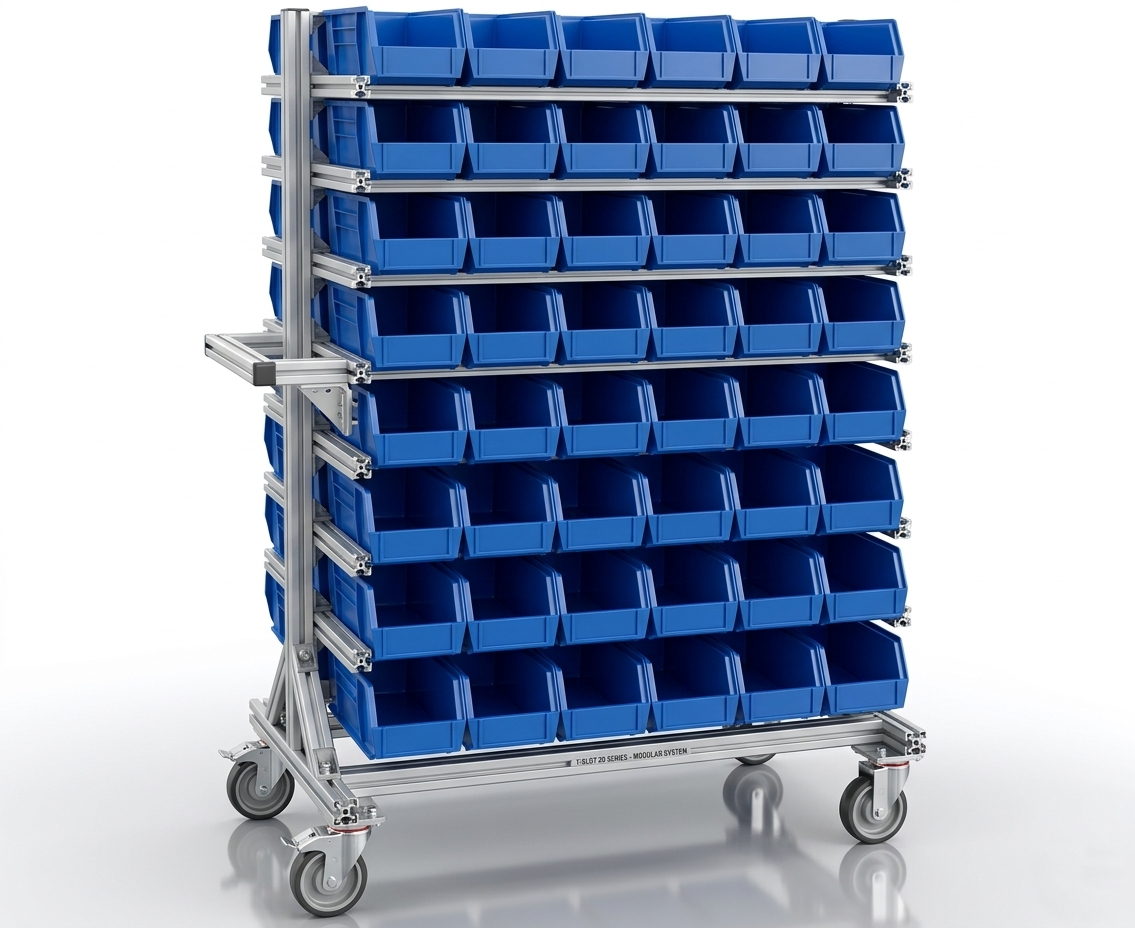
Ergonomically designed flow carts with gravity-fed lanes, push bars engineered to NIOSH standards, and tow couplings for tugger train operations — the same cart handles both manual push routes and automated tugger delivery without modification.
Why Choose Push-Pull Flow Carts

Push-pull flow carts reduce ergonomic risk at the point of material handling while maintaining full gravity-flow FIFO performance — on manual or automated delivery routes.

NIOSH-Compliant Push Bar

Push bar height is set between 900mm and 1100mm for neutral wrist and shoulder posture. Initial push force is designed to stay below 23kg on the specified floor surface — eliminating MSD risk from overloaded flat-shelf carts.

Dual-Mode: Manual and Tow

One cart operates in both manual push and tugger-tow modes. The pin-and-hook tow coupling is standard; the caster configuration tracks straight under tow and swivels freely for manual positioning — no conversion needed.

Gravity FIFO on Every Tier

Each tier uses gravity-flow lanes so the operator always picks the oldest container from the front. No sorting, no reaching past work, no double-handling at the workstation or pick face.

Container Retention for Tow

Anti-rattle clips and bungee retention bars attach to the T-slot frame and secure containers during acceleration and deceleration on tow routes — preventing lane spillage in transit.

Tight-Aisle Navigation

Cart width is sized to the minimum aisle and doorway clearance on the delivery route. Swivel-only caster configurations provide zero-radius turning for routes through equipment bays or production cell openings.

Tool-Free Caster Height Adjustment

Caster stems thread into the base extrusion and adjust without tools — leveling the cart on uneven surfaces and compensating for caster wear without replacing hardware.

Specifications

Frame Profile

45mm or 90mm aluminum T-slot extrusion

Push Bar Height

900mm–1100mm adjustable (NIOSH neutral posture range)

Caster Diameter

100mm–150mm polyurethane; sealed bearing option

Initial Push Force

<23kg on sealed concrete at full rated load

Tow Coupling

Pin-and-hook; compatible with standard tugger hitches

Lane Track Types

Skate wheel rail, roller track, or poly-wheel lane

Load Capacity

Up to 800kg total distributed load

Retention Options

Anti-rattle clips, bungee retention bars, lane end stops

Finish

Natural anodized aluminum; powder-coat available

Applications

Push-pull flow carts support material transport operations where ergonomic compliance, flexible routing, and gravity-flow pick face performance are required together.

Manual Delivery Routes

Operator-pushed delivery routes where cart push force compliance is required for ergonomic program certification.

Tugger Train Operations

Cart couples to the tugger train for the delivery leg and decouples for one-person manual positioning at line-side drop points.

Mixed Route Operations

Some route segments use tugger tow; others require manual push through tight cell aisles — one cart handles both without conversion.

Ergonomic Program Compliance

Operations that require documented push/pull force compliance for OSHA VPP, SHARP, or customer ergonomic audit programs.

Frequently Asked Questions

What ergonomic standards are applied to push-pull flow cart design?

Push-pull flow carts are designed to NIOSH lifting guidelines and OSHA ergonomic risk reduction principles. Push bar height is set between 900mm and 1100mm for neutral wrist and shoulder position. Caster rolling resistance is calculated to keep initial push force below 23kg for one-person operation on the specified floor surface. Low-friction polyurethane casters are standard to reduce sustained push effort.

Can push-pull carts be used in both manual push and tugger tow modes?

Yes. Push-pull flow carts include both an ergonomic push bar for manual operation and a pin-and-hook tow coupling for tugger train attachment. The caster configuration allows straight tracking during tugger tow and full swivel during manual positioning. No modification is needed to switch between the two modes.

What is the maximum load for a one-person push operation?

Maximum one-person push load depends on the floor surface, caster specification, and push distance. Modular Solutions designs for a maximum initial push force of 23kg and sustained push force of 10kg for one-person operation, consistent with NIOSH guidelines. For heavier loads, larger casters, additional casters, or a ball-bearing caster upgrade are specified.

How are containers secured during push or tow movement?

Containers in the flow lanes are retained by the lane end stop at the pick face. For tow operations where acceleration and deceleration forces are higher, anti-rattle clips or bungee cord retention bars are added across the front of each tier. These attach to T-slot hardware and take less than one minute to add or remove.

Can push-pull flow carts navigate tight corners and doorways?

Yes. Cart width and turning radius are designed around the minimum aisle width and doorway clearance on the delivery route. Swivel-only caster configurations (no fixed rear casters) allow zero-radius turning in tight spaces. Frame width can be reduced to as narrow as 500mm if the route requires it, with lane configuration adjusted to suit the narrower frame.

Specify Your Push-Pull Flow Cart

Share your route dimensions, load weight, floor surface, and ergonomic program requirements — we will design a cart that passes your push-force audit and serves the route from day one.

Request a Quote