Reconfigurable Flow Modules

Pre-assembled lane cassettes and bay insert modules for rapid flow rack change-over — drop-in lane module units that swap in and out of a fixed supporting frame in minutes, enabling multiple product families or container sizes to share the same rack structure with zero permanent modification.
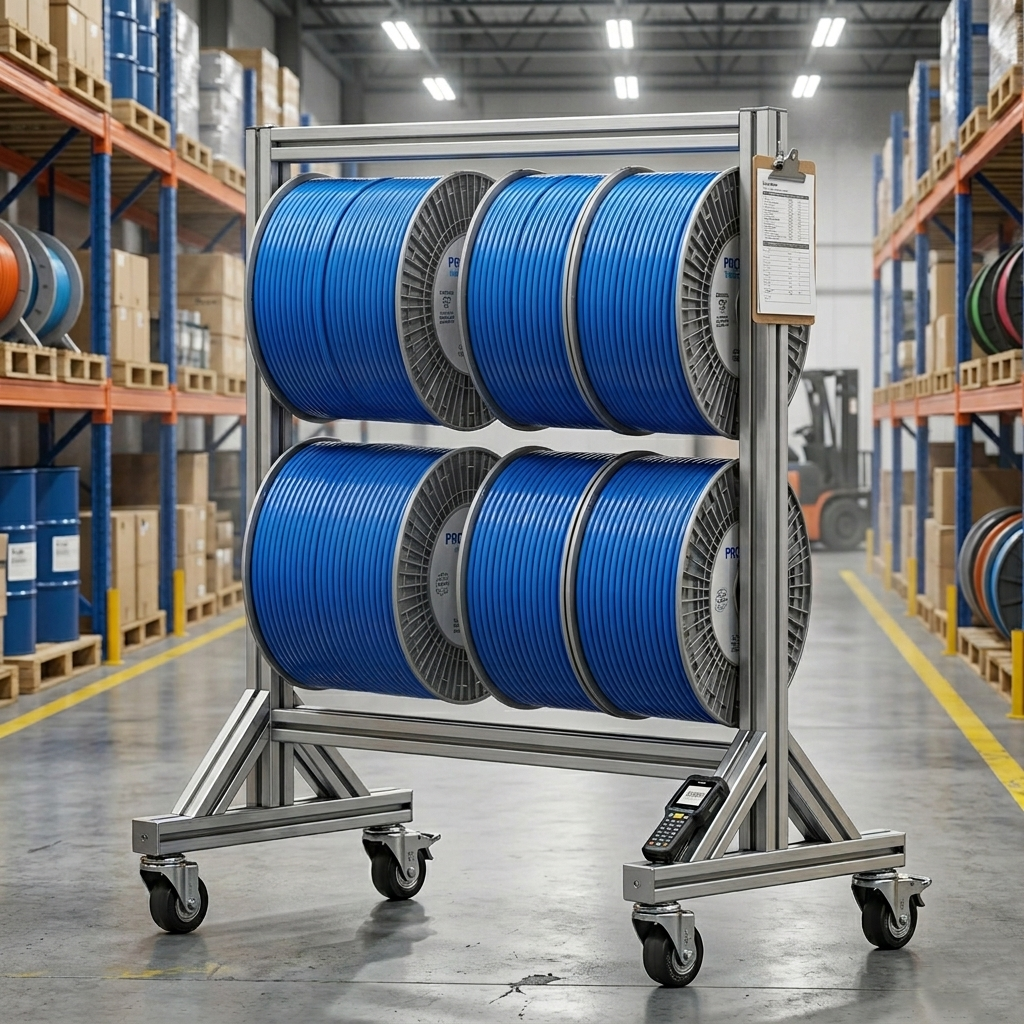
Why Choose Reconfigurable Flow Modules

Drop-In Cassette Design

Reconfigurable flow modules are pre-assembled lane units — roller or skate wheel lanes in a fixed-width cassette frame — that drop into a fixed supporting frame structure and are secured with a single retained pin or quarter-turn fastener. Changing the lane configuration means swapping cassettes: remove the current cassette, insert the new one, secure. No tools, no reconfiguration of the supporting frame.

Width-Standardized Cassette Sizes

Cassettes are available in standard widths matching the most common container families: narrow (150mm to 250mm), standard (250mm to 400mm), and wide (400mm to 600mm). A single supporting frame bay can accept multiple cassette widths or a mix of narrow, standard, and wide lanes depending on the product family using the rack at that time.

Lane Hardware Flexibility

Each cassette can contain any lane hardware type — roller track, skate wheel rail, or gravity tube track — independently of adjacent cassettes in the same bay. A single bay can simultaneously contain roller-track lanes for heavy containers and skate-wheel lanes for light containers, with each lane optimized for its specific container type.

Pre-Set Incline Options

Cassettes are available with pre-set incline angles of 2.5°, 3.5°, and 5°. Incline is fixed within the cassette and is selected at cassette order time based on the container family the cassette will serve. Switching between product families with different optimal inclines is handled by swapping to a cassette with the correct pre-set incline.

Storage and Management System

Cassette storage racks are available to store spare cassettes adjacent to the production area. Cassettes hang vertically on storage pins or lay flat on shelf rails for space-efficient storage. Cassette-type labeling and color-coding identify each cassette family by product group for visual management.

Change-Over Time Reduction

Cassette change-over for a 6-lane, single-tier rack takes approximately 5 to 10 minutes for a trained operator. This compares to 30 to 90 minutes for lane-by-lane reconfiguration of a conventional adjustable divider rack — a 6x to 10x reduction in change-over downtime for high-frequency product mix changes.

Specifications

Cassette Widths

150–250mm narrow; 250–400mm std; 400–600mm wide

Lane Hardware

Roller track, skate wheel, or gravity tube per cassette

Incline Options

2.5°, 3.5°, 5° pre-set per cassette

Fastener

Retained pin or quarter-turn; no tools

Change-Over Time

5–10 min for 6-lane single-tier (trained operator)

Cassette Material

Anodized aluminum cassette frame

Storage System

Vertical pin or flat shelf cassette storage rack

Bay Compatibility

Universal cassette saddle mount; all frame series

Load Capacity

Up to 80kg per lane (hardware type dependent)

Applications

High-Mix Production Lines

Manufacturing lines producing multiple product families with different container sizes where the rack must be reconfigured multiple times per shift to match the current production schedule.

Model Year Change-Overs

Automotive and discrete manufacturing facilities that reconfigure their supermarket rack systems annually for model year changes, using cassette swaps to minimize changeover downtime.

Shared Rack Infrastructure

Production areas where multiple cell teams share a common rack aisle and each team uses different containers — cassette modules allow each team to use the appropriate lane geometry without a dedicated rack bay per team.

New Product Introductions

New product introduction (NPI) environments where the container size is unknown or expected to change during product launch and a reconfigurable cassette system allows the rack to adapt without capital expenditure on new frames.

Frequently Asked Questions

What is the difference between a reconfigurable cassette rack and a conventional adjustable lane rack?

In a conventional adjustable lane rack, each lane is individually configured by repositioning dividers, changing roller track width, and adjusting end stops — a process that requires accessing each lane individually and takes several minutes per lane. In a cassette rack, the supporting frame structure is fixed and the pre-configured lane cassettes are swapped as complete units. A 6-lane bay is reconfigured in 5 to 10 minutes by swapping 6 cassettes rather than reconfiguring 6 lanes. The cassette approach is optimal when change-over frequency is high; the adjustable divider approach is optimal when lane geometry changes are infrequent.

How many cassette sizes can be stored in a standard storage rack?

A standard cassette storage rack holds 12 to 18 cassettes in a 900mm wide, 1800mm tall footprint, depending on cassette depth (lane depth). Cassettes are stored vertically on horizontal pins at 150mm vertical intervals. For facilities with many cassette families, storage racks are added in multiples and labeled by product family or cell number for rapid cassette retrieval during change-over.

Can cassettes be used across different supporting frame bays?

Yes. The cassette saddle mount interface is standardized across all supporting frame bay widths. A cassette of a given width fits in any bay wide enough to accept it, regardless of which bay it was originally assigned to. This means cassettes are interchangeable across all rack positions in the facility, and the cassette inventory can be shared across all production areas rather than dedicated to specific bays.

What is the minimum supporting frame investment for a cassette system?

The supporting frame for a cassette system is a simpler structure than a conventional flow rack frame because it does not need to accommodate lane-level adjustments. A basic supporting frame for a 3-bay, single-tier cassette installation typically costs 15% to 25% less than an equivalent conventional adjustable frame because the frame complexity is reduced. The cassette units themselves add cost compared to simple lane hardware, but the total system cost comparison depends on change-over frequency and labor cost savings.

Are cassettes available in ESD or food-grade materials?

Yes. Cassettes with ESD-dissipative roller or skate wheel lane surfaces and grounded aluminum cassette frames are available for ESD-sensitive component lanes. Food-grade cassettes with polypropylene or stainless steel lane hardware and anodized aluminum cassette frames are available for food-adjacent environments. The supporting frame structure is unchanged for specialty cassettes — only the cassette lane hardware material changes.

Configure Your Reconfigurable Flow Module System

Share your product mix, container sizes, change-over frequency, and lane count — we will design the right cassette width families and supporting frame configuration to minimize your change-over downtime.

Request a Quote