Pallet Flow Racks

Gravity-fed FIFO pallet lanes engineered for warehouses, distribution centers, and manufacturing floor supply — custom-designed to your pallet size, load weight, lane depth, and forklift access requirements. Manufactured in Auburn Hills, MI.
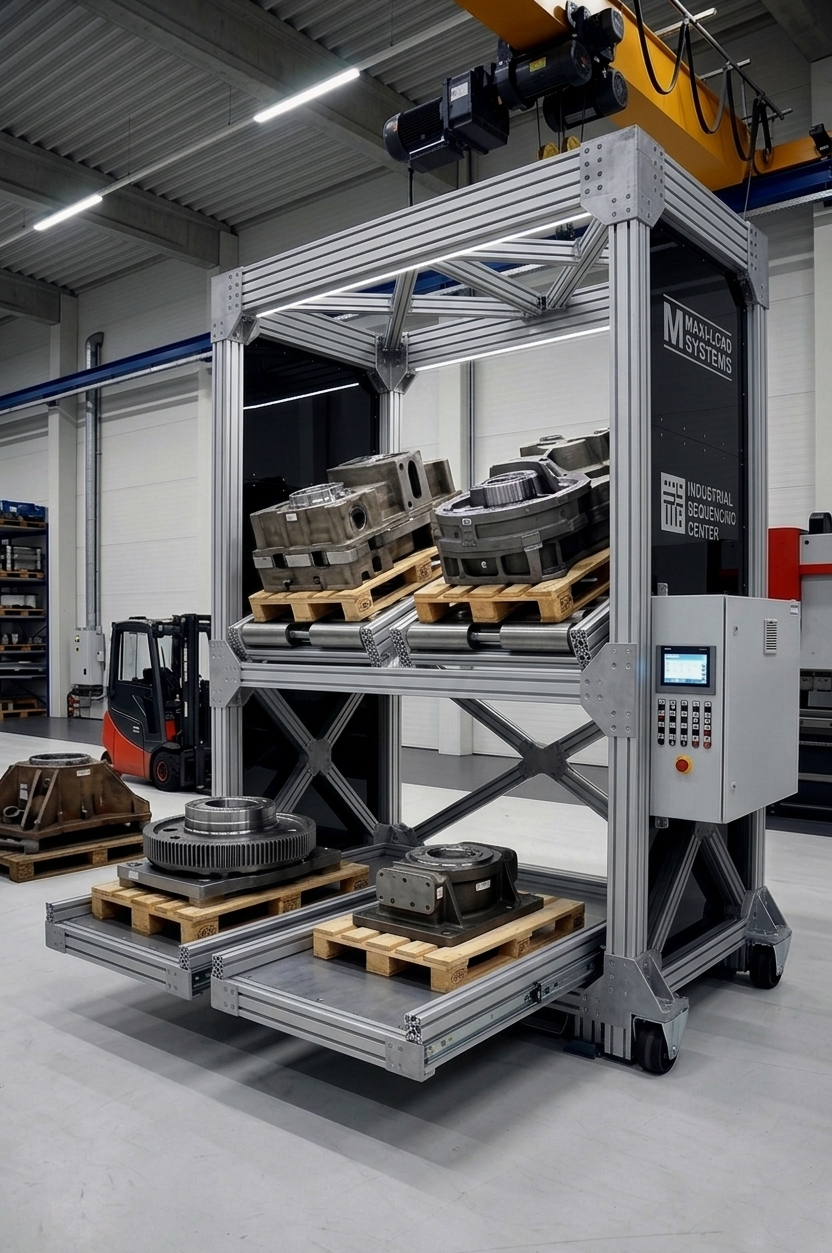
Why Choose Modular Solutions Pallet Flow Racks

True FIFO Rotation

Rear-load, front-pick lane geometry ensures the oldest pallet is always next to be picked — essential for date-coded product rotation, food distribution, and JIT production sequencing.

Custom Lane Engineering

Lane width, roller pitch, slope, and speed controller placement are calculated for your specific pallet footprint and gross load weight — not approximated from a standard catalog configuration.

Speed Controller on Every Lane

Braked rollers are positioned per lane to cap pallet travel velocity and protect personnel and equipment at the pick face, regardless of pallet weight variation across lanes.

Forklift Access Engineered In

Load and pick aisle dimensions, beam heights, and upright positions are designed around your specific forklift or reach truck envelope — eliminating rack strikes from mis-specified clearances.

High-Density Storage

Pallet flow lanes eliminate the dedicated access aisle that selective racking requires between each row — increasing storage positions per square foot by 30–50% in equivalent footprint.

WMS-Ready Lane Sensing

Pallet presence sensors at the pick face can signal lane-empty status to WMS systems, triggering replenishment workflows without manual inventory walks or lane scanning.

System Specifications

Lane Width

Custom to pallet footprint; typical 42–52 in. for GMA pallets; EUR/ISO lane widths also standard

Lane Depth

2-deep to 8-deep standard; custom depths available based on floor plan and replenishment cycle

Roller Diameter

60mm minimum steel tube rollers; heavy-duty grades up to 90mm for loads above 2,000 lbs per pallet

Slope

3–4% standard; adjusted per pallet weight; speed controllers mandatory at slopes ≥3%

Load Rating

Up to 2,500 lbs per pallet position standard; engineered ratings to 5,000+ lbs available

Tier Height

Single-tier to four-tier configurations; floor-level pick or elevated pick face options available

Lane Count

Single-bay to full warehouse row configurations; multiple SKU lanes per bay available

Frame Material

Hot-rolled steel uprights and formed steel beam rails; powder coated or paint finish standard

Pallet Stop

Positive pallet stop at pick face retains front pallet until forklift engages and lifts

Applications

Warehouse FIFO Storage

Date-coded product rotation for food, beverage, and consumer goods distribution.

Manufacturing Line Supply

JIT pallet replenishment to production lines with continuous FIFO sequencing.

Distribution Center Staging

High-density order staging and accumulation before shipping dock loading.

Cold Storage Facilities

Stainless roller options and corrosion-resistant hardware for refrigerated environments.

Pharmaceutical Warehouses

FEFO (first expired, first out) pallet rotation for date-sensitive medical product.

Automotive Parts Supply

Lane-by-SKU pallet flow for sequenced assembly line parts delivery.

Retail Distribution

High-volume cross-dock staging with fast lane replenishment and pick face presentation.

E-Commerce Fulfillment

Dense storage of uniform product pallets with clear pick face visibility for rapid replenishment.

Frequently Asked Questions

What pallet sizes do your pallet flow rack lanes accommodate?

Standard lane widths are designed for 48x40 inch GMA pallets, 48x48 inch pallets, and EUR/ISO 1200x800mm and 1200x1000mm pallets. Custom lane widths are available for non-standard pallet footprints. Each lane is designed with 50–75mm of clearance per side to allow easy forklift entry and release without binding.

How deep can a pallet flow rack lane be?

Pallet flow rack lane depth typically ranges from 2-deep to 8-deep depending on available floor space and inventory requirements. Deeper lanes increase storage density but also increase the time a pallet spends in the lane before it reaches the pick face. Lane depth is balanced against replenishment frequency to ensure the pick face is rarely empty.

What slope is used for pallet flow lanes?

Standard pallet flow lanes are designed at 3–4% slope. Heavier pallets (over 1,000 lbs) may need less slope as their own weight overcomes rolling resistance. Speed controllers are specified per lane to cap pallet velocity at the pick face, typically targeting 0.3–0.5 m/s maximum approach speed.

Can pallet flow racks be installed in existing racking structures?

Yes. Pallet flow track can be retrofit into compatible selective or drive-in rack bays if the beam height and bay depth are adequate. Our engineers will assess the existing rack structure and confirm compatibility before designing the flow track insert. New upright and beam structures can also be specified as part of a complete system.

What maintenance is required for pallet flow racks?

Standard maintenance includes quarterly inspection of rollers for wear, damage, or seized bearings; annual lubrication of speed controller mechanisms; and inspection of pallet stops and guide rails for deformation from forklift impacts. Our flow rack hardware uses industry-standard roller sizes and bearing types, meaning replacement parts are available from multiple suppliers without proprietary ordering.

Ready to Add Pallet Flow Racks?

Tell us your pallet size, load weight, lane count, and floor plan — our engineers will design and quote a system built to your exact specification.

Request a Quote