Heavy-load gravity flow systems engineered for full pallets, large industrial skids, bulk containers, and oversized components — delivering FIFO material flow at extreme load capacities for manufacturing, distribution, and automotive operations. Custom-engineered in Auburn Hills, MI.
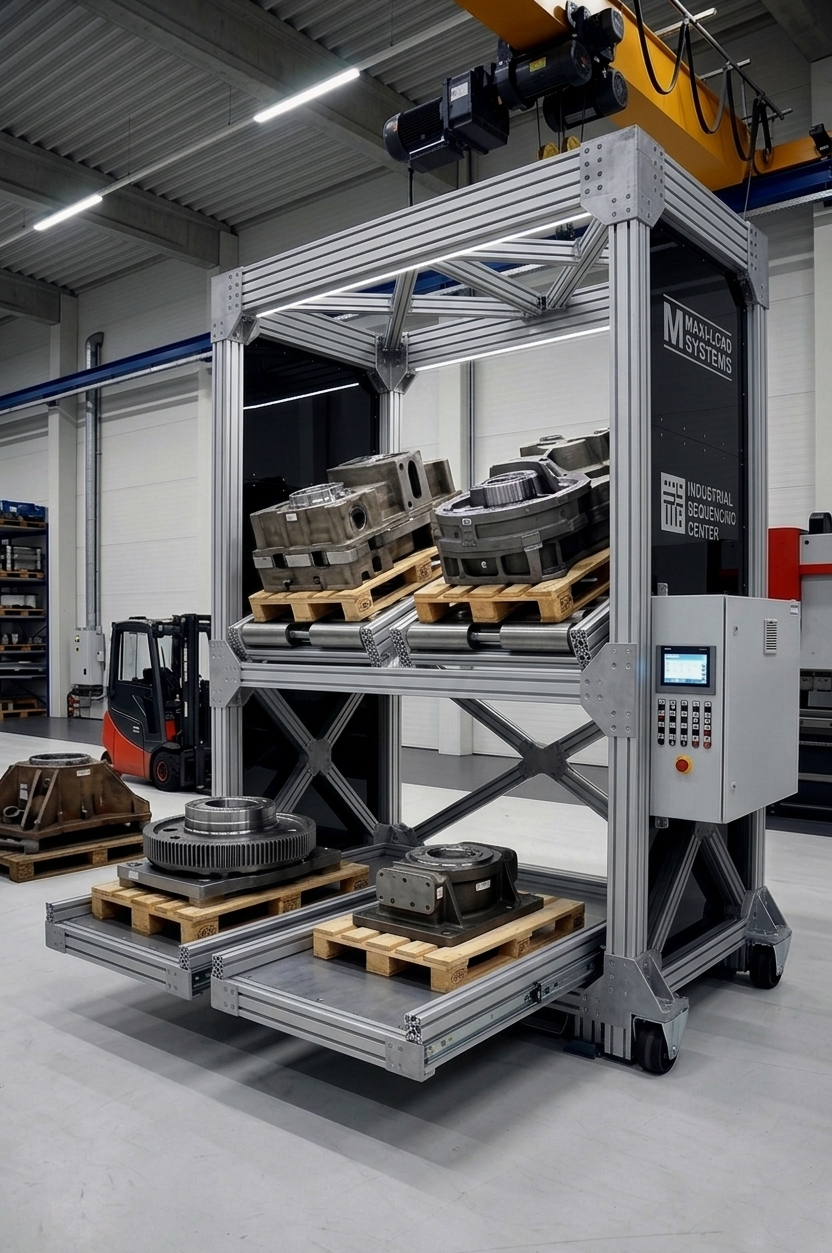
Ten heavy-load gravity flow rack configurations — select a category to explore specifications, features, and applications for your pallet size, load weight, and process requirements.
FIFO gravity-fed pallet storage lanes for warehouses and distribution centers.
Reinforced structural systems rated for extreme loads and continuous industrial use.
Precision roller rail tracks engineered for standard and custom pallet dimensions.
Gravity flow systems for production skids in automotive and assembly plant environments.
Heavy-gauge lanes for engine blocks, cylinder heads, and powertrain assemblies.
Large-format flow lanes for bumpers, fascias, body panels, and chassis components.
Drum, IBC, and bulk container gravity flow and staging systems.
Gaylord box and large returnable container gravity flow lanes.
Heavy steel tote and industrial container gravity flow systems.
Extra-heavy-duty structural frames for maximum load capacity applications.
Lane width, roller pitch, slope, and structural framing are calculated from your exact pallet dimensions and load weight — not defaulted to a catalog standard that may not match your operation.
Speed-limiting rollers and pallet brakes are specified per lane based on slope and load — preventing runaway pallet acceleration and protecting personnel and equipment at the pick face.
Rear-load, front-pick lane geometry ensures the oldest pallet or container is always the next one picked — critical for date-coded product rotation, FEFO pharmaceutical, and JIT production sequences.
Load aisle and pick aisle clearances, beam heights, and upright positions are designed around your specific forklift or reach truck envelope — eliminating rack strikes from incorrect clearance assumptions.
Pallet presence sensors, RFID readers, and barcode scan positions can be integrated at load and pick faces to provide real-time lane status to WMS and ERP systems without manual inventory counting.
Every system is designed, engineered, and built in Auburn Hills, MI — with lead times and support that reflect domestic manufacturing, not overseas sourcing with extended delivery and support delays.
Heavy-duty pallet flow rack lanes are rated by the total lane load, which is the number of pallets in the lane multiplied by the load per pallet. Standard heavy-duty roller track lanes are typically rated at 500kg to 1000kg per pallet position, with lanes holding two to five pallet depths. The frame and roller track specification is selected to handle the maximum lane load with a safety factor of at least 2:1. Modular Solutions confirms the lane load rating in writing as part of the project documentation.
Pallet flow lanes use heavy-duty steel tube rollers (minimum 60mm diameter) on a formed steel rail. The roller pitch (center-to-center spacing) is set so that a standard 1200mm x 1000mm or 1200mm x 800mm pallet is always supported by at least three rollers simultaneously. Speed controllers (braked rollers or speed-limiting devices) are added to each lane to limit pallet velocity on steep inclines and protect personnel and racking at the pick face.
Pallets are loaded at the rear of the rack using a forklift or reach truck, which drives into the load aisle and places the pallet on the rear end of the lane. The pallet then gravity-feeds forward. The pick face is in a separate aisle where a different forklift removes pallets from the front. The two aisles are never shared by loading and picking forklifts simultaneously, eliminating forklift-on-forklift collision risk. Pallet stops at the pick face retain the front pallet until a forklift engages it for removal.
Pallet flow lanes are typically set at 3 to 5 percent slope (approximately 1.7 to 2.9 degrees) depending on pallet weight and roller type. Heavier pallets require less slope because their weight overcomes roller rolling resistance more easily. Speed controllers are mandatory for slopes above 3 percent to prevent pallets from accelerating to unsafe speeds. Modular Solutions calculates the required slope and specifies speed controller positions as part of the rack design.
Yes. Pallet presence sensors (photoelectric or weight-based) can be installed at the pick face to signal the WMS when a lane is empty and replenishment is required. RFID readers can be mounted at the load or pick face to record pallet ID and lot number automatically. Barcode scanner mounts are available on the front frame rail for manual or automatic scan-on-pick operations. All sensor and reader mounting hardware attaches to the rack frame without welding.
Tell us your pallet size, load weight, lane count, and facility constraints — our engineers will design and quote a system built to your exact specification.