Lean Supermarket Racks

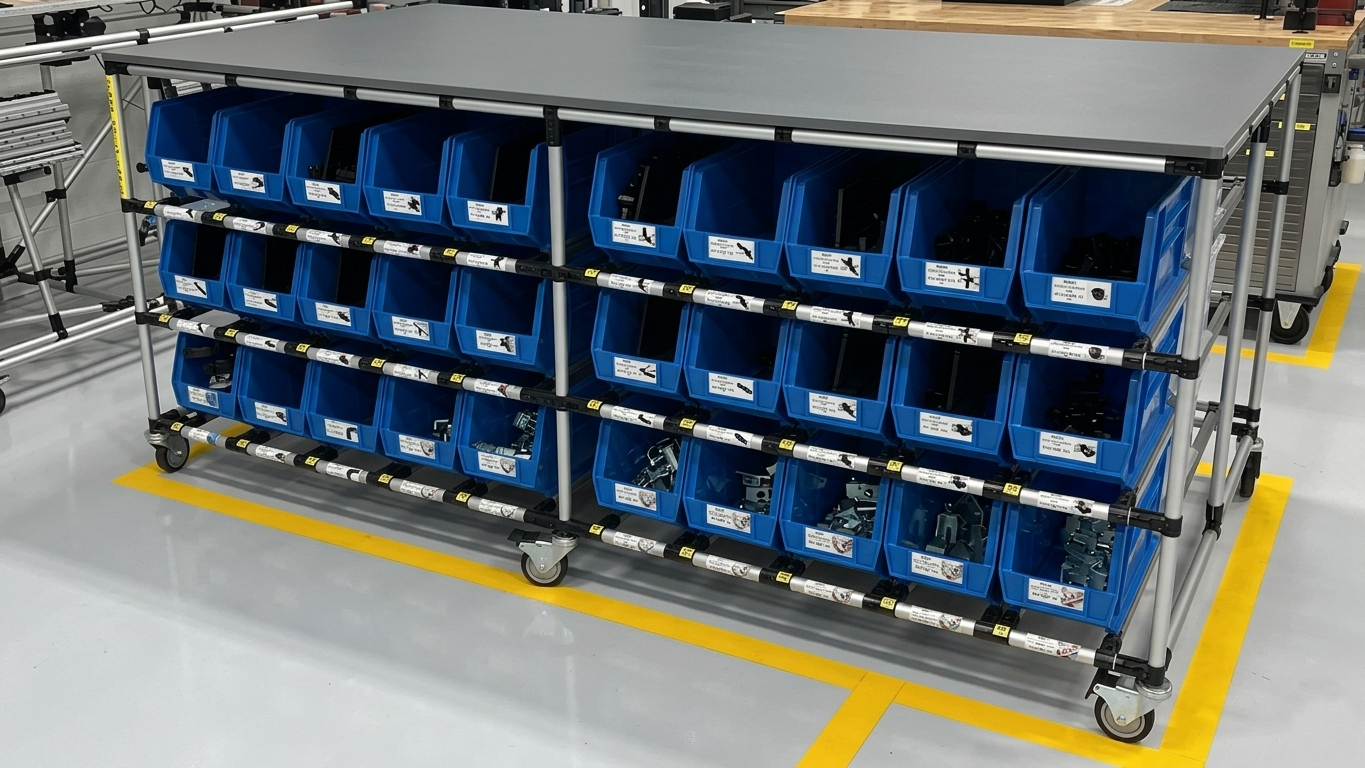
Fixed gravity flow rack structures for lean supermarket zones — designed to hold a defined maximum inventory per part number, enforce FIFO rotation, and make the replenishment trigger visible without any system query or operator counting.
Why Choose Lean Supermarket Racks

A lean supermarket rack is the physical backbone of any pull-based material flow system — it enforces inventory limits, presents parts at the pick face, and signals replenishment without overhead.

Defined Inventory Cap per Lane

Lane depth is set to hold exactly the kanban quantity for each part number — no more, no less. The rack physically prevents excess inventory accumulation even without system enforcement.

FIFO Without Operator Discipline

Rear-load, front-pick geometry makes FIFO the only possible pick sequence. The oldest container always slides to the front — date-coded parts rotate correctly without any rack-face management.

Empty Lane = Replenishment Signal

When a lane empties, the open space is the replenishment signal. No card to route, no system entry, no scanner required — the milk-run driver loads the empty lane on the next scheduled cycle.

Zone Layout for Multiple Cells

Color-coded lane tags and zone dividers organize the supermarket by production cell or product family. Milk-run drivers pick only their zone lanes, reducing delivery time and eliminating cross-zone errors.

High-Density Lane Configuration

Three-tier frames with adjustable lane widths pack eight to twenty-four part numbers into a single rack bay. Multiple bays combine to form a complete supermarket zone without wasted floor space.

T-Slot Accessory Integration

Kanban card holders, label holders, and signal flag mounts clip into the T-slot frame without drilling — the rack is fully configured for visual pull management on delivery day.

Specifications

Frame Profile

45mm or 90mm aluminum T-slot extrusion

Tier Count

2–5 tiers per bay; independently configurable

Lane Track Types

Roller track, skate wheel rail, or poly-wheel lane

Lane Depth

Sized to kanban quantity; 2–8 containers per lane typical

Lane Pitch

2%–8% adjustable per tier via front leg or bracket

Bay Width

600mm, 900mm, 1200mm, 1500mm standard

Part Numbers per Bay

8–24 lanes per bay depending on container width

Load Capacity

Up to 1000kg total distributed load per bay

Finish

Natural anodized aluminum; color-coded zone tags

Applications

Lean supermarket racks serve every pull-based material flow strategy where controlled inventory, FIFO rotation, and visual replenishment signals are required.

Warehouse Supermarket

Structured inventory buffer between the warehouse and the production floor, replenished by milk run from bulk storage.

Line-Side Supermarket

Point-of-use flow lanes positioned at the assembly workstation, stocked from the warehouse supermarket by milk-run cart.

Multi-Cell Supply Zone

Centrally located supermarket zone serving multiple production cells, with color-coded bays per cell and a shared replenishment aisle.

Cross-Dock Supermarket

Supermarket stocked directly from the receiving dock on a JIT delivery schedule, eliminating bulk storage and pick-to-supermarket handling.

Frequently Asked Questions

What is a lean supermarket rack and where is it positioned in the value stream?

A lean supermarket rack is a fixed gravity flow rack structure positioned between the upstream supplying process (warehouse or production) and the downstream consuming process (assembly line or production cell). It holds a defined maximum inventory quantity per lane and is replenished only when a lane empties, creating a pull signal. The rack physically enforces the inventory cap and ensures FIFO rotation through rear-load, front-pick lane geometry.

How is lane depth determined for a lean supermarket rack?

Lane depth is calculated from the kanban quantity for the part number assigned to that lane. The kanban quantity is determined by the replenishment cycle time, the line consumption rate, and the safety stock policy. Modular Solutions confirms the lane depth calculation with the customer before manufacture and documents it in the rack design specification.

Can one supermarket rack serve multiple production cells?

Yes. A supermarket rack can be zoned by production cell, product family, or delivery route, with each zone serving a different consuming process. Lane labels and color-coded zone tags identify which lanes belong to which cell. Milk-run drivers use the zone color to pick only the lanes for their assigned delivery route.

How are supermarket racks typically arranged in a supermarket zone?

Supermarket racks are arranged in parallel bays with a load aisle at the rear and a pick aisle at the front. The bays are grouped by product family or production cell. Each bay typically has two to four tiers of gravity-feed lanes. Aisle width is designed for the replenishment vehicle (milk-run cart or forklift) and the pick operator simultaneously.

What happens when all lanes in a supermarket rack are empty?

If all lanes are empty simultaneously, it indicates a replenishment failure. The rack can be equipped with lane-empty sensor arrays that signal a shortage alert to a supervisor andon board before the last container is consumed, providing advance warning time to prevent a line stop.

Design Your Lean Supermarket Rack System

Share your part list, container sizes, kanban quantities, and zone layout requirements — we will design a supermarket rack system that supports your pull strategy from day one.

Request a Quote