Purpose-built gravity flow racks for lean supermarket zones, kanban pull-system replenishment, FIFO production buffers, and signal-integrated line-side delivery — the physical infrastructure for every pull-based material flow strategy. Custom-engineered in Auburn Hills, MI.
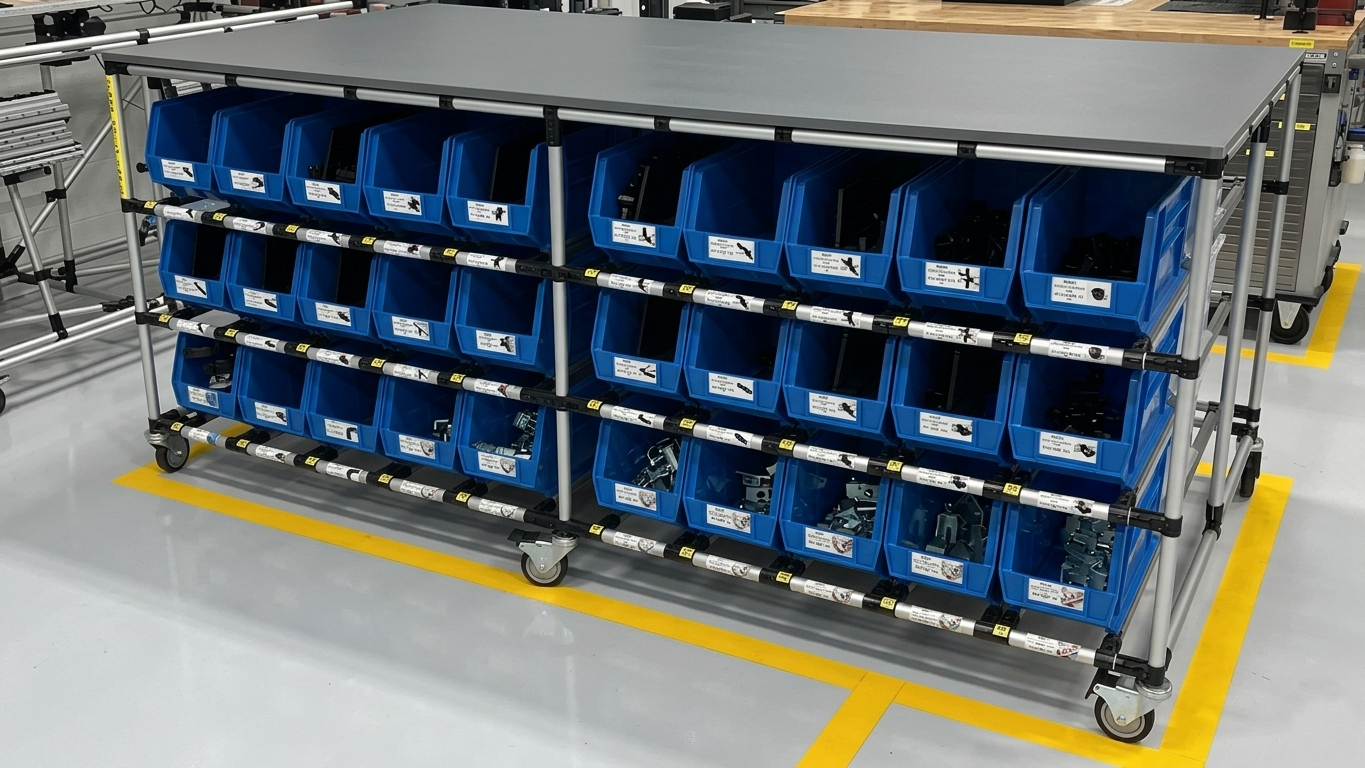
Six pull-system flow rack configurations — select a category to explore specifications, features, and applications for your supermarket, kanban, buffer, or signal-integrated material flow requirements.
Fixed gravity flow rack structures for controlled-inventory lean supermarket zones between warehouse and line.
Flow racks with integrated kanban card holders, signal flags, and two-bin lane configurations for pull replenishment.
Rear-load, front-pick gravity lanes that guarantee first-in, first-out rotation across all supermarket part numbers.
Flow racks with lane-empty sensors, andon lights, and wireless kanban signal integration for electronic pull systems.
Dedicated replenishment zone structures with load and pick aisles designed for milk-run and scheduled delivery cycles.
Inter-operation WIP buffer racks sized to defined container quantities for controlled production pacing.
Every kanban and supermarket pull system requires physical racks that present parts at the pick face, signal when replenishment is needed, and enforce the lane depth that defines the kanban quantity. Our racks are built to support the pull logic, not just store parts.
Lane depth is calculated from your kanban container quantity and replenishment cycle time — the rack physically enforces the WIP cap so the production system cannot accumulate excess inventory even if the replenishment signal is ignored.
Rear-load, front-pick gravity lanes ensure every part number in the supermarket rotates in FIFO order without operator discipline or system enforcement — the rack geometry makes FIFO the only possible pick sequence.
Kanban card holders, color-coded lane tags, flag signal mounts, and andon light brackets are standard T-slot accessories — the rack arrives configured for visual pull management at the hardware level, not as an afterthought.
Lane-empty sensors, RFID antenna mounts, and barcode scanner brackets integrate into the T-slot frame without welding. Connect to any WMS, ERP, or andon system to automate the replenishment signal trigger without manual card routing.
Every system is designed, engineered, and built domestically — with lead times and support that reflect local manufacturing. No overseas sourcing delays, no long-distance support calls when you need a design adjustment after installation.
A lean supermarket is a controlled inventory buffer between a supplying process and a consuming process. It is stocked to a defined maximum quantity per part number and replenished by a pull signal (kanban card, empty lane, or electronic trigger) only when inventory is consumed. The supermarket rack is the physical structure that holds and presents the parts — gravity-fed lanes ensure FIFO rotation and make the empty lane visible without any counting or system query.
A kanban rack is a flow rack configured specifically for pull-system replenishment. It includes kanban card holders at each lane, visual signal devices (flag, light, or electronic sensor), and lane depth sized to hold a defined number of kanban containers. The physical rack is identical to a standard flow rack — the kanban function is added through accessories and lane sizing, not through a different frame structure.
A supermarket rack sits between the warehouse and the production line and is replenished on a scheduled milk run or pull signal. A production buffer rack sits between two operations within the production line and holds WIP containers at a defined level to absorb cycle time variation between upstream and downstream processes. Both use gravity-fed lanes for FIFO, but they serve different points in the value stream.
A standard three-tier supermarket rack with a 1200mm working width holds eight to twenty-four lanes depending on container width. Each lane is assigned one part number, so the rack can manage eight to twenty-four part numbers. Larger supermarkets combine multiple rack bays in a defined supermarket zone, with each bay dedicated to a product family or production cell supply group.
Yes. Lane-empty sensors, RFID readers, and barcode scanner mounts can be integrated at the pull point of each lane. When a lane empties, the sensor triggers a replenishment signal to the WMS or ERP without operator input. Modular Solutions supplies the mounting hardware and sensor brackets; the customer connects the sensors to their existing control infrastructure.
Tell us your part list, container sizes, kanban quantities, and pull signal requirements — our engineers will design a system that supports your pull strategy from day one.