Signal-Integrated Flow Racks

Flow racks with lane-empty photoelectric sensors, andon light towers, and wireless kanban signal integration — automating the replenishment trigger from the rack lane to the WMS, ERP, or warehouse andon board without operator intervention.
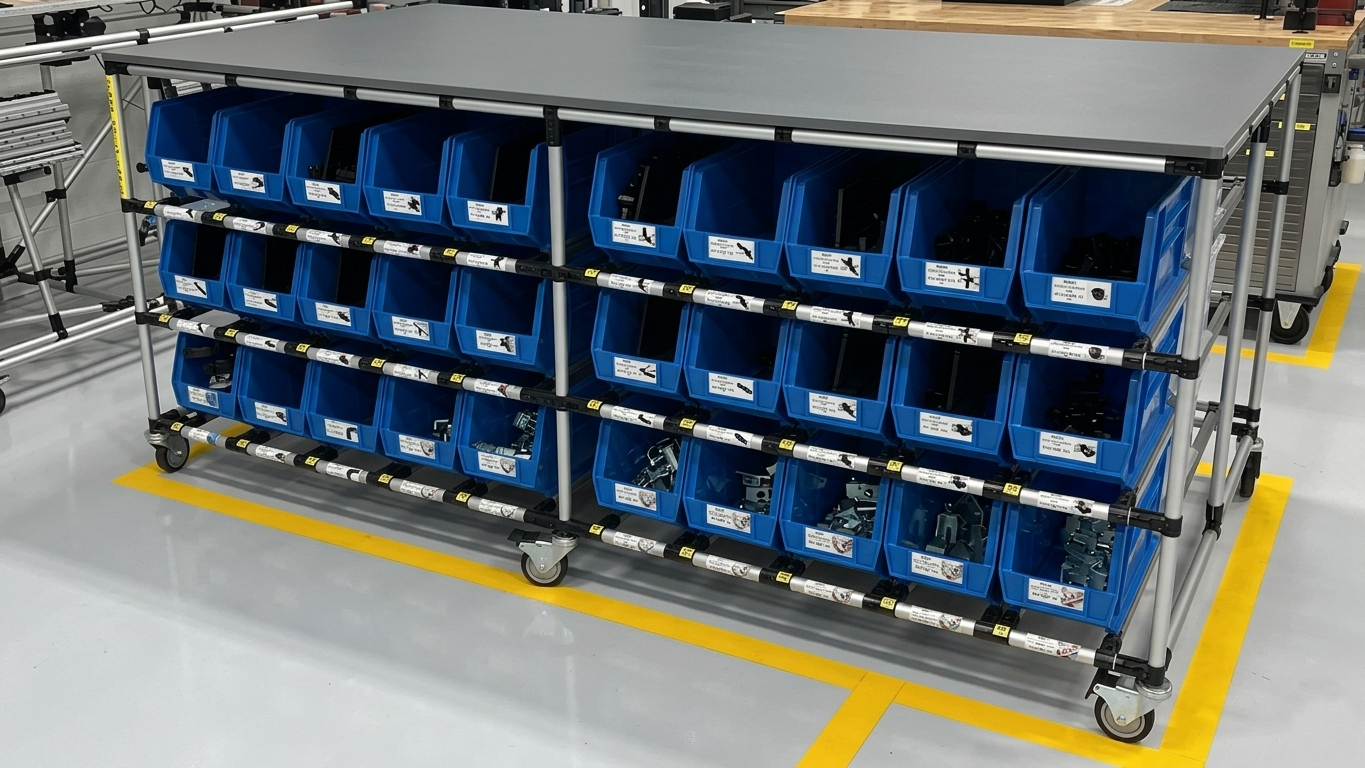
Why Choose Signal-Integrated Flow Racks

Electronic signal integration eliminates the manual kanban card routing cycle, reduces replenishment lead time, and provides real-time supermarket inventory visibility in the WMS.

Lane-Empty Photoelectric Sensors

Diffuse or through-beam photoelectric sensors detect the last container leaving the lane and immediately trigger the replenishment signal. Response time is under 50ms — the WMS receives the replenishment order before the operator has moved to the next pick.

Andon Light Towers

Red/yellow/green andon light towers mount on the rack upright and are visible from across the replenishment aisle. Red indicates lane empty, yellow indicates low stock alert, green confirms replenishment complete. No WMS terminal required to read replenishment status.

Wireless Kanban Transmitters

Industrial wireless transmitters send the lane-empty signal to a receiver at the warehouse supermarket picking station or to the WMS gateway, enabling hands-free replenishment order generation without a human observer in the replenishment aisle.

WMS and ERP Integration

Sensor outputs connect to the WMS or ERP through a field controller via Modbus, OPC-UA, MQTT, or REST API. Modular Solutions provides the field wiring and controller mounting on the rack frame; the customer's IT team connects at the protocol gateway.

RFID and Barcode Ready

RFID antenna brackets and barcode scanner mounts integrate into the T-slot lane front rail for container-level traceability at the pick point. Scan-on-pick workflows confirm FIFO compliance and update lot tracking records without manual entry.

Retrofit Compatible

All signal integration hardware is T-slot clip-on accessory format — sensors, conduit clips, andon mounts, and wireless brackets retrofit to any existing aluminum T-slot flow rack without frame modification or downtime.

Specifications

Sensor Type

Diffuse photoelectric, through-beam, or load cell

Sensor Output

NPN/PNP discrete; 4–20mA analog (load cell); IO-Link

Andon Tower

3-color LED tower; 24VDC; IP54; T-slot upright mount

Wireless Protocol

900MHz or 2.4GHz industrial wireless; range up to 300m

Controller Interface

Modbus RTU/TCP, OPC-UA, MQTT, REST API

Power Supply

24VDC, 2A per rack bay (sensors + andon)

RFID Option

UHF 860–960MHz antenna bracket; clip-on lane rail

Barcode Option

1D/2D scanner mount; T-slot clip-on; wired or USB

Mounting

All hardware T-slot clip-on; no drilling; retrofit compatible

Applications

Signal-integrated flow racks eliminate manual kanban card routing and close the replenishment loop automatically in any pull-based production system.

Electronic Kanban Systems

Replace paper kanban card routing with automatic lane-empty signals that trigger electronic replenishment orders in the WMS without operator action.

Real-Time Supermarket Visibility

WMS dashboard shows lane-empty status across all supermarket bays in real time — supervisors see replenishment queue depth without walking the supermarket floor.

Shortage Prevention

Low-stock alerts at two-thirds empty trigger early replenishment orders, providing buffer time to prevent lane-out shortages during high-demand production periods.

Lot Traceability at Pick

RFID or barcode scan-on-pick records which lot number was consumed at each pick event, providing complete container-level lot traceability without manual data entry.

Frequently Asked Questions

How do lane-empty sensors work on a flow rack?

A lane-empty sensor is a photoelectric sensor mounted at the front of the lane rail. When the last container in the lane is removed, the sensor beam is no longer interrupted and triggers a signal output. The output can drive a local andon light tower, a wireless transmitter, or a direct wired connection to a controller or WMS gateway. Modular Solutions supplies the sensor bracket as a T-slot clip-on accessory that installs without drilling.

Can signal-integrated racks connect to our existing WMS or ERP?

Yes. The sensor output connects to the customer's WMS or ERP through a field controller or IoT gateway. Modular Solutions supplies the sensor hardware, mounting brackets, and wiring conduit runs on the rack frame. The customer's IT or automation team connects the controller output to the WMS using their standard integration protocol.

What is the difference between an andon light and a wireless kanban transmitter?

An andon light tower is a visual indicator mounted on the rack frame that illuminates red when a lane empties and resets to green when the lane is replenished. A wireless kanban transmitter sends an electronic signal to a receiver at the warehouse supermarket or to the WMS, enabling automated replenishment order generation without a human observer needing to see the andon light.

Can electronic signals be added to an existing flow rack?

Yes. Sensor brackets, conduit clips, andon mounts, and wireless transmitter brackets are all T-slot accessories that retrofit to any existing aluminum T-slot flow rack without modification to the frame. Retrofitting an existing rack with electronic signals typically takes one to two hours per rack bay.

What sensor types are available for lane detection?

Diffuse photoelectric sensors, through-beam photoelectric sensors, and weight-based load cells are all available as lane detection options. For RFID-tagged containers, RFID antenna brackets mount to the lane front rail. Barcode scanner mounts are available for QR and 1D scan-on-pick workflows.

Integrate Electronic Signals into Your Flow Rack System

Tell us your WMS platform, signal protocol requirements, and lane count — we will specify the sensor and integration hardware for your pull system.

Request a Quote