Dedicated replenishment zone flow rack structures with dual-aisle load and pick design — engineered for milk-run and scheduled delivery cycles with separate load and pick aisles that keep replenishment traffic and production traffic from conflicting.
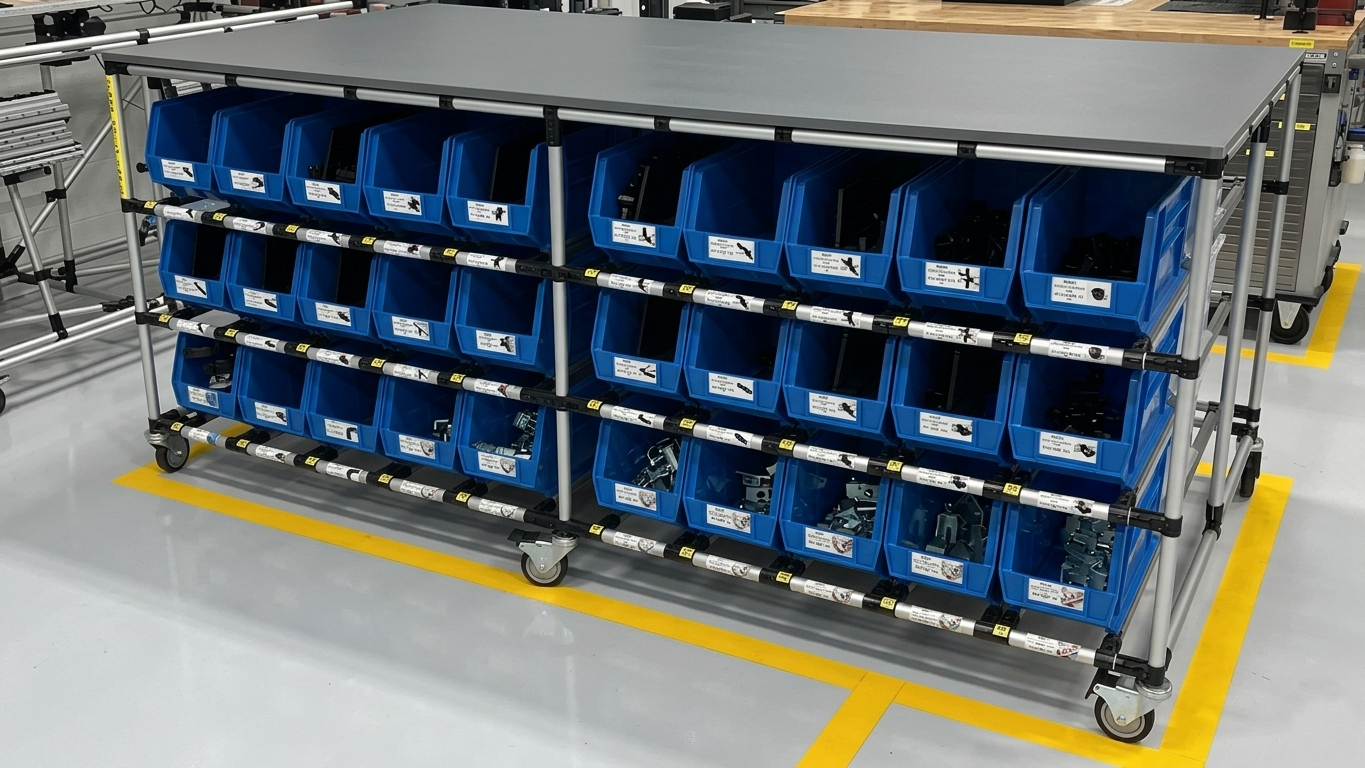
A well-designed replenishment zone separates material flow from production flow — the rack structure is the physical enabler of that separation.
Separate rear load aisle and front pick aisle prevent milk-run delivery traffic from intersecting production pick traffic. The two aisle functions never compete for the same space, reducing replenishment cycle time and eliminating aisle conflict safety incidents.
Each production cell is assigned a dedicated bay group with color-coded zone headers. Milk-run drivers load only their assigned zone bays; line-side operators pick only from their cell's lanes. Zone boundaries prevent cross-zone loading errors.
Bay sequencing is designed to minimize milk-run cart travel distance. The load aisle runs the full length of the rack zone so the cart enters once and services all bays on a single forward pass without reversing or repositioning.
Small containers at upper tiers (shoulder to waist height), large containers at lower tiers (waist to knee height). Tier heights are set during design based on the container mix and operator posture requirements for the pick frequency in that zone.
Load aisle width is sized to the replenishment vehicle — milk-run cart, tugger train, or counterbalance forklift. All lane rear openings are accessible from the load aisle without vehicle repositioning, maintaining the milk-run cycle time target.
Additional bays bolt onto the existing end frames to expand the replenishment zone as the production cell count grows. Zone expansion does not require dismantling existing bays or interrupting production during the addition.
45mm or 90mm aluminum T-slot extrusion
Rear load aisle + front pick aisle (dual-aisle)
1200mm (cart), 1800mm (tugger), 3000mm (forklift)
900mm minimum; ergonomic reach to all tier levels
2–5 tiers; small containers upper, large containers lower
Roller track, skate wheel, or poly-wheel; per lane
Color-coded zone headers; floor tape zone boundaries
Up to 1000kg total distributed load per bay
Bay additions bolt to existing end frames; no dismantling
Replenishment zone racks are the physical infrastructure for any milk-run or scheduled delivery system that requires separation of replenishment traffic from production floor activity.
Central replenishment zone that all milk-run routes deliver to on a fixed schedule, with each route loading only its assigned zone bays.
Replenishment zone racks positioned at the boundary of the production floor where water spiders pick from the front aisle and deliver to line-side stations without entering the production cell.
Large production floors with multiple cells each requiring their own supply zone — bay-per-cell zoning within one physical rack structure keeps the supply area compact.
Replenishment zone stocked directly from the receiving dock by inbound JIT delivery, eliminating the warehouse picking step for high-velocity part numbers.
A replenishment zone is a physically defined area of the production floor that serves as the interface between the warehouse and the production line. It contains the replenishment zone racks plus the load aisle where milk-run carts unload from the warehouse and the pick aisle where line-side operators or water spiders pick from the rack. A general supermarket is a broader concept; the replenishment zone is the physical space implementation of that concept.
A dual-aisle design positions the load aisle at the rear of the rack bays and the pick aisle at the front. The milk-run cart enters the load aisle and loads containers into the rear of each lane. The line-side operator or water spider accesses the front pick aisle and removes containers from the pick face. The two aisles are never occupied simultaneously by load and pick traffic, eliminating aisle conflicts in high-frequency replenishment zones.
Load aisle width depends on the replenishment vehicle. A milk-run cart requires a minimum 1200mm clear aisle. A tugger train requires 1800mm minimum. A counterbalance forklift requires 3000mm minimum. Modular Solutions designs the rack bay depth and load aisle width together to ensure the specified vehicle can access all lane rear openings from the load aisle without repositioning.
Each production cell is assigned a dedicated bay or zone of bays within the replenishment zone rack structure. Bay boundaries are marked with color-coded zone headers and floor tape. Milk-run routes are designed so each route driver services only the bays for their assigned production cells, eliminating cross-zone loading errors and simplifying route timing.
Yes. Lane width and track type are set independently per lane. Small plastic containers use roller track lanes at upper tiers. Large totes use wider roller rail lanes at lower tiers for easy two-handed loading. Modular Solutions designs the tier and lane layout to match the full container mix for the replenishment zone.
Share your production cell count, container mix, replenishment vehicle, and milk-run schedule — we will design a zone rack system that keeps delivery and production traffic separated.
Request a Quote