Rapid-deploy and permanent fencing systems for safely isolating maintenance, repair, and overhaul work zones from active production. Lockout/tagout (LOTO) hasp provisions integrated into gate latches, portable panel systems deployable in minutes, high-visibility warning colors, and safety sign mounting positions — supporting OSHA 29 CFR 1910.147 energy control program requirements.
Request a Quote
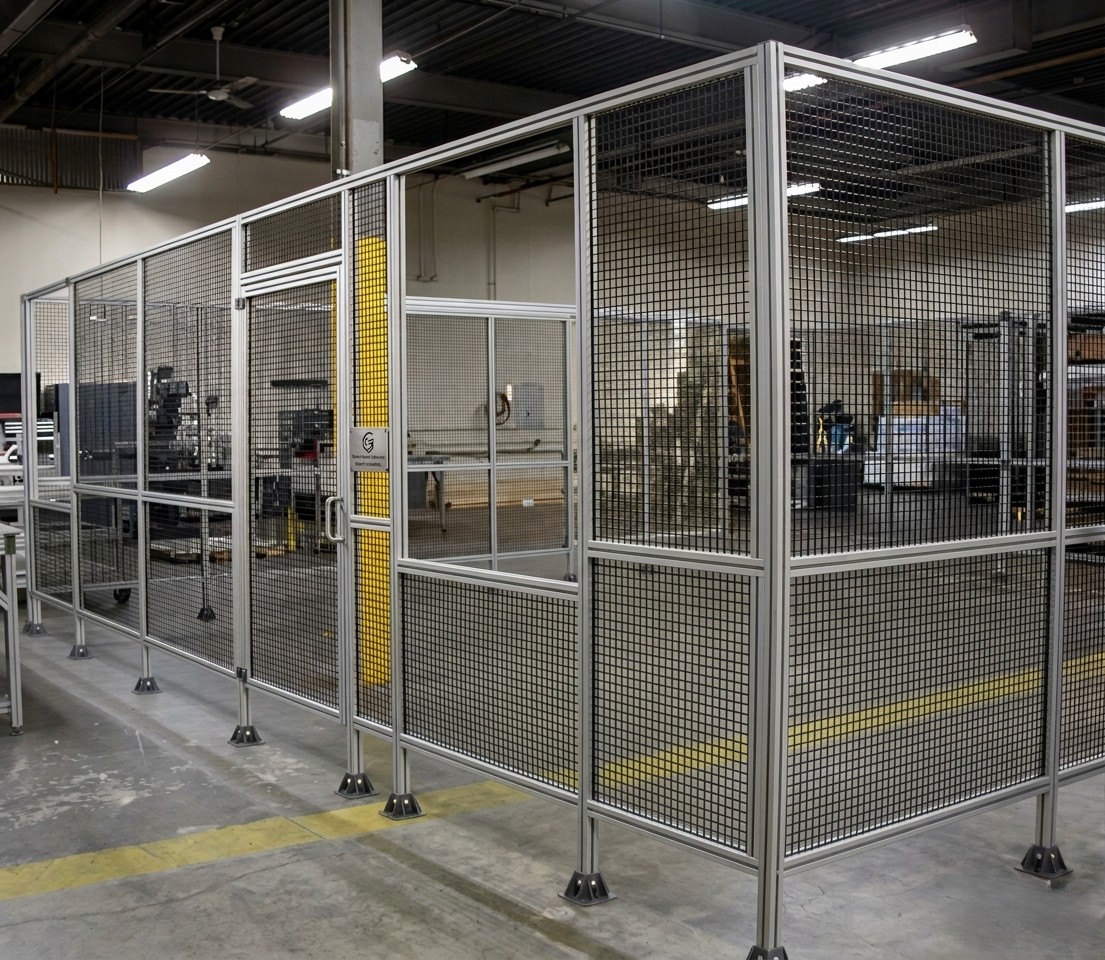
Maintenance work in active facilities requires defined exclusion zones that communicate to all workers — energy isolation alone is not sufficient without physical boundary management.
Gate latch provisions with integrated lockout hasp positions — multiple maintenance technicians apply individual padlocks to the fence gate entry point as part of the group LOTO procedure.
Panel systems stored on carts and deployed without tools in under 5 minutes — creating a compliant isolation perimeter around any equipment or area before maintenance work commences.
Isolation fencing designed to support the physical isolation step of OSHA's Control of Hazardous Energy standard — providing the visible boundary that supplements energy isolation and LOTO devices.
Safety orange, danger red, and caution yellow powder coat and panel color options — clearly communicating active maintenance work hazard to production workers, supervisors, and contractors.
Integrated sign bracket positions on panels and posts for "Danger — Equipment Out of Service," "Authorized Personnel Only," and LOTO procedure reference signs at all fence entry points.
Aluminum extrusion frames and infill panels built for hundreds of deploy-recover cycles — maintenance fencing that is a permanent safety asset, not a consumable.
Maintenance isolation fencing from Modular Solutions provides safety infrastructure for every type of planned and emergency maintenance activity.
Panel storage carts that organize panels vertically by size — allowing a single technician to transport and deploy a full isolation perimeter from a centralized storage location to any area of the facility.
Panel systems in multiple widths allowing perimeter configurations from a single machine to a full production bay — the same panel set creates small and large isolation zones as work scope requires.
Self-supporting panel systems with weighted base plates or interlocking panel connections that create a stable perimeter without concrete drilling — critical for leased facilities and polished concrete floors.
Overhead barrier tape and rope hook positions on panel posts for perimeters requiring coverage at elevated work zones — cranes, mezzanine edges, and overhead conveyor maintenance areas.
Fencing systems meeting OSHA 1926 construction isolation requirements for contractor maintenance work in occupied industrial facilities — supporting your contractor safety management program.
Tag holders and clip positions on panels for maintenance work order, inspection status, and authorization tags — integrating isolation fencing with your maintenance management system documentation.
Maintenance isolation fencing is used across every type of industrial facility wherever planned and corrective maintenance occurs in proximity to active operations.
OSHA 29 CFR 1910.147 (Control of Hazardous Energy, or Lockout/Tagout) requires that energy isolation procedures be in place before maintenance personnel enter a hazardous machine area. Maintenance area fencing supports LOTO compliance by providing a physical boundary that prevents other workers from entering the maintenance zone while lockout is in effect. OSHA 1910.212 (General Machine Guarding) also requires that maintenance zones adjacent to operating equipment be physically separated from production traffic.
Maintenance area fencing can be deployed as temporary or permanent barriers. Temporary deployable barriers (stanchion-and-chain or portable fence panels) are used for short maintenance windows where the fence must be removed at the end of the shift. Permanent fencing with interlocked gates is used for zones that require regular planned maintenance access — the gate interlock ensures the machine is de-energized before the maintenance technician can open the gate and enter the zone.
Yes. Safety gate interlock switches on maintenance zone access gates can be wired into the machine safety circuit so the machine cannot be energized while the gate is open, and the gate cannot be opened (or will trigger a machine stop) while the machine is running. This is an additional layer above the LOTO procedure, not a replacement for it. The interlock safety integrity level (SIL or PLe) is specified based on the hazard severity and frequency of maintenance access.
Maintenance gate width is determined by the largest item of equipment, tooling, or material that must pass through the gate during maintenance activities. Standard minimum gate width for personnel access is 900mm. For gates through which equipment carts, lift tables, or replacement components must pass, 1200mm to 2000mm is typical. Double gates (two leaves) are available for wide openings while maintaining structural rigidity.
A machine guard (per OSHA 1910.212) is a fixed or movable safeguard that prevents contact with a specific moving part or hazard zone during normal machine operation. A maintenance area fence is a larger-scale perimeter barrier that defines a zone within which maintenance activities take place and production traffic is excluded. The two are complementary: the machine guard protects against contact with the specific hazard, while the maintenance fence protects against production activities (forklifts, workers, other machines) intruding into the maintenance zone.
Contact our engineering team for maintenance isolation fencing designed to your facility's maintenance program, LOTO procedures, and compliance requirements.
Request a Custom Quote