Access-controlled perimeter fencing for high-hazard equipment areas, high-voltage electrical zones, chemical storage, and proprietary production areas requiring restriction to authorized personnel only. Card reader mounting provisions, key switch gate systems, double-gate man trap entries, and documented access control integration — ensuring only trained, authorized individuals enter hazardous restricted zones.
Request a Quote
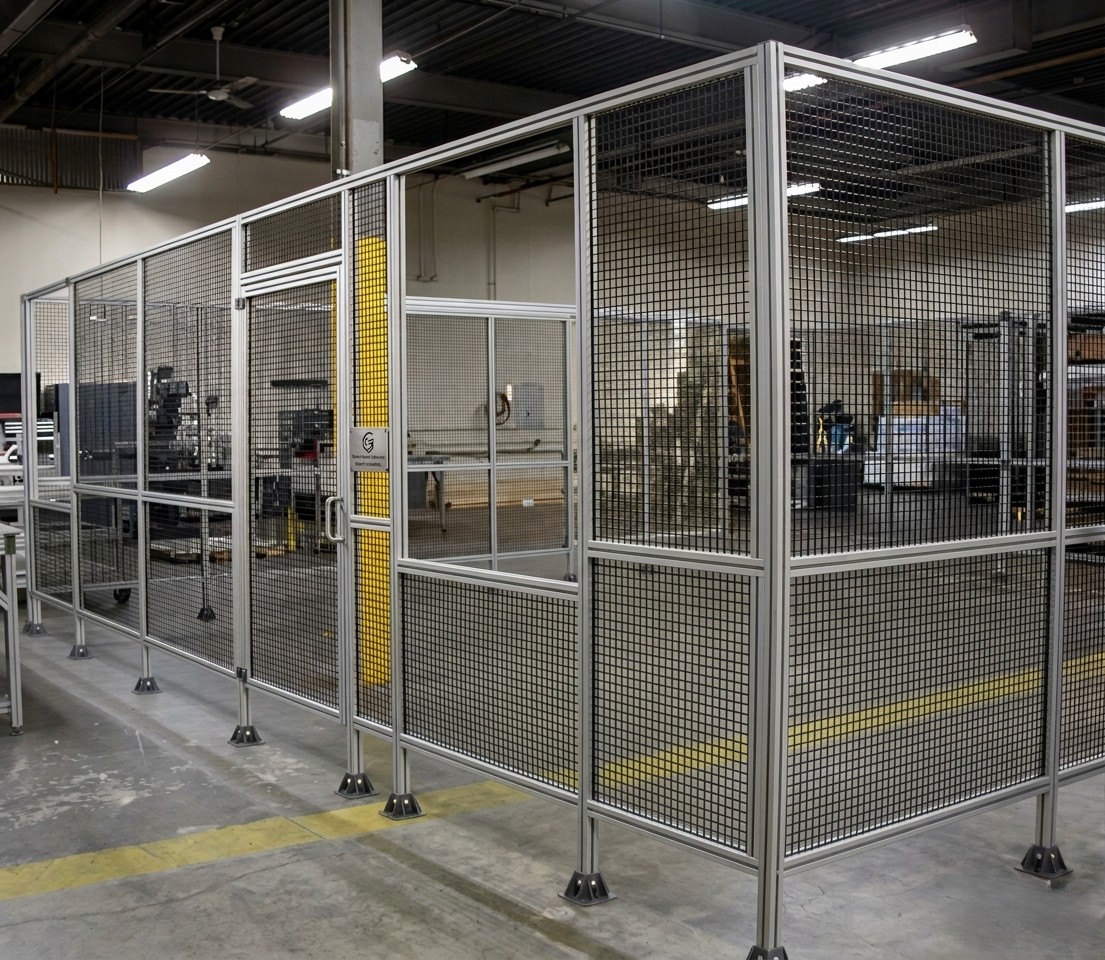
Restricted zone fencing does more than provide a physical barrier — it creates an auditable, controlled access point that supports regulatory compliance and incident liability management.
Gate posts with conduit routing, reader mounting brackets, and wiring provisions for RFID card reader access control systems — integrating fencing with your facility access control infrastructure.
Mechanical key switch gate latches for restricted areas that require simple and reliable access restriction without electronic infrastructure — key control managed through your safety program.
Sequential double-gate entry configurations for highest-security restricted areas — first gate closes and latches before second gate can be opened, preventing tailgating into the restricted zone.
Fencing configurations meeting NFPA 70E arc flash restricted approach boundary physical demarcation, OSHA electrical safety requirements, and NEC working space requirements around electrical equipment.
Welded wire mesh panels with small grid openings (25x50mm) and post top designs that prevent climbing and stepping on fence rails — addressing the bypass risk of standard perimeter fencing.
Electronic gate interlock provisions compatible with access control systems that log entry and exit events — supporting post-incident investigation and regulatory compliance audit documentation.
Restricted access fencing from Modular Solutions combines physical deterrence with access control provisions appropriate for each hazard classification.
Fencing around substations, MCC rooms, switchgear, and transformer areas — meeting NFPA 70E restricted approach requirements with lockable access gates and hazard warning signage.
Restricted perimeter fencing around bulk chemical storage tanks, drum storage, and chemical dispensing stations — limiting access to trained chemical handling personnel with full PPE.
Restricted access fencing for prototype areas, R&D labs, IP-sensitive production areas, and high-value material storage — preventing unauthorized access for both safety and security purposes.
Restricted access fencing for data center floor areas, server cage perimeters, and telecom equipment rooms requiring physical access control beyond standard door lock provisions.
Restricted perimeter fencing for industrial X-ray, gamma exposure, and laser class 4 areas — physical access control integrated with process interlocking to prevent entry during active radiation events.
Access-controlled fencing for areas where facility visitors, contractors, and temporary workers require restriction — while authorized production personnel have keycard or key access.
Restricted access zone fencing is deployed wherever hazard level, proprietary content, or regulatory requirements mandate personnel access control beyond standard safety signage.
Restricted access fencing gates can be fitted with key cylinder locks (keyed entry for low-frequency authorized access), coded electronic keypads, proximity card or fob readers, and biometric readers for high-security zones. For regulatory compliance (e.g., DEA schedules for pharmaceutical facilities), the access control system logs entry and exit timestamps with user identity. Modular Solutions provides the fence and gate hardware; access control electronics are typically supplied by the customer's security integrator and mounted on the T-slot gate frame.
Anti-climb designs include vertical bar spacing no wider than 100mm (too narrow for foot footholds), absence of horizontal rails that could serve as ladder rungs, topping rails that slope outward or are fitted with anti-climb deterrents, and mesh panel sizes too small for finger and toe holds. For extreme security requirements, fence height extends to 2400mm or above, and panel infills are changed to small-mesh welded wire that provides no grip.
Regulated industries (pharmaceutical, aerospace, defense, nuclear) typically require that restricted access zones be documented in a facility security plan or access control policy. The physical fencing is documented with engineering drawings, material specifications, and installation records. For FDA-regulated environments, the restricted access zone boundary is referenced in the site master file or facility diagram. Modular Solutions provides as-built drawings and a component BOM to support these documentation requirements.
Yes. Polycarbonate or tempered glass viewing panels can be incorporated into restricted access fence sections to allow authorized observation from outside the zone without granting physical access. The panel infill is selected to provide the required impact resistance while maintaining optical clarity for monitoring production activities. Panels are captured in the T-slot frame and do not create a structural weakness in the fencing.
Modular Solutions restricted access fencing is installed in sections during planned production windows (shift changes, planned downtime) without requiring welding or cutting that generates sparks, heat, or fumes. T-slot section assembly uses standard hand tools. Sections can be pre-assembled off-site and carried into position as complete panels, reducing the installation time in the restricted area itself. The installation sequence is planned to maintain the production area's operation right up until the fence line reaches the active zone.
Contact our engineering team for restricted access zone fencing designed to your hazard classification, access control requirements, and compliance standards.
Request a Custom Quote