High-temperature polycarbonate guards rated to +250°F for injection molding equipment mold protection — OSHA 1910.212 press guarding compliance for automated and semi-automated molding systems. Transparent barriers maintain mold visibility while protecting personnel from hot material contact and part ejection.
Request a Quote
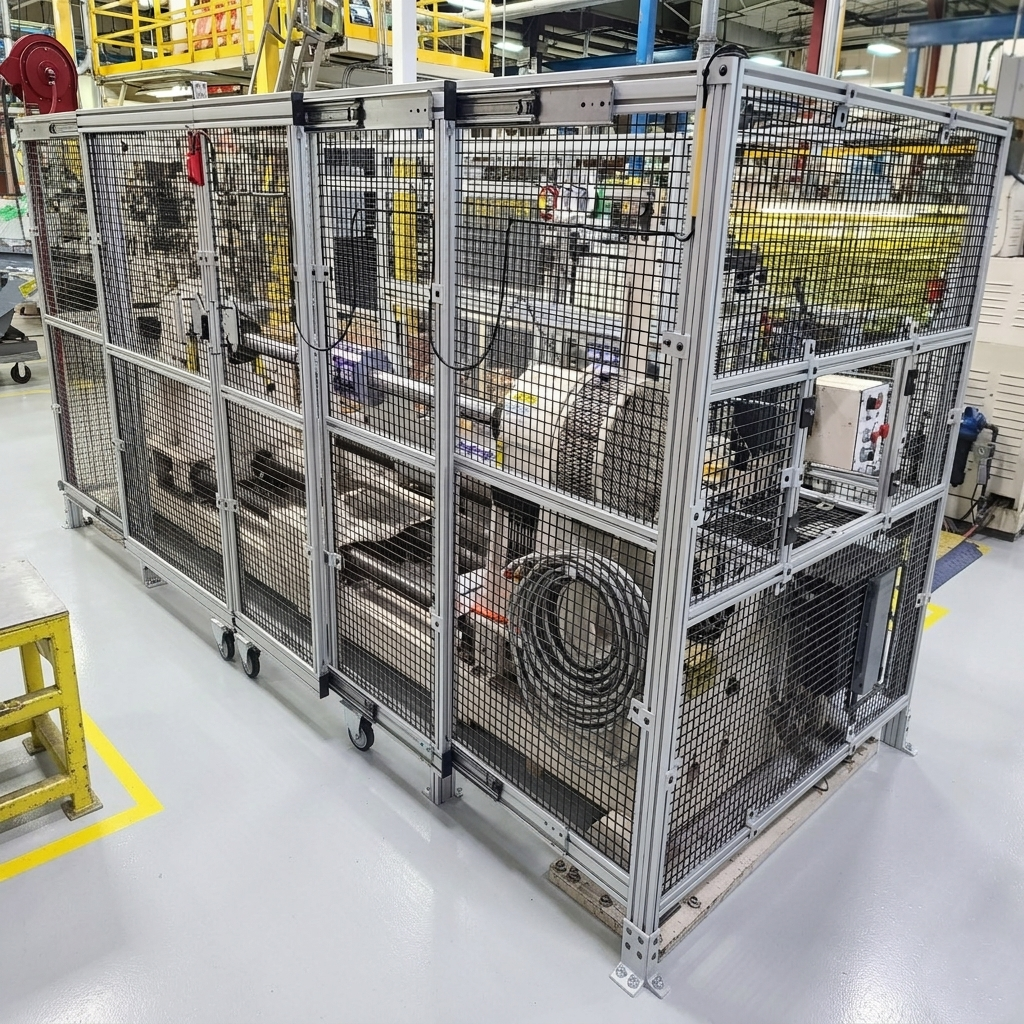
Injection molding machines clamp molds at 250–350°F, creating severe burn hazard on contact. OSHA 1910.212 requires guards preventing accidental operator contact with hot mold surfaces during operation. Heat-resistant polycarbonate maintains transparency for process monitoring while meeting guarding requirements.
Heat-resistant polycarbonate maintains performance during continuous operation with mold temperatures to +250°F. No thermal warping, discoloration, or dimensional change.
Guards prevent accidental operator contact with hot mold during operation — documented compliance for OSHA molding equipment audits and liability protection.
Transparent barriers allow cycle monitoring, part observation, and troubleshooting without removing guards. Operators maintain process control visibility.
Guards protect from hot part ejection, sprue removal hazards, and hydraulic pressure release events common in automated molding systems.
Modular guards install around existing mold clamping areas without equipment modification. Retrofit guards adapt to various machine sizes and footprints.
Hinged or removable panels allow part setup and removal while maintaining heat protection barrier during operation.
OSHA 29 CFR 1910.212 (General Machine Guarding) and 1910.217 (Mechanical Power Presses) establish the guarding requirements that apply to injection molding machines. The primary hazard is the clamping force of the mold (typically 50 to 4000 tons of clamping force) combined with hot mold surfaces (250°F to 350°F). Guards must prevent operator access to the clamping zone during the machine cycle and protect against hot material splash from the injection point during injection and screw purging.
Polycarbonate allows the machine operator to monitor the mold cycle, part ejection, and runner system without opening the guard. This is important for process monitoring (short shots, flashing, runner adhesion) and for detecting tool problems early without stopping the cycle. Steel guards must be opened for the same observations, which exposes the operator to the hazard zone. High-temperature polycarbonate provides the same operator protection as steel while maintaining visual access to the mold area.
Injection mold surface temperatures are typically 150°F to 350°F depending on the material being molded. Standard polycarbonate (UL 94 HB) is rated to 266°F continuous service, which is adequate for most commodity resins (PP, ABS, PE). For engineering resins (nylon, acetal, PEEK) molded at higher temperatures, or for the purge guard in front of the injection nozzle (where purged material at 400°F+ can impact the guard), a higher-temperature polycarbonate grade or polysulfone panel is specified.
Injection molding machines use hydraulic systems at pressures up to 2500 PSI for clamping, injection, and ejection. A hydraulic line failure inside the guard zone creates a high-pressure fluid spray and potential fire hazard. Guards should be designed to contain hydraulic fluid splash within the guard enclosure and should not have gaps in the lower sections that would allow high-pressure fluid to reach personnel standing at the machine. Solid panel sections (not open wire mesh) are specified for the lower 600mm of the guard where hydraulic component exposure is greatest.
Yes. Modular Solutions designs retrofit guard systems that attach to the existing machine frame tie bars or guarding mounting provisions without modifying the machine's structural elements. The guard is designed around the machine's operator access sequence (front guard for part removal, rear guard for mold service, top guard for overhead handling). Retrofit guards for older machines without adequate OEM guarding are common in facilities upgrading equipment to current OSHA compliance.
High-temperature polycarbonate guards for OSHA 1910.212 compliance and operator safety at hot mold surfaces.
Request a Quote