Polycarbonate Guard Systems
Eight transparent barrier solutions engineered for industrial and specialized applications — IK08+ impact-rated guards with 360° operator visibility, food-pharma NSF certification, laser-safe enclosures, and extreme-temperature protection. Compliance-engineered polycarbonate barriers for machinery, robots, lasers, and medical device manufacturing.
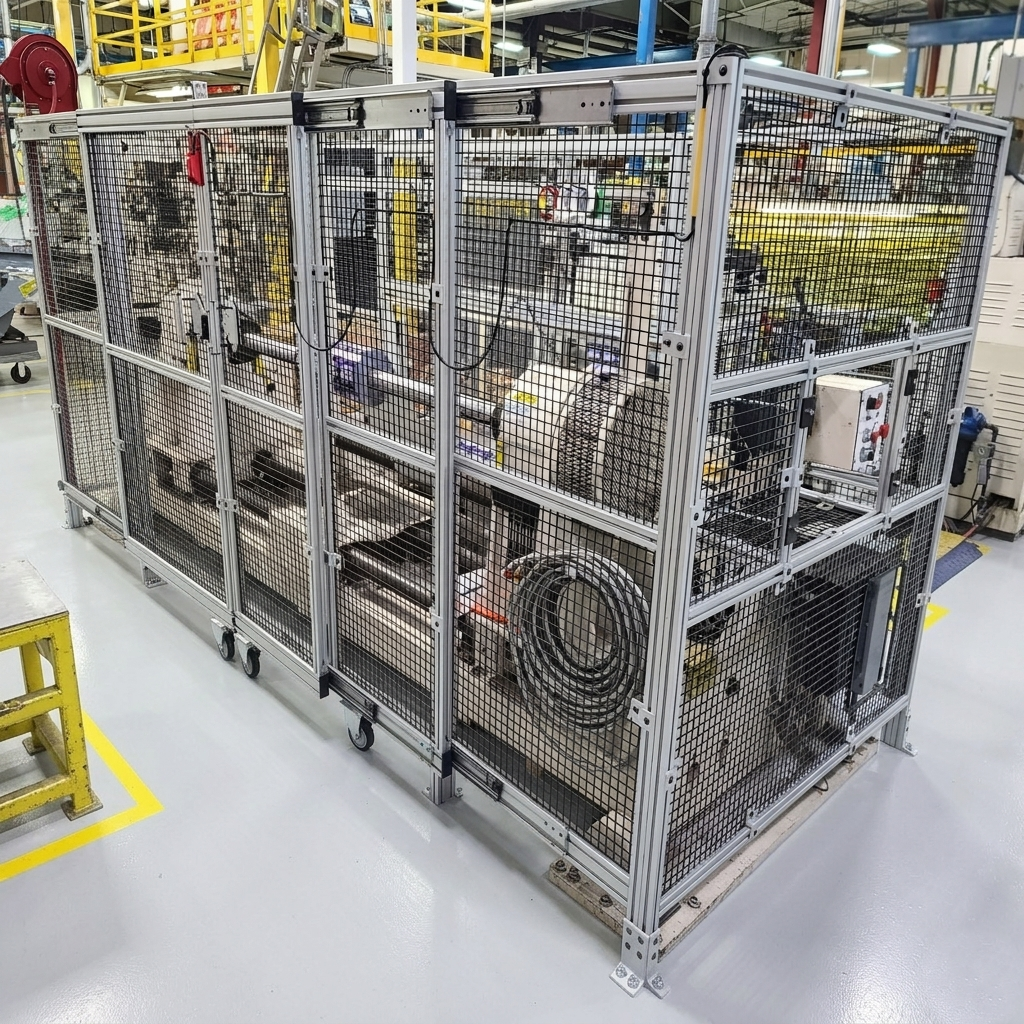
Featured Polycarbonate Guard Categories
Eight specialized barrier systems engineered for specific compliance requirements and operational hazards. Explore each category below to discover the polycarbonate solution for your application.
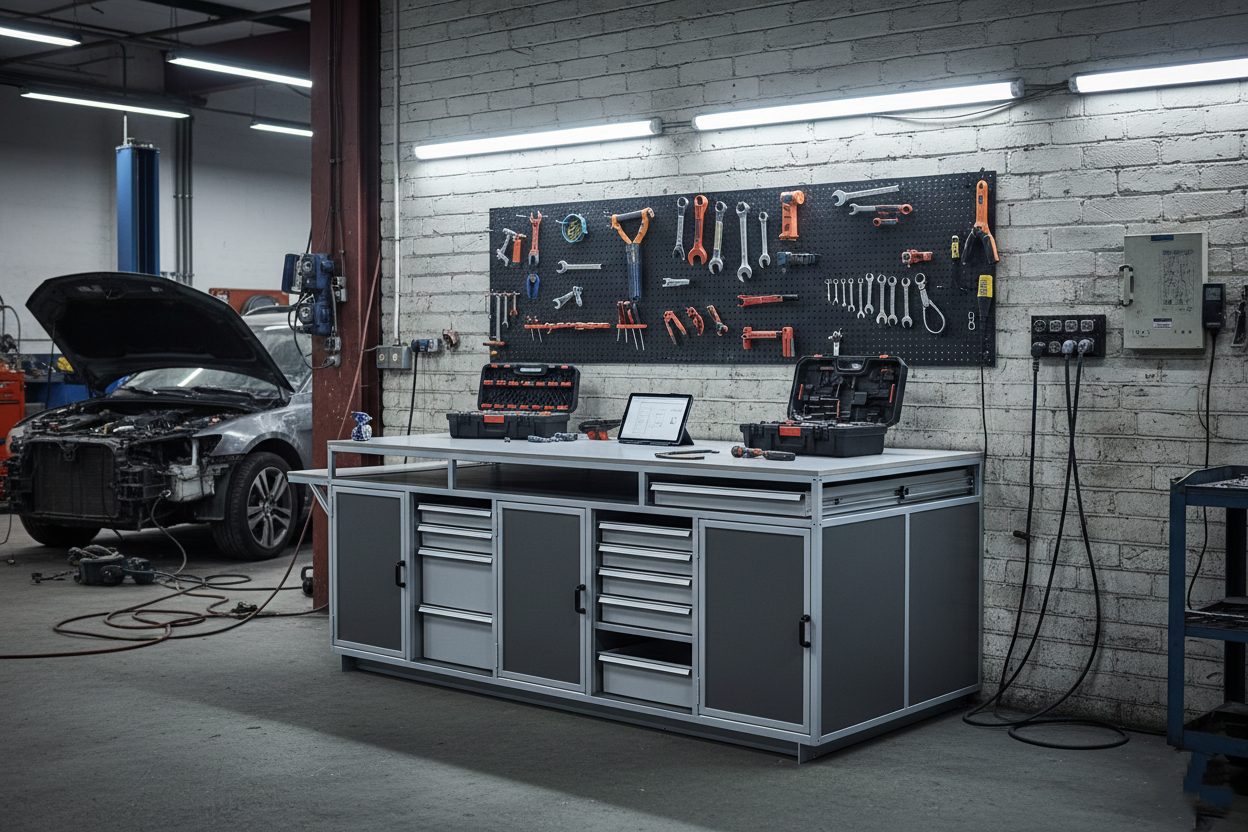
Transparent Robot Cell Guards
ANSI/RIA R15.06 transparent barriers for industrial robots with IK08+ impact rating and 360° operator visibility.
Machine Vision Enclosures
IEC 62262 impact-rated enclosures with >88% optical transmission for camera and sensor performance.
Food & Pharma Production Guards
NSF/ANSI 51 + FDA compliant barriers for GMP manufacturing with CIP washdown and sterilization compatibility.
CNC Machine Visibility Panels
Coolant-resistant polycarbonate protecting CNC spindles from chip ejection and cutting fluid degradation.
Laser Cutter Safety Enclosures
ANSI Z136 optical density-rated barriers for CO2 and fiber cutters with Class 3–4 laser protection.
Injection Molding Mold Area Guards
+250°F heat-resistant polycarbonate for OSHA 1910.212 press guarding at hot mold surfaces.
Collaborative Cobot Safety Guards
ISO/TS 15066 force-limiting barriers for human-robot interaction workspaces with E-stop integration.
Autoclave Viewing Windows
+300°F steam-rated windows for FDA medical device sterilization with 10,000+ cycle durability.
Why Polycarbonate for Industrial Barriers
Glass shatters on impact and creates liability risk. Solid barriers block sightlines and limit operator control. Steel mesh permits edge contact hazards. Transparent polycarbonate barriers deliver impact protection, operator visibility, and compliance—without the downsides of legacy materials.
Impact Resistance without Fragmentation
IK08–IK10 rated polycarbonate absorbs machinery impact without shattering into dangerous shards. Operator safety is maintained even during unexpected collisions or tool ejection events.
Crystal-Clear Operator Visibility
Transparent barriers maintain direct sight lines to machine operations, tool paths, and finished parts. Operators retain full awareness of process status and can respond quickly to anomalies or emergency conditions.
Compliance-Engineered Materials
Every barrier is selected to meet the specific standards for its application: ANSI/RIA for robots, ANSI Z136 for lasers, NSF 51 for food contact, FDA Title 21 for pharmaceuticals. Documentation is provided for your safety audit file.
Extreme-Temperature Capability
Standard polycarbonate handles -20°F to +140°F. Specialized formulations perform reliably in high-temperature environments: +250°F for injection molding mold areas, +300°F for autoclave chambers and thermal cycling equipment.
Specialized Optical Properties
Optical-grade formulations maintain >88% light transmission for camera and sensor ports. Laser-attenuated grades provide specified OD ratings for Class 3–4 laser safety. Anti-spatter formulations protect welding and cutting operations.
Retrofit Integration without Equipment Modification
Custom-fabricated polycarbonate panels integrate into existing guarding frames, robot perimeters, and machine structures. No equipment downtime, no facility modification, no capital equipment replacement required.
Industries & Applications
Polycarbonate barriers protect operations in every sector where equipment hazards need transparent, compliant guarding.
- Automotive & Tier-1 Manufacturing — Robot cell guarding (ANSI/RIA R15.06), CNC machine vision enclosures, press guarding, welding cell barriers, and assembly line process containment.
- Medical Device & Life Sciences — FDA-compliant sterilization chambers, autoclave viewing windows, clean room process barriers, and pharmaceutical production guarding.
- Food & Beverage Processing — NSF/ANSI 51 certified barriers for packaging lines, filling equipment, and mixing operations with hygienic washdown and cleanability requirements.
- Aerospace & Defense Manufacturing — Precision machining enclosures, composite layup and cure chambers, and clean room process barriers meeting AS9100 cleanliness protocols.
- Laser & Specialty Cutting — ANSI Z136-compliant laser cutter barriers, CO2 and fiber laser enclosures, and Class 3–4 optical density-rated protective windows.
- Metal Fabrication & Job Shops — Grinding and deburring dust barriers, laser cutting enclosures, robotic cell perimeters, and welding flash containment for contract manufacturing.
- Electronics & Semiconductor — ESD-safe clean room barriers, soldering equipment guards, and thermal cycling chamber viewing windows.
- Injection Molding & Plastics — High-temperature (+250°F) mold area guarding, hopper guards, and cooling section barriers for OSHA 1910.212 press guarding compliance.
Polycarbonate Specifications & Compliance Options
Polycarbonate barriers must meet strict standards for their specific application. These are the key specification dimensions we engineer to.
Frequently Asked Questions
Common questions about polycarbonate barrier selection and application.
What makes polycarbonate better than acrylic for barriers?
Polycarbonate is 250x stronger than glass and approximately 30x stronger than acrylic by impact resistance. Acrylic is cheaper but brittle and prone to cracking under shock loads, creating liability risk in industrial environments.
How do you specify the right polycarbonate thickness?
Thickness depends on impact velocity, load forces, and heat exposure. Standard 1/4" for moderate impacts; 3/8" for heavy machinery and high-speed impacts; 1/2" for extreme hazards. We conduct impact analysis based on your equipment specifications.
Can polycarbonate handle sterilization or high-temperature service?
Standard grades handle -20°F to +140°F. Specialized formulations (Makrolon®, Lexan®) perform at +250°F for injection molding and +300°F for autoclave chambers. FDA-compliant grades are available for food and pharmaceutical applications.
Is polycarbonate clear enough for precision vision systems?
Yes. Optical-grade polycarbonate maintains >88% light transmission with minimal optical distortion, making it suitable for machine vision enclosures, camera ports, and sensor windows. Standard grades are also highly transparent.
Can polycarbonate barriers be retrofitted to existing equipment?
Yes. Custom-fabricated panels integrate into existing machine guarding frames, robot cell perimeters, and safety systems without equipment modification. We engineer adapters and fastening systems for seamless integration.
What compliance standards do polycarbonate barriers meet?
Compliance is application-specific: ANSI/RIA R15.06 for robot guarding; ANSI Z136 for laser safety (with OD ratings); IEC 62262 for impact; ISO 4406 for coolant resistance; NSF/ANSI 51 for food; FDA Title 21 for pharma/medical. All ratings are documented for your compliance file.
Specify Your Polycarbonate Barrier
Share your equipment type, hazard classification, temperature range, and compliance requirements — we'll engineer the polycarbonate barrier solution meeting your specific needs.
Email Us for a Quote Contact FormModular Solutions — 4280 Giddings Rd, Auburn Hills, MI 48326 | 248-625-1864