Dock Traffic Control Gates
Loading dock safety gates that physically control forklift and pedestrian access at dock doors, trailer edges, and staging zones — preventing drive-off incidents, unauthorized dock entry, and vehicle-pedestrian conflict at the most accident-prone location in the warehouse. Interlock-capable with trailer restraint systems and dock communication equipment. Modular retrofit installation at existing dock positions without structural modification or facility shutdown.
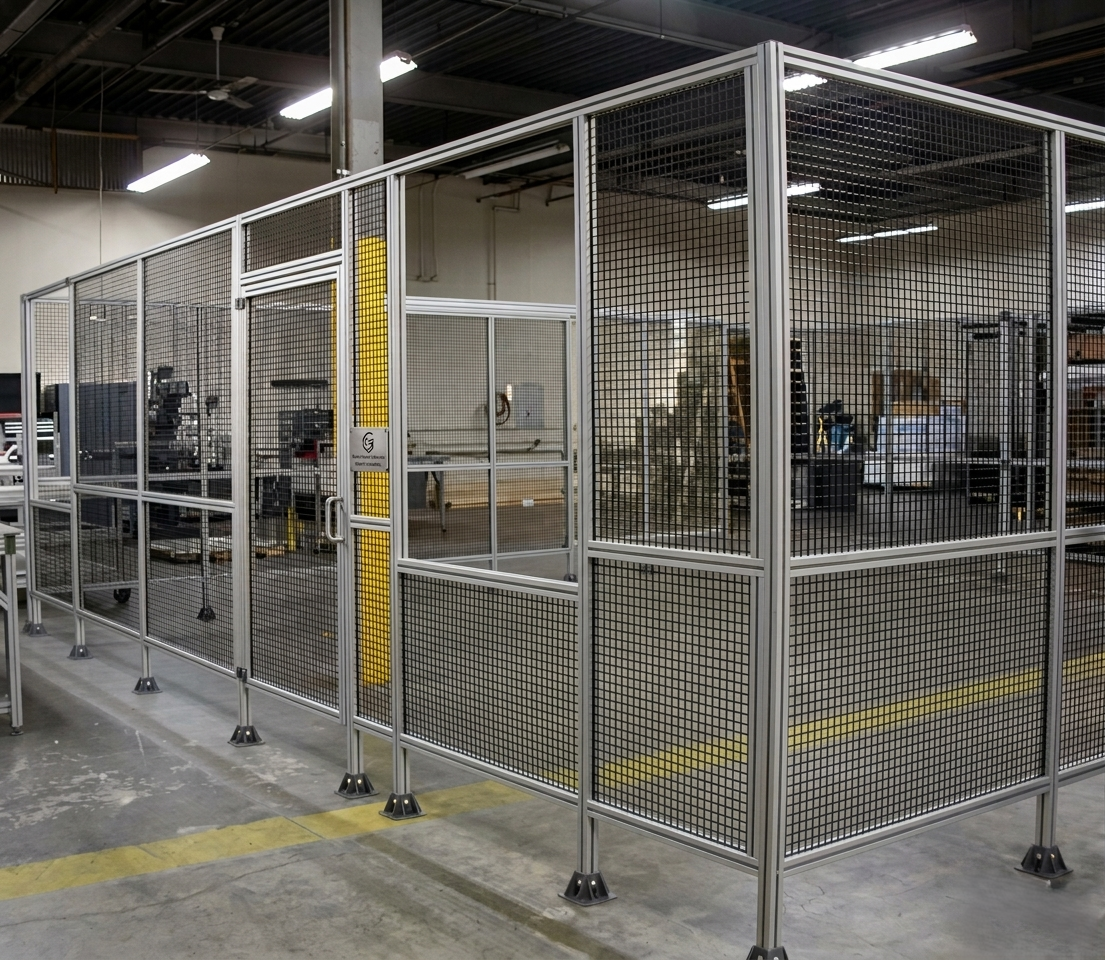
Dock Traffic Control Gate Features
Each dock gate system is specified to your dock door width, leveler type, communication system, and traffic pattern — not a catalog product bolted to every door identically.
Forklift Drive-Off Prevention
Heavy-duty gate arms and barrier rails prevent forklifts from driving off open dock edges and into dock pits or onto unsecured trailer beds — the leading cause of forklift fatalities at loading docks per OSHA fatality data. Gate construction rated for incidental forklift contact without permanent failure.
Dock Communication System Interlock
Gate status signals integrate with dock communication systems — gates must be in the closed position before dock levelers deploy, and trailer restraints must confirm engagement before gates open for forklift entry. Two-way interlock eliminates the gap between truck departure and gate closure.
Dock Door Span Coverage
Gate systems designed to span standard 8 ft and 10 ft dock door openings, plus wider openings for double-door and drive-through dock configurations. Custom spans for non-standard dock widths and high-clearance doors used with tall-load forklift operations.
Heavy-Duty Impact Rating
Gate posts and pivot hardware rated for incidental forklift contact at dock operating speeds — designed to deflect impact and continue operating rather than failing permanently on first contact. Impact-absorbing gate arm mounts allow arm deflection without post damage on minor strikes.
Swing & Slide Gate Options
Swing gates for standard dock applications and sliding gates for dock openings where swing clearance is restricted by adjacent staging racks, column guards, or dock equipment. Bi-parting sliding gates for very wide openings where single-leaf swing is impractical.
High-Visibility Gate Construction
ANSI Z535 safety yellow gates with retro-reflective tape on all arms and rails. Optional LED indicator lights signal gate status — red for closed, green for clear — visible to forklift operators approaching the dock from staging aisles at distance.
Personnel Pedestrian Pass-Through
Separate pedestrian swing gates sized for personnel access without opening the full forklift gate. Pedestrian gates include self-closing hardware and optional alarm contact to detect when left open beyond a set time limit — preventing the gate from becoming a permanent open hazard.
Weather Seal Compatibility
Gate systems designed to operate with dock weather seals, dock bumpers, and pit covers in place — no modification to existing dock equipment required for standard installations. Gate pivot and post locations clear all dock leveler pivot points and bumper brackets.
Modular Retrofit Installation
Gates bolt to existing dock floor, wall framing, or dock leveler pit edges — no structural modification to the dock itself. Retrofit installation typically completed in 4–6 hours per dock position, allowing a multi-door facility to be upgraded door-by-door without taking the dock offline permanently.
Technical Specifications
Standard specifications for dock traffic control gate systems. All parameters adjustable to dock door width, leveler type, and communication system.
Industries & Applications
Dock traffic control gates are deployed wherever loading docks are shared by forklifts, pedestrians, and over-the-road trucks — the highest-risk intersection in the facility.
- Distribution Centers & Fulfillment — High-throughput dock operations with 20 to 200+ dock positions require gate systems that integrate with existing dock communication and trailer restraint infrastructure across all active positions.
- Cold Storage & Refrigerated Distribution — Dock door gates at refrigerated and frozen docks prevent open-door heat infiltration and unauthorized entry while maintaining forklift access protocol during unloading cycles.
- Automotive Parts Receiving — Just-in-sequence receiving docks at automotive plants use gate interlocks to sequence forklift entry against trailer restraint confirmation — eliminating the window between truck arrival and restraint engagement.
- 3PL & Public Warehousing — Multi-client facilities where rotating carrier drivers and unfamiliar personnel increase unauthorized dock entry incidents; gates provide a physical barrier requiring deliberate opening.
- Retail Distribution — High-volume retail DC receiving docks with simultaneous inbound carrier trucks and outbound order picker forklifts require gates to separate vehicle and personnel access at each door position.
- Food & Beverage Processing — Receiving docks at food processing facilities require gates compatible with dock wash-down procedures and USDA sanitation requirements — galvanized or stainless hardware available.
- Manufacturing Inbound Receiving — Production facility inbound docks where delivery schedules are tight and dock workers may be on the trailer side while forklifts approach from the inside require gates as a physical sequencing control.
- Pharmaceutical Distribution — Controlled-environment receiving docks at pharma DCs require dock gates with access control integration and audit log capability for regulatory compliance documentation.
Frequently Asked Questions
Common questions about dock traffic control gate specification, compliance, and installation.
What OSHA regulations apply to loading dock safety gates?
OSHA 1910.178(e) requires that powered industrial vehicle traffic areas in the vicinity of loading docks be controlled and delineated. OSHA 1910.23 covers fall protection at open dock edges including requirements for guardrails or equivalent protection when workers are exposed to fall hazards. OSHA's General Duty Clause applies broadly when forklift drive-off incidents or pedestrian strikes at docks create recognized hazards. Dock traffic control gates satisfy the engineering control requirement for all three standard areas simultaneously.
How do dock gate interlocks work with trailer restraints?
Dock gate interlocks use a dry contact relay circuit that connects the gate position sensor to the dock communication system. When the trailer restraint confirms trailer engagement, a signal is sent to the gate controller authorizing gate opening. If the restraint releases while the gate is open — indicating the trailer is pulling away — the gate control system triggers a visual and audio alarm. The interlock prevents the gate from opening until restraint engagement is confirmed, and alerts operators immediately if the trailer moves while loading is in progress.
Can dock traffic gates be added to existing loading docks without rebuilding?
Yes. Dock traffic control gates are designed as retrofit systems that bolt to existing dock floor slabs, wall framing, or leveler pit edges. No structural modification to the dock building or leveler pit is required for standard gate configurations. Installation is typically completed in 4–6 hours per dock position, allowing a multi-door dock facility to be retrofitted over a weekend without a full facility shutdown.
What is the most common cause of forklift fatalities at loading docks?
Forklift drive-off incidents — where a forklift drives off an open dock edge or onto an unsecured, pulling-away trailer — are among the most frequently cited causes of forklift fatalities per OSHA and NIOSH data. Contributing factors include unsecured trailers, open dock doors without barriers, poor visibility at dock edges, and inadequate communication between dock workers and forklift operators. Dock traffic control gates address multiple contributing factors simultaneously: physical drive-off prevention, trailer restraint interlock confirmation, and visual gate status signaling.
Do dock gates need to work with dock levelers already in place?
Yes, and all dock gate designs account for dock leveler deployment geometry. Gates are positioned and dimensioned so levelers can deploy to full extension without contacting gate hardware. Weather seals, bumpers, and pit covers all remain fully functional with gates installed. For docks with vertical-storing levelers or pit covers, gate height and pivot location are specified to avoid clearance conflicts.
Are dock traffic gates required for all dock doors or only certain positions?
OSHA requirements and insurance carrier standards typically apply to all active dock positions where forklifts operate. The highest-risk positions are dock doors that are opened frequently with trailers only partially backed in, dock doors adjacent to pedestrian staging areas, and dock doors where drive-off exposure exists due to grade changes or dock edge conditions. A risk assessment of each dock position determines gate priority — Modular Solutions can assist in prioritizing which positions to address first based on operational hazard data.
Make Your Loading Docks Compliant and Safe
Get a dock gate specification for your facility — door count, opening widths, leveler types, interlock requirements, and OSHA compliance documentation included.
Request a Quote Email Us Directly