Healthcare AGV Barriers
Infection control compatible AGV and AMR barrier systems engineered for hospital corridors, clinical environments, and healthcare logistics operations. Smooth, non-porous surfaces compatible with EPA-registered hospital disinfectants. Quiet operation for patient care proximity. Joint Commission Environment of Care compliant. Integrates with hospital access control for pharmaceutical delivery chain of custody, sterile supply separation, and medication distribution route management.
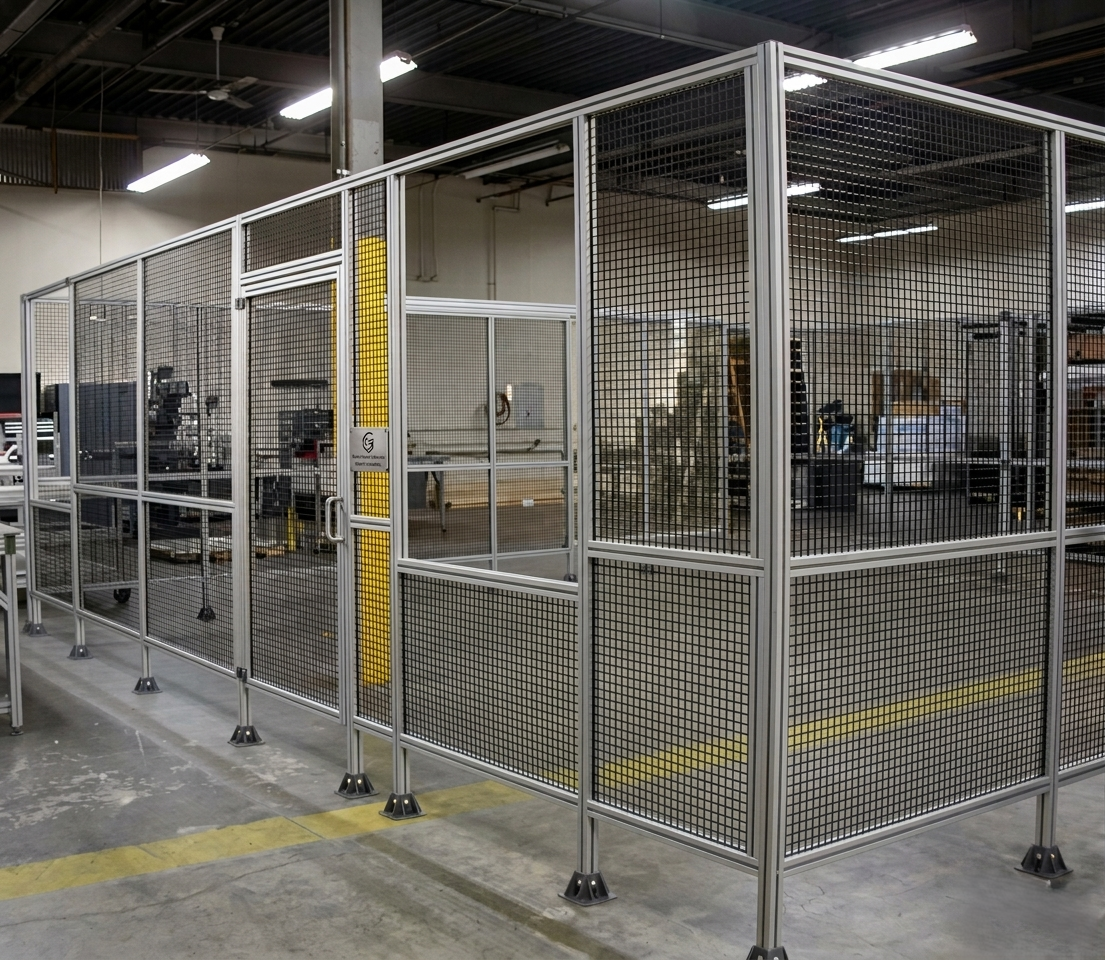
Healthcare AGV Barrier Features
Every barrier system is specified to the clinical environment, AMR route, infection control protocol, and regulatory framework — not adapted from an industrial catalog.
Infection Control Compatible Surfaces
Barrier surfaces engineered with smooth, non-porous finishes — no crevices, exposed fasteners, or harboring geometries. Compatible with EPA-registered hospital-grade disinfectant cleaning protocols including quaternary ammonium compounds, hydrogen peroxide vapor, and UV-C disinfection cycles used in terminal cleaning programs.
Joint Commission EC Compliance
Barrier systems are documented and specified to support Joint Commission EC.02.06.01 Environment of Care requirements covering physical environment safety programs in hospital facilities. Compliance documentation available for Joint Commission survey preparation and ILSM records during installation.
Quiet Operation for Patient Care Proximity
Barrier hardware, gate mechanisms, and access control components are specified for quiet operation — below 45 dB at 3 meters in standard configuration. No pneumatic actuators, slamming latches, or vibrating contact surfaces incompatible with patient care and recovery environments or ICU adjacency requirements.
Pharmaceutical Delivery Route Separation
Dedicated AMR delivery route barriers separate pharmaceutical and medication delivery paths from general patient corridor traffic — maintaining controlled access chain of custody for medication delivery AMRs and preventing unauthorized personnel access to pharmacy delivery vehicles and their payloads.
Hospital Access Control Integration
Barrier gate systems integrate with hospital building access control infrastructure — Wiegand readers, RFID badges, biometric access, and nurse call systems. Gate access events log to hospital security management systems with personnel identification for chain of custody and audit trail requirements.
Sterile Supply Chain Separation
Physical separation barriers for sterile supply and central sterile processing (CSP) AMR routes — maintaining the clean/dirty corridor separation required by ANSI/AAMI ST79 sterile processing standards and preventing contamination of sterile material delivery routes from general hospital traffic.
Clinical-Grade Finish Options
Barrier finishes specified for clinical environments — white or light gray powder coat to match hospital corridor aesthetics for patient-facing zones, or safety yellow for service corridor and logistics areas. Antimicrobial coating options available for high-touch surfaces in zones adjacent to patient care.
ISO 3691-4 & ANSI B56.5 AMR Compliance
AMR lane barrier geometry, detection zone provisions, and pedestrian separation dimensions are specified to ISO 3691-4 and ANSI B56.5 requirements for driverless vehicles operating with pedestrian co-presence — including healthcare-specific adaptations for patient, visitor, and clinical staff traffic patterns.
Modular Reconfiguration for Facility Renovations
Hospital facilities undergo continuous renovation and expansion. Modular construction allows barrier systems to be relocated during building construction phases without replacement — supporting phased construction sequencing and Interim Life Safety Measures (ILSM) compliance during renovation periods.
Technical Specifications
Specifications reflect standard healthcare AGV barrier configurations for hospital and clinical environments. All parameters adjusted to regulatory framework, clinical zone, and infection control protocol.
Industries & Applications
Healthcare AGV barriers serve every environment where autonomous delivery systems operate alongside patients, clinical staff, and regulated supply chains.
- Hospital Pharmacy Delivery Systems — AMR systems delivering medications from central pharmacy to nursing units require controlled-access route barriers that maintain chain of custody, prevent unauthorized access, and integrate with the hospital access control system for audit trail compliance.
- Central Sterile Processing Departments — Clean/dirty corridor separation barriers for CSP sterile supply AMR delivery routes — maintaining ANSI/AAMI ST79 sterile processing corridor requirements and preventing contamination of sterile material from soiled instrument return traffic.
- Hospital Food Service & Linen Systems — Food service and linen delivery AMR routes through service corridors require barriers that separate delivery traffic from patient corridor access and integrate with patient confidentiality requirements in adjacent nursing units.
- Ambulatory Surgery Centers — Compact ASC facilities with AMR systems for supply replenishment and specimen transport require barriers that maintain sterile field separation without impacting the facility's NFPA 101 ambulatory healthcare occupancy egress requirements.
- Pharmaceutical Distribution Centers — Healthcare system central distribution facilities with AGV picking and delivery systems require infection control compatible barriers for pharmaceutical product segregation and DEA Schedule II-V controlled substance area separation.
- Academic Medical Centers — Large teaching hospitals with complex logistics networks and multiple AMR fleets require barriers that support multiple concurrent delivery route programs with independent access control, route separation, and compliance documentation.
- Long-Term Care & Rehabilitation Facilities — Skilled nursing and rehabilitation facilities with AMR meal and medication delivery require barriers with patient-friendly aesthetics, quiet operation, and compliance with CMS Conditions of Participation for physical environment safety.
- On-Site Hospital Pharmacies & Compounding — USP 797 and USP 800 compounding pharmacy facilities require physical separation of hazardous drug handling areas from general pharmacy traffic — barriers support containment requirement compliance and access restriction for non-qualified personnel.
Frequently Asked Questions
Common questions about healthcare AGV barrier specification, infection control compatibility, and Joint Commission compliance.
What standards govern AGV barriers in hospital environments?
Healthcare AGV barriers must satisfy multiple overlapping standards. ISO 3691-4 and ANSI B56.5 govern AGV and AMR vehicle operation and physical environment requirements. The Joint Commission Environment of Care standards (EC.02.06.01) govern physical environment safety programs. NFPA 101 (Life Safety Code) governs egress corridor clearances and obstruction restrictions. ANSI/AAMI ST79 governs sterile processing corridor requirements. Infection prevention standards from APIC and the CDC affect surface finish and cleaning compatibility. Modular Solutions coordinates all applicable standards during barrier specification.
How do healthcare AGV barriers handle infection control requirements?
Healthcare AGV barriers are specified with smooth, non-porous surface finishes that support routine terminal cleaning with EPA-registered hospital-grade disinfectants. All exposed fasteners are recessed or capped — no open bolt heads, hex socket depressions, or thread exposure that accumulates contamination. Frame profiles are selected for smooth external faces without crevice exposure. Antimicrobial powder coat options are available for high-touch gate handles and access points in zones adjacent to patient care areas.
Can healthcare AGV barriers integrate with hospital badge access systems?
Yes. Gate barrier systems integrate with standard hospital access control infrastructure using Wiegand interface readers compatible with HID, Lenel, Genetec, Software House, and other hospital security management systems. Gate access events — entry, exit, held-open, forced-open — log to the hospital security management system with badge holder identification and timestamp. Integration supports pharmacy delivery chain of custody audit trails, visitor restriction enforcement, and Joint Commission Security Management compliance documentation.
What corridors require AGV barrier separation in hospital environments?
Pharmaceutical and medication delivery AMR routes through pharmacy corridors and medication distribution paths require separation from general hospital traffic to maintain controlled substance chain of custody. Central sterile processing clean and dirty corridors require physical separation that prevents contamination of sterile material delivery routes. Food service and linen delivery corridors may require separation from clinical corridors when AGV delivery systems operate on shared paths. Each separation requirement is driven by a different regulatory standard and is addressed individually in the barrier specification.
How are healthcare AGV barriers specified for NFPA 101 egress compliance?
NFPA 101 restricts obstructions in required egress corridors. Healthcare AGV barriers must be positioned to maintain the minimum clear egress width required by the applicable occupancy chapter — typically 8 feet (96") in hospital patient care corridors. Barrier gates in egress paths must be fail-safe open in fire alarm or power failure conditions and must not require key or badge access for egress direction travel. All barrier installations in healthcare facilities are reviewed against the facility's NFPA 101 occupancy classification and egress path documentation before installation.
Do healthcare AGV barriers require Interim Life Safety Measures during installation?
The need for Interim Life Safety Measures (ILSM) during barrier installation depends on whether the installation affects egress paths, fire barriers, or smoke compartments during construction activity. Barrier installations that do not penetrate rated assemblies, do not obstruct required egress widths, and are completed within a single shift typically do not trigger ILSM requirements. Installations in fire-rated corridors or requiring temporary egress path modifications require ILSM documentation per Joint Commission EC.02.06.01 and coordination with the facility's safety officer.
AGV Barriers Built for Clinical Environments
Get a healthcare AGV barrier specification for your facility — infection control compliance, Joint Commission documentation, and access control integration from day one.
Request a Quote Email Us Directly