Impact-Resistant Guard Panels
Engineered guard panels for high-traffic forklift and vehicle environments — steel-reinforced base sections, replaceable impact-absorbing cores, and modular post systems. Rated for the specific vehicle fleet operating in your facility, with OSHA 1910.178 and ANSI B56.1 compliance documentation.
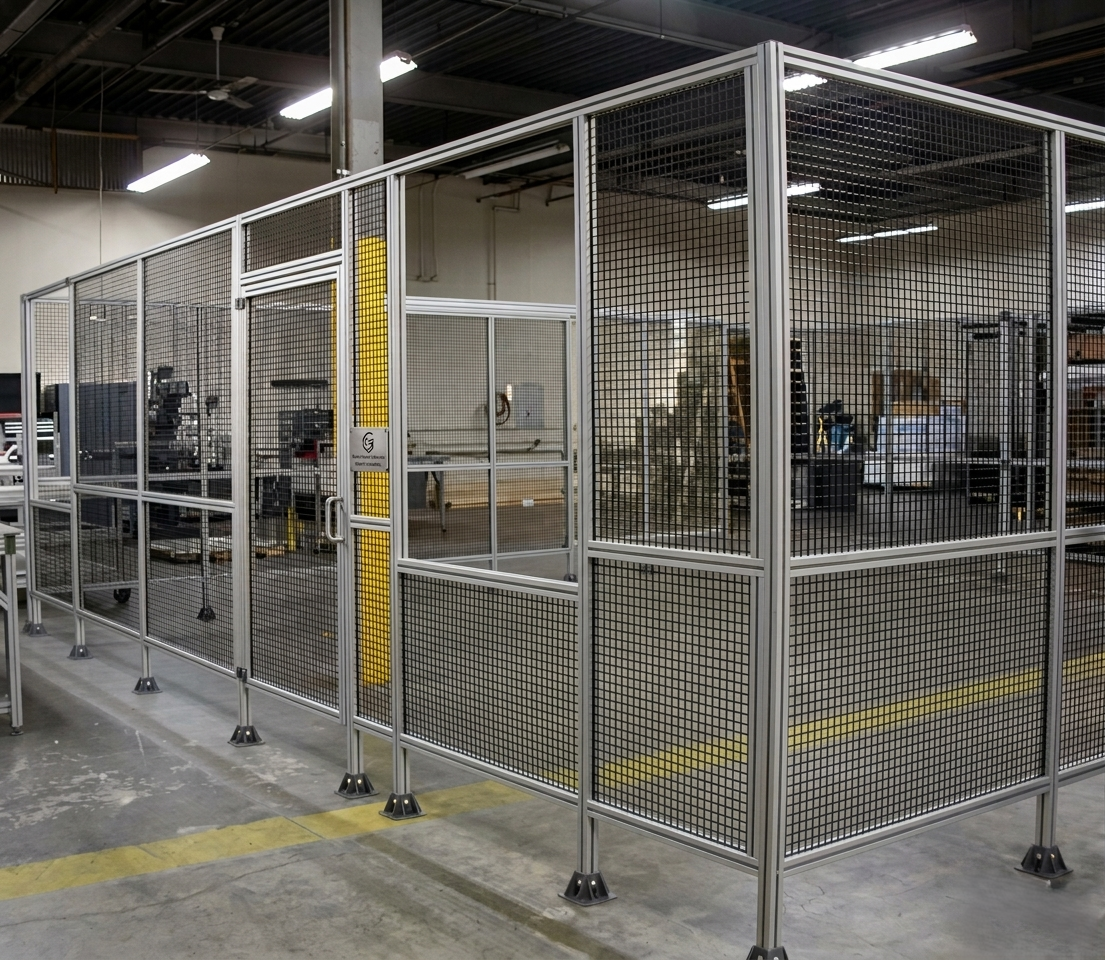
Impact-Resistant Guard Panel Features
Guard panels engineered to absorb, deflect, and recover from vehicle impact — protecting personnel, equipment, and facility structure in the most demanding forklift environments.
Forklift-Rated Impact Absorption
Each panel system is rated to absorb the kinetic energy of the specified vehicle fleet at maximum travel speed. Impact ratings are calculated from the heaviest vehicle operating in the aisle, not a generic standard, ensuring the guard panel actually stops the vehicle before it contacts equipment, racking, or personnel.
Steel-Reinforced Base Sections
Base sections are fabricated with structural steel reinforcement to handle the concentrated low-height impact energy of forklift counterweights and mast frames — the most common impact zone in warehouse and manufacturing environments. Steel reinforcement is integrated into the base without adding unnecessary weight to upper panel sections.
Replaceable Impact Panel Sections
Impact-absorbing panel sections bolt into standardized post systems so field replacement requires only hand tools. After a strike, remove the damaged panel and install a replacement in under 30 minutes — no welding, re-anchoring, or post replacement. Keeping replacement panels on-site eliminates extended downtime after impact events.
Modular Post System
Guard panel posts anchor independently and accept any panel infill type — wire mesh, solid, or polycarbonate. Post spacing accommodates standard and custom panel widths. Post-only installation allows panels to be added, repositioned, or removed without disturbing floor anchors, reducing reconfiguration labor and cost.
High-Visibility Safety Marking
Factory-applied ANSI Z535 yellow and black safety striping on base sections and posts maximizes panel visibility in low-light warehouse aisles, under racking shadows, and in dusty production environments. Reflective tape options maintain visibility in low-light third-shift and cold storage operations.
Dual-Purpose Machine Guarding
When specified to ANSI B11 and OSHA 1910.217 distance, height, and opening requirements, impact guard panels serve dual roles as vehicle barriers and machine safety guards. Dual-purpose configurations eliminate redundant guarding systems in tight-aisle CNC, press, and robot-adjacent areas where space is limited.
Technical Specifications
Standard configurations for impact-resistant guard panel systems. Custom impact ratings, heights, infill types, and post spacings available for any vehicle fleet or facility requirement.
Applications & Industries
Impact-resistant guard panels protect wherever forklifts, reach trucks, and industrial vehicles operate near equipment, structure, or personnel.
- Warehouse & Distribution Centers — Racking end-aisle guard panels preventing counterbalance forklift overrun; pick aisle boundary protection; conveyor and sortation system perimeter guarding along active forklift lanes.
- Automotive Manufacturing — Press and stamping cell guard panels in high-density forklift material delivery areas; assembly line perimeter protection at tugger train delivery points; robot cell boundary panels in mixed forklift/AGV zones.
- Metal Fabrication — CNC machine aisle guard panels protecting equipment during pallet delivery; overhead crane travel path boundary panels; coil and sheet metal storage zone perimeter guarding.
- Food & Beverage — Washdown-compatible guard panels in refrigerated and cooler storage aisles; dock staging zone boundary protection; food processing equipment perimeter guarding in active forklift areas.
- Lumber & Building Materials — High-impact rated panels for heavy-load forklift environments; tall-reach aisle boundary panels; outdoor-rated guard panels for covered dock and yard storage areas.
- Plastics & Rubber Manufacturing — Injection molding machine perimeter panels in press-and-forklift combination areas; pellet and granule silo access zone protection; material handling equipment boundary guarding.
- Pharmaceutical Distribution — Temperature-controlled warehouse aisle guard panels; controlled substance storage zone boundary protection; FDA-compliant panel finishes for pharmaceutical environments.
- Tier-1 Auto Suppliers — Mixed-fleet guard panels rated for both counterbalance forklifts and AGVs operating in the same aisle; production cell perimeter protection at just-in-time delivery stations.
Frequently Asked Questions
Common questions about impact guard panel specification, installation, and maintenance.
What impact rating do guard panels need for forklift environments?
Guard panels in forklift environments are specified to absorb the kinetic energy of the heaviest vehicle operating in the area at its maximum travel speed. OSHA 1910.178 and ANSI B56.1 govern forklift operations but do not specify a universal panel rating — impact specifications are determined by the facility's vehicle inventory, aisle speeds, and the consequence of panel failure. We size panels to the specific vehicle fleet and operating conditions.
What makes a guard panel 'replaceable' after impact?
Replaceable impact guard panels are designed so that the panel itself — not the post or structural frame — absorbs and deforms during impact. After a strike, only the panel section requires replacement, not the entire installed system. Panels bolt into standardized post systems so field replacement takes minutes without special tools, welding, or new floor anchoring.
Can impact guard panels also serve as machine guards?
Yes, when specified to the appropriate ANSI B11 or OSHA 1910.217 machine guarding distance, height, and opening requirements. Guard panels serving as direct machine guarding barriers must meet distance-from-hazard requirements, maximum opening size limits, and minimum height specifications. Systems serving dual purposes are engineered to the more stringent of the two standards.
How are impact guard panels anchored?
Guard panel posts anchor to the floor with concrete anchor bolts or epoxy-set fasteners sized to the panel's rated impact energy. Anchoring transfers impact load to the facility floor slab rather than allowing the system to tip or slide. Base plate size and anchor pattern are specified per panel height, weight, and impact rating.
What visibility options exist for guard panels?
Guard panels are available with wire mesh infill for visibility and ventilation, solid infill for opacity and debris containment, or polycarbonate infill for full visual transparency. High-visibility yellow and black finishes are standard in forklift areas. Reflective tape strips enhance panel visibility under variable lighting conditions.
How quickly can impact-damaged guard panels be replaced?
A single panel section typically replaces in under 30 minutes using standard hand tools — unbolt the damaged panel, install the replacement, and retorque fasteners. No cutting, welding, or re-anchoring required. Keeping a small inventory of replacement panels on-site eliminates downtime from waiting for parts after impact events.
Guard Your Aisles Against Impact
Impact-resistant guard panels rated for your vehicle fleet, sized to your aisles, and designed to replace fast after a strike. Ready for the most demanding forklift environments.
Request a Quote Email Our Team