Temporary Safety Walls
Rapidly deployable modular safety wall systems for construction, maintenance shutdowns, equipment installation, and facility reconfigurations. No-anchor floor mount options available — deploy and remove without floor core drilling, construction permits, or facility modification.
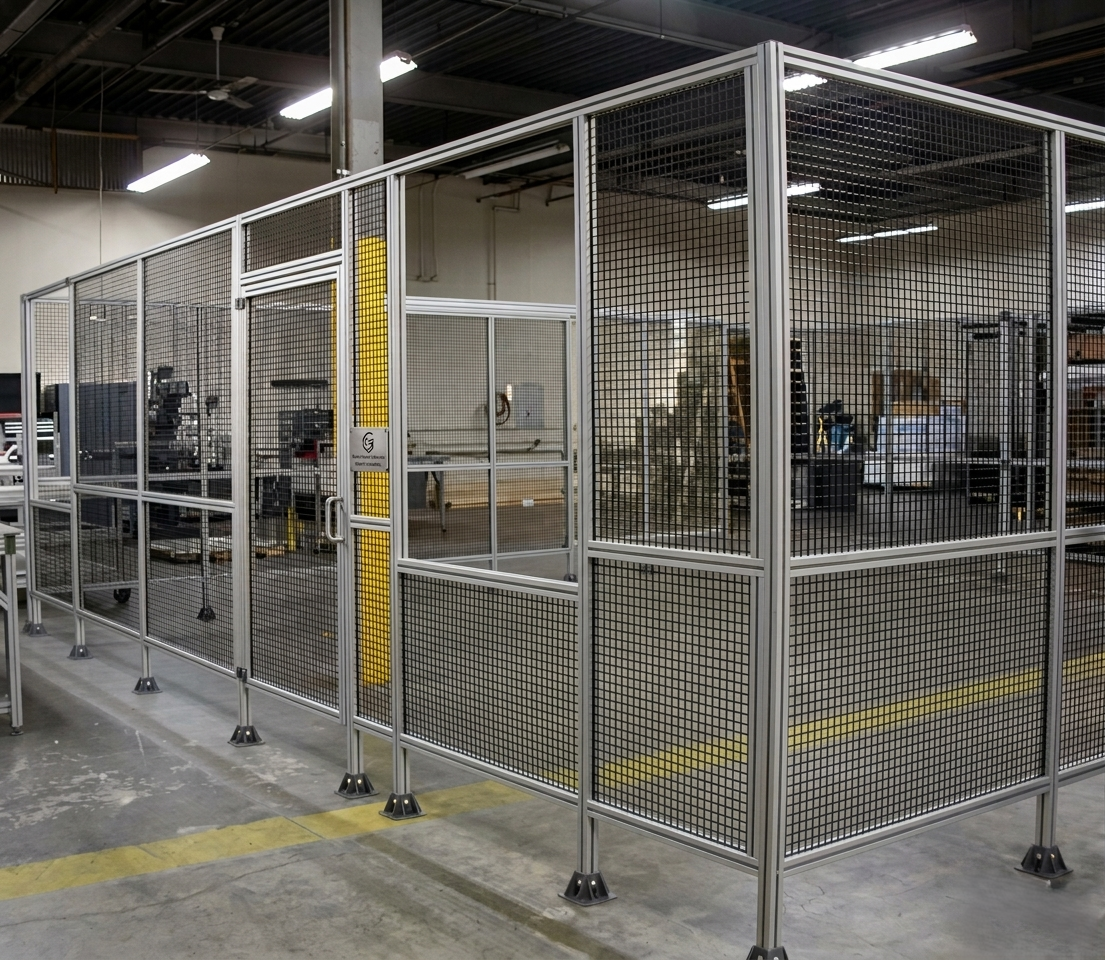
Temporary Safety Wall Features
Modular temporary walls engineered for speed, safety, and zero damage to your facility — deploy in hours, remove without a trace.
No-Anchor Floor Mount Options
Weighted base channel systems stabilize temporary walls without floor penetration, anchors, or construction permits. No-anchor configurations deploy on any floor surface — polished concrete, epoxy coatings, tile, or grating — without damage. Critical for leased facilities, clean environments, and areas where active operations continue during wall installation.
Rapid Deployment in Hours
Quick-release panel-to-post connections allow a two-person crew to assemble a 50-foot wall run in 2–4 hours. Pre-kitted panel sets include all hardware, bases, and fasteners — no site preparation, no specialized equipment, and no construction experience required. The same crew disassembles and stores the system when the work period ends.
OSHA Construction & General Industry Compliance
Systems engineered for compliance with OSHA 1926 construction safety standards and OSHA 1910 general industry requirements for temporary barriers. ANSI Z535 safety signage provisions and OSHA 1926.502 fall protection integration points are built into standard configurations. Compliance documentation supports safety plans, insurance requirements, and regulatory inspections.
Integrated Personnel Access Doors
Swing and self-closing personnel doors integrate directly into the temporary wall system for controlled access to the work zone. Self-closing mechanisms prevent accidental open-door hazards in active maintenance corridors. Lockable options restrict access to authorized personnel. Door integration maintains OSHA passageway clearance requirements throughout the work period.
Multiple Infill & Visibility Options
Solid infill panels provide full containment of dust, debris, and visual separation for sensitive or confidential work areas. Wire mesh infill provides ventilation and visual access for monitoring active work zones. Polycarbonate panels allow full visibility for safety observation. Infill selections balance containment, ventilation, and visibility requirements for each project.
Reusable Across Multiple Projects
Modular aluminum construction withstands repeated assembly and disassembly cycles without degradation. Panels, posts, bases, and hardware store compactly for transport to the next project. Long-term ownership of a temporary wall system eliminates repeated rental costs for facilities that conduct regular maintenance shutdowns, equipment installations, or continuous improvement projects.
Technical Specifications
Standard configurations for temporary safety wall systems. Custom heights, panel widths, infill types, and base configurations available for any project requirement.
Applications & Industries
Temporary safety walls deploy wherever active production, construction, and maintenance operations must coexist safely in the same facility.
- Annual Maintenance Shutdowns — Temporary walls separating active production areas from shutdown zones during planned preventive maintenance, equipment overhauls, and capital project installations. Walls deploy before shutdown, contain the work zone, and remove at restart — no permanent changes to the facility.
- Equipment Installation & Removal — Temporary enclosures around new equipment installation sites, preventing interference from ongoing production and containing construction debris, welding sparks, and overhead crane hazard zones during mechanical and electrical installation.
- Facility Renovation During Production — Floor resurfacing, structural repairs, HVAC upgrades, and lighting projects in active facilities require temporary walls to separate the construction zone from continuing operations and protect personnel from construction hazards.
- Automotive Plant Model Changes — Assembly line retooling and model changeover periods require temporary zone separation between active and shutdown production cells during simultaneous production and construction activities.
- Food & Beverage Plant Expansions — Temporary walls separating active food production from new equipment installation or facility expansion construction, maintaining FDA and FSMA food safety zone separation requirements during construction periods.
- Pharmaceutical Plant Upgrades — GMP-compliant temporary wall systems for facility renovations in operating pharmaceutical plants — maintaining controlled environment zones while adjacent construction proceeds in compliance with FDA facility modification requirements.
- Warehouse Racking Reconfiguration — Temporary walls isolating racking demolition and installation zones from active warehouse operations, protecting personnel from falling materials and overhead hazards during active reconfiguration projects.
- Emergency Containment — Rapid-deploy temporary walls for spill containment, equipment failure isolation, or emergency work zone establishment — deployed in hours without advance planning or construction coordination.
Frequently Asked Questions
Common questions about temporary safety wall specification, deployment, and compliance.
What is a temporary safety wall used for?
Temporary safety walls are deployed during construction, maintenance shutdowns, equipment installation or removal, facility renovations, and production line reconfigurations. They separate active production or pedestrian areas from hazardous work zones without permanent wall construction. After the work period ends, the walls disassemble and store for the next deployment.
Can temporary safety walls be installed without anchoring to the floor?
Yes. No-anchor temporary safety walls use weighted base channels that provide stability without floor penetration. This is critical in facilities where floor core drilling is prohibited by lease, where facility operations must continue during wall installation, or where the wall location changes frequently. Weighted base options are specified to the wall height and panel weight to ensure stability under normal traffic and lateral loads.
What OSHA standards apply to temporary safety walls?
Temporary safety walls in active construction or renovation areas are governed by OSHA 1926 construction safety standards, including 1926.502 for fall protection and 1926.200 for safety signage. In operating general industry facilities, OSHA 1910.22 covers housekeeping and passageway standards, and 1910.145 governs safety sign requirements. Temporary walls in machine guarding applications must also meet ANSI B11 guarding distance and height specifications.
How quickly can a temporary safety wall be deployed?
Modular temporary safety wall panels connect with quick-release fasteners allowing a single crew to deploy a 50-foot wall run in 2–4 hours. No specialized tools, no floor preparation, and no construction experience required. Pre-kitted panel sets include all hardware, so deployment begins immediately on arrival. The same crew disassembles and stores the system after the work period in similar time.
Can temporary safety walls include personnel access doors?
Yes. Personnel access doors — swing, sliding, or self-closing — integrate directly into temporary wall systems. Doors maintain the wall's safety function while providing controlled access for authorized personnel. Self-closing mechanisms prevent accidental open-door hazards in high-traffic maintenance corridors. Lockable door options restrict access to authorized maintenance or construction personnel only.
What is the difference between temporary safety walls and permanent partition walls?
Temporary safety walls are designed for rapid deployment, no-damage removal, and repeated reuse across multiple projects. They prioritize installation speed and portability over the structural permanence and impact resistance of permanent partition walls. Permanent partition walls carry higher forklift impact ratings, heavier infill options, and full machine guarding certifications for long-term fixed installations. Temporary walls are the right choice for time-limited work periods; permanent walls are the right choice for fixed production zone segregation.
Deploy a Safety Wall in Hours — Not Days
Modular temporary safety walls sized to your project, compliant with OSHA requirements, and ready to deploy without floor modifications. Own a system that redeploys across every shutdown, renovation, and installation project.
Request a Quote Email Our Team