Work Area Separation Screens
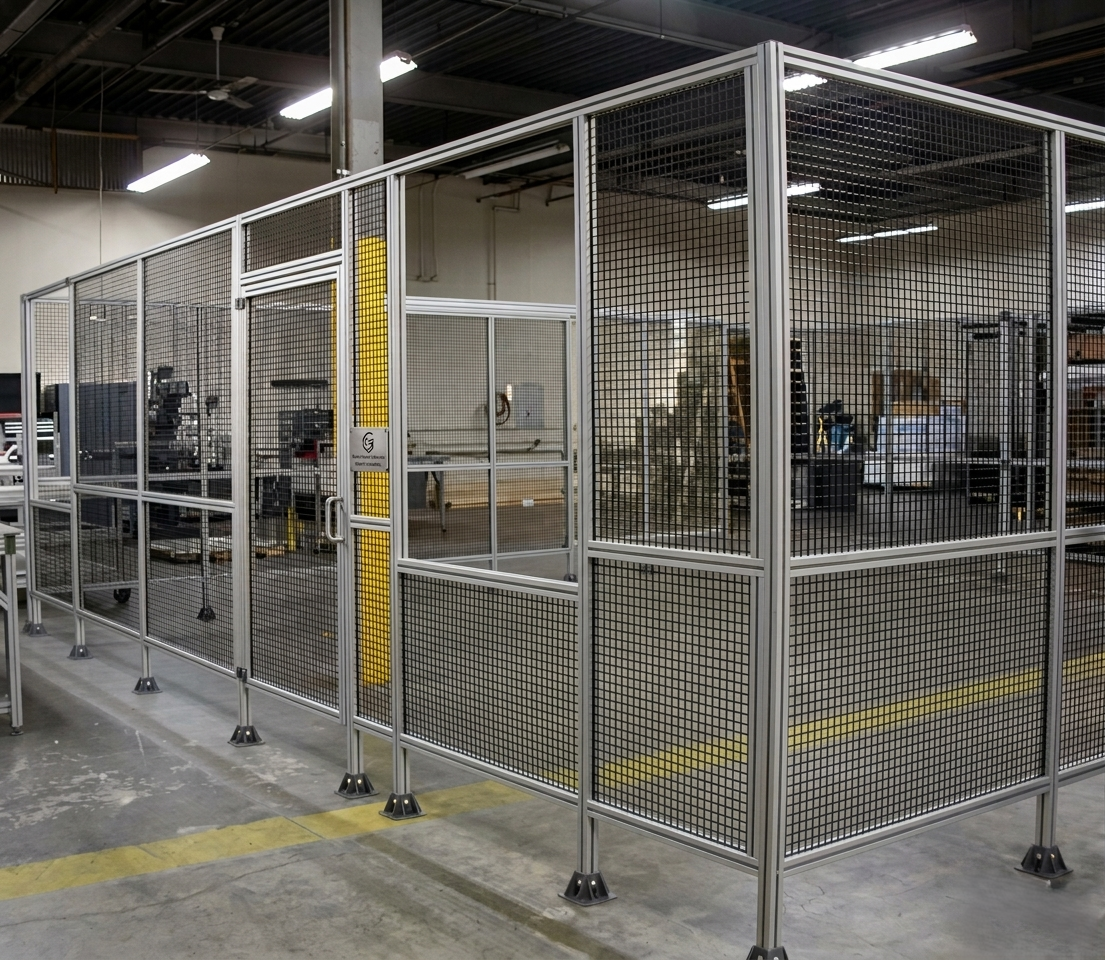
Freestanding and partition-mounted screens for industrial workstation separation, visitor observation barriers, and production floor zone division. Wire mesh, polycarbonate, solid infill, and acoustic panel options in modular aluminum frames — no floor anchoring required for freestanding configurations.
Work Area Separation Screen Features
Modular screens designed to divide, define, and control work areas without permanent construction — flexible configurations for any production floor layout.
Freestanding No-Anchor Configurations
Weighted base feet stabilize separation screens without floor penetration, concrete anchors, or construction permits. Freestanding screens reposition as production layouts change — ideal for flex manufacturing areas, visitor access routes, or temporary workspace configurations that evolve seasonally or by program.
Multiple Infill Panel Options
Wire mesh infill for visibility and airflow in production monitoring zones. Polycarbonate panels for full visual transparency in visitor observation and quality inspection areas. Solid infill for privacy and visual separation in administrative or secure work areas. Acoustic infill for noise reduction between high-noise and quiet adjacent zones.
Acoustic Noise Reduction
Acoustic infill panels with mass-loaded vinyl or mineral wool cores reduce airborne sound transmission between adjacent work areas. Measured STC ratings allow acoustic performance to be matched to facility noise levels and the hearing protection requirements of adjacent zones. Effective for separating loud manufacturing operations from adjacent quality control or office areas.
Modular Panel Connectivity
Standard panel-to-panel connectors create straight runs, 90-degree corners, T-intersections, and angled configurations without custom fabrication. Screens extend, branch, or redirect using standard components. Mixed infill types — mesh sections adjacent to solid or acoustic panels — combine in a single run for zone-specific performance.
Workstation Divider Integration
Screen panels mount directly to workstation benches and assembly tables for individual operator workspace division. Bench-mounted configurations divide adjacent operators on shared benches, reduce cross-contamination between work cells, and provide focused work environments in open-floor assembly layouts without requiring floor-standing frames.
Visitor & Observation Barriers
Polycarbonate separation screens create clear visitor corridors alongside active production areas — full visual access to operations without physical access to the production floor. Visitor barriers define tour routes, safety briefing areas, and customer observation zones while maintaining production separation and OSHA general-duty compliance.
Technical Specifications
Standard configurations for work area separation screen systems. Custom heights, widths, infill materials, and base configurations available for any production floor requirement.
Applications & Industries
Work area separation screens are used wherever production zones, workstations, or pedestrian areas need clear, flexible physical division.
- Automotive Assembly — Operator workstation dividers on shared assembly benches; visitor observation corridors alongside production lines; quality control area separation from general assembly floor traffic.
- Electronics Manufacturing — ESD-sensitive zone separation screens with antistatic panel options; workstation dividers for individual board-level assembly; soldering and reflow area visual separation from adjacent operators.
- Pharmaceutical Manufacturing — GMP-compliant zone separation screens with smooth, sanitizable surfaces; cleanroom anteroom and gowning area division; administrative area separation from production floor personnel.
- Food & Beverage — Allergen zone visual separation screens; processing area observation barriers for food safety audits; packaging area workstation dividers for individual operator hygiene separation.
- Aerospace & Defense — Classified work area visual screens; composite layup zone separation; visitor and contractor observation corridors alongside production operations.
- Metal Fabrication — Grinding and deburring zone acoustic screens reducing noise in adjacent inspection or office areas; operator workstation dividers for individual weld or fit-up stations; customer observation barriers for job shop operations.
- Medical Device Manufacturing — ISO 13485 controlled work area separation screens; sterile and non-sterile zone visual barriers; operator workstation dividers for individual traceability-controlled assembly stations.
- Warehouse Office Areas — Production floor office separation screens; shipping and receiving zone administrative area barriers; visitor processing and security screening area dividers.
Frequently Asked Questions
Common questions about work area separation screen specification, installation, and performance.
What is the difference between a separation screen and a safety barrier?
Work area separation screens define and divide work zones, manage pedestrian flow, and reduce cross-contamination or distraction between work areas. They are not impact-rated for vehicle contact — that role belongs to forklift barriers and guard panels. Separation screens are appropriate for pedestrian-only zones, visitor observation areas, workstation dividers, and light-duty zone definition where vehicle traffic is excluded.
What infill options are available for separation screens?
Wire mesh provides visibility and ventilation for production monitoring. Polycarbonate provides full visual transparency for visitor observation or quality inspection. Solid infill panels provide privacy for administrative areas within the facility. Acoustic infill panels reduce sound transmission between adjacent work areas and are particularly effective in high-noise manufacturing environments.
Can separation screens be freestanding without floor anchoring?
Yes. Freestanding separation screens use weighted base feet that stabilize the screen without floor penetration. This allows placement in any location without construction permits, floor core drilling, or facility modification. Freestanding configurations are repositionable and removable, making them ideal for changing production layouts, temporary visitor access areas, or seasonal workspace configurations.
How do acoustic separation screens reduce noise?
Acoustic infill panels use mass-loaded vinyl, mineral wool, or composite foam cores that absorb and block airborne sound transmission. Performance is measured in Sound Transmission Class (STC) ratings — higher STC means more noise reduction. Screens reduce noise between adjacent workstations, quiet inspection areas adjacent to production noise, and improve speech intelligibility in operator control areas.
Can separation screens be used as machine guards?
Standard work area separation screens are not intended to serve as machine guards unless specifically engineered to ANSI B11 or OSHA 1910.217 guarding requirements. When used near machinery, screens should be positioned outside the required guarding distance, or replaced with properly rated guard panels. If dual-purpose use is required, we can engineer a screen system to meet the applicable guarding standard.
Are separation screens suitable for cleanroom or food processing environments?
Yes. Separation screens with smooth polycarbonate or powder-coated aluminum infill panels are appropriate for cleanroom, food processing, and pharmaceutical environments where surface sanitation is required. Mesh panels are generally avoided where particle shedding or cleanability is a concern. Custom panel finishes and sealing options are available for controlled environment applications.
Divide Your Workspace — Without Building Walls
Modular separation screens designed to your floor layout, infill requirements, and acoustic performance targets. Freestanding, flexible, and ready to reconfigure as your production evolves.
Request a Quote Email Our Team