3D Printing Enclosures
Modular aluminum enclosures engineered for industrial additive manufacturing — providing fume and particulate containment, thermal management, filtration integration, and safe photopolymer resin handling for FDM, SLA, and SLS systems. Every enclosure is designed around your specific printer hardware, material set, and facility requirements. Custom-engineered in Auburn Hills, MI.
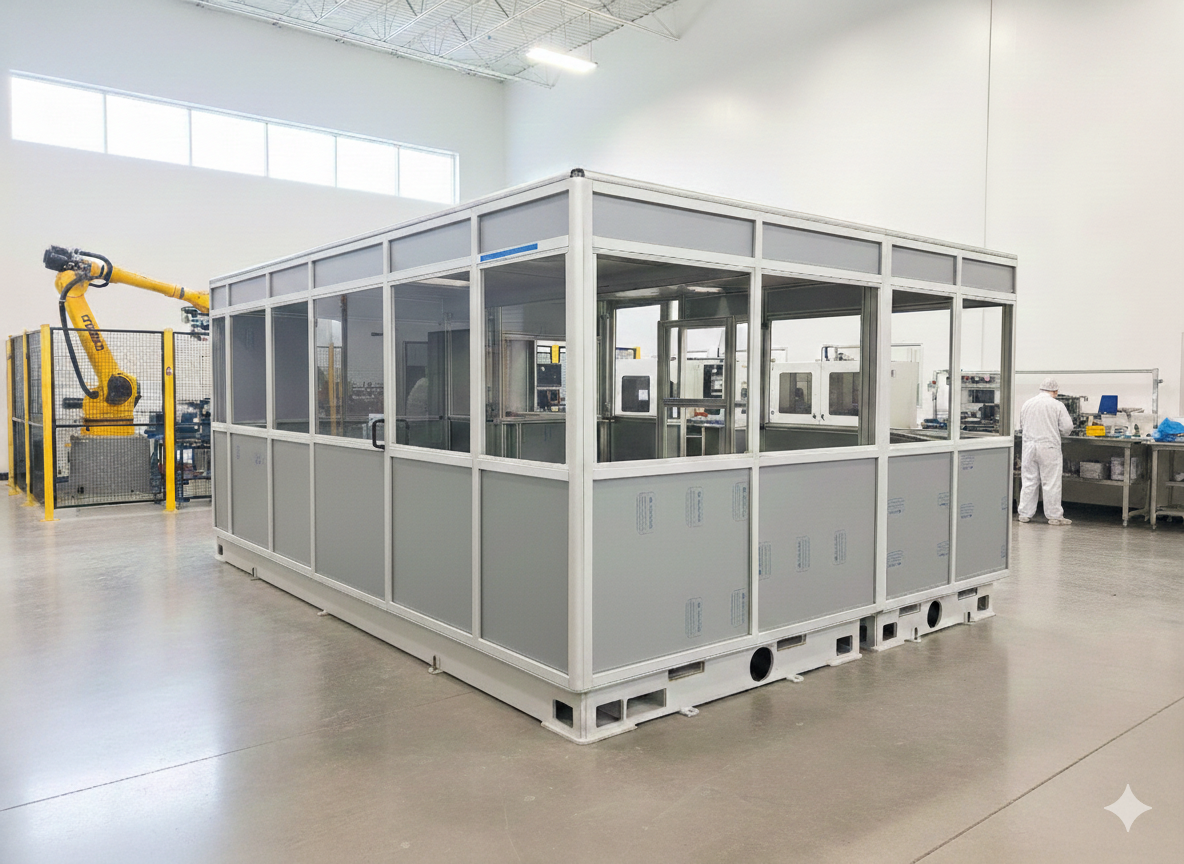
3D Printing Enclosure Engineering Features
Industrial additive manufacturing introduces unique environmental challenges — fumes, particles, UV exposure, and thermal management requirements that vary by process type. These features address all of them.
Particulate & Fume Containment
Sealed aluminum panel construction contains ultrafine particles (UFPs) and VOCs emitted during FDM, SLA, and SLS printing processes within the enclosure — directing emissions to filter provisions rather than into facility air. Reduces ambient particulate exposure for personnel working near printing operations throughout the shift.
Filtration Integration Provisions
Enclosures include mounting provisions and ducting interfaces for HEPA and activated carbon filter assemblies — the two-stage filtration combination required to address both particulates and chemical VOCs from common engineering filaments. Filter units sourced and installed by the customer per their chemistry and compliance requirements.
Thermal Management
FDM enclosures are specified with sealed construction to retain heat and reduce warping and delamination of engineering thermoplastics such as ABS, ASA, PC, and Nylon. Resin printer enclosures can be specified with vented configurations to prevent photopolymer resin overheating. Thermal configuration is matched to your printer type and material set.
Safe Resin & VOC Handling
Enclosed access doors, interlocked or latched, reduce direct operator exposure to photopolymer resins and styrene-based filament emissions during print setup, resin changes, and build removal. Enclosure design addresses the OSHA and ACGIH exposure reduction principles for resin-handling operations without requiring full PPE for routine maintenance.
Cable & Filament Routing
Built-in T-slot channel routing provisions for power cables, data cables, filament feed tubes, and pneumatic connections keep runs organized and accessible. Pass-through fittings seal routing openings to maintain enclosure integrity for filtration effectiveness without compromising the cable management layout.
Multi-Printer Farm Configurations
T-slot aluminum frame system scales to house multiple printers in a single enclosure with shared filtration, individual access doors per printer, and organized cable management for the entire farm. Farm enclosures reduce per-printer installation cost and improve environmental consistency across all printers for better lot-to-lot part quality.
Additive Manufacturing Enclosure Applications
Industrial 3D printing enclosures are specified wherever additive manufacturing processes create fume, particulate, thermal, or UV exposure risks in occupied facilities.
- FDM Prototype and Production Parts — Enclosures for FDM printers running engineering thermoplastics (ABS, ASA, PC, Nylon, PETG) in engineering labs, tooling shops, and production support environments — containing emissions, retaining build chamber heat, and reducing VOC exposure for nearby personnel.
- SLA and DLP Resin Printing — Enclosed environments for photopolymer resin printers with UV-blocking viewing windows, ventilation provisions, and interlocked access doors — reducing resin splash, UV exposure, and photopolymer VOC emissions during setup, print, and build removal operations.
- SLS and Powder Bed Fusion Systems — Containment enclosures for polymer powder handling and post-process depowdering operations associated with SLS and multi-jet fusion systems — containing explosive and inhalation-hazardous nylon and PA-12 powder during removal and recovery.
- Printer Farm Arrays — Multi-printer enclosures for digital manufacturing operations running continuous FDM production with 4–20+ printers in shared enclosures — providing consistent ambient temperature, shared HEPA/carbon filtration, and organized cable and filament management at scale.
- R&D and Materials Development Labs — Enclosures for additive manufacturing research environments where operators print experimental materials with unknown emission profiles — providing a contained and filtered environment for materials development without a dedicated exhaust-ventilated lab.
- Post-Processing Containment — Enclosures for IPA wash stations, UV cure chambers, powder removal, and support-removal operations associated with SLA and SLS processes — containing chemical exposure and powder dispersion from post-processing steps that are often overlooked as emission sources.
Engineering & Specification Parameters
All 3D printing enclosures are engineered to your specific printer hardware, material set, and facility requirements — no standard catalog sizes.
Frequently Asked Questions
Common engineering questions about 3D printing enclosures and additive manufacturing containment.
Do 3D printer enclosures actually reduce VOC and particulate emissions?
Yes. Sealed aluminum enclosures with activated carbon and HEPA filter provisions significantly reduce operator exposure to ultrafine particles (UFPs) and VOCs emitted during FDM printing. Studies have shown FDM printers emit substantial particulate and styrene levels during operation. An enclosure with active filtration directs emissions through filter media rather than into facility air, measurably reducing ambient levels for personnel working near the printing area.
Can one enclosure house multiple 3D printers?
Yes. Multi-printer farm enclosures are a common and cost-effective configuration. The T-slot aluminum frame system is sized to the combined footprint of your printer array, with shared filtration provisions and individual access doors per printer. This is particularly useful for FDM printer farms where consistent ambient temperature and shared air filtration improve part quality and reduce installation cost compared to individually enclosed printers.
Does enclosing a 3D printer affect print quality by trapping heat?
For FDM printers, enclosure-retained heat is generally beneficial — it reduces warping and delamination of engineering thermoplastics like ABS, ASA, and PC by maintaining a consistent ambient temperature around the build. For resin printers (SLA/DLP), thermal management provisions include vented configurations to prevent resin overheating. We specify the correct thermal configuration for your printer type and material set during the engineering process.
What type of filtration is recommended for FDM printing enclosures?
FDM printing generates both ultrafine particles (UFPs) requiring HEPA filtration and VOCs — styrene, caprolactam, and other filament-specific emissions — requiring activated carbon filtration. Effective enclosures include provisions for both HEPA and activated carbon filter stages in series. We provide the enclosure with mounting provisions and ducting interfaces; filter units are sourced and installed by the customer based on their specific material chemistry and compliance requirements.
Can a resin printer enclosure be safely opened during a print?
SLA and DLP resin printers using UV-cured photopolymers can generally be accessed during printing if the enclosure includes UV-blocking polycarbonate viewing windows and the access door design prevents UV exposure to the operator. Our enclosures can incorporate UV-blocking viewport panels and interlocked access doors that pause the UV light source when opened. Resin toxicity, VOC exposure, and UV risks are all addressed through enclosure design and appropriate access configurations specified for your printer model.
Engineer Your 3D Printing Enclosure
Share your printer hardware, material set, facility layout, and compliance requirements — our engineering team will design a containment enclosure that addresses your specific additive manufacturing environment.
Email Us for a Quote Contact FormModular Solutions — 4280 Giddings Rd, Auburn Hills, MI 48326 | 248-625-1864