Robotic & Automation Enclosures
Precision-engineered modular aluminum enclosures built specifically for robotic cells, cobot stations, laser cutting, laser welding, material removal operations, mobile robot systems, machine vision inspection, and industrial additive manufacturing. From laser light containment to grinding dust control, OSHA-compliant safety guarding to thermal management — each enclosure is designed around your exact equipment layout, process requirements, and facility constraints. Engineered and manufactured in Auburn Hills, MI.
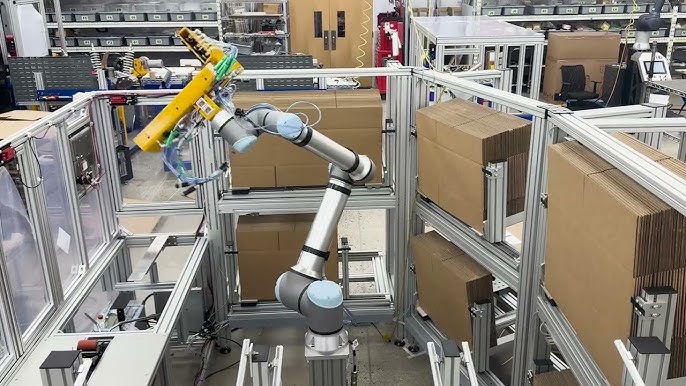
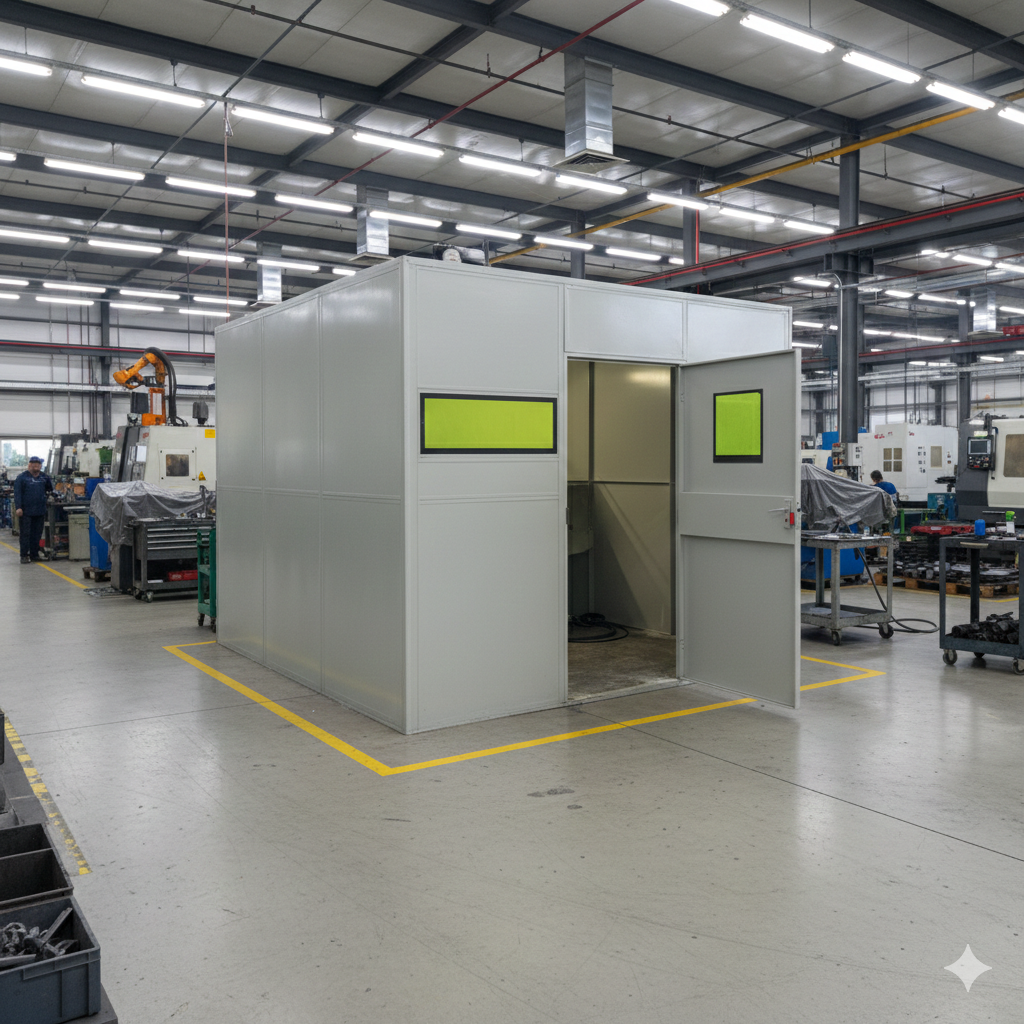
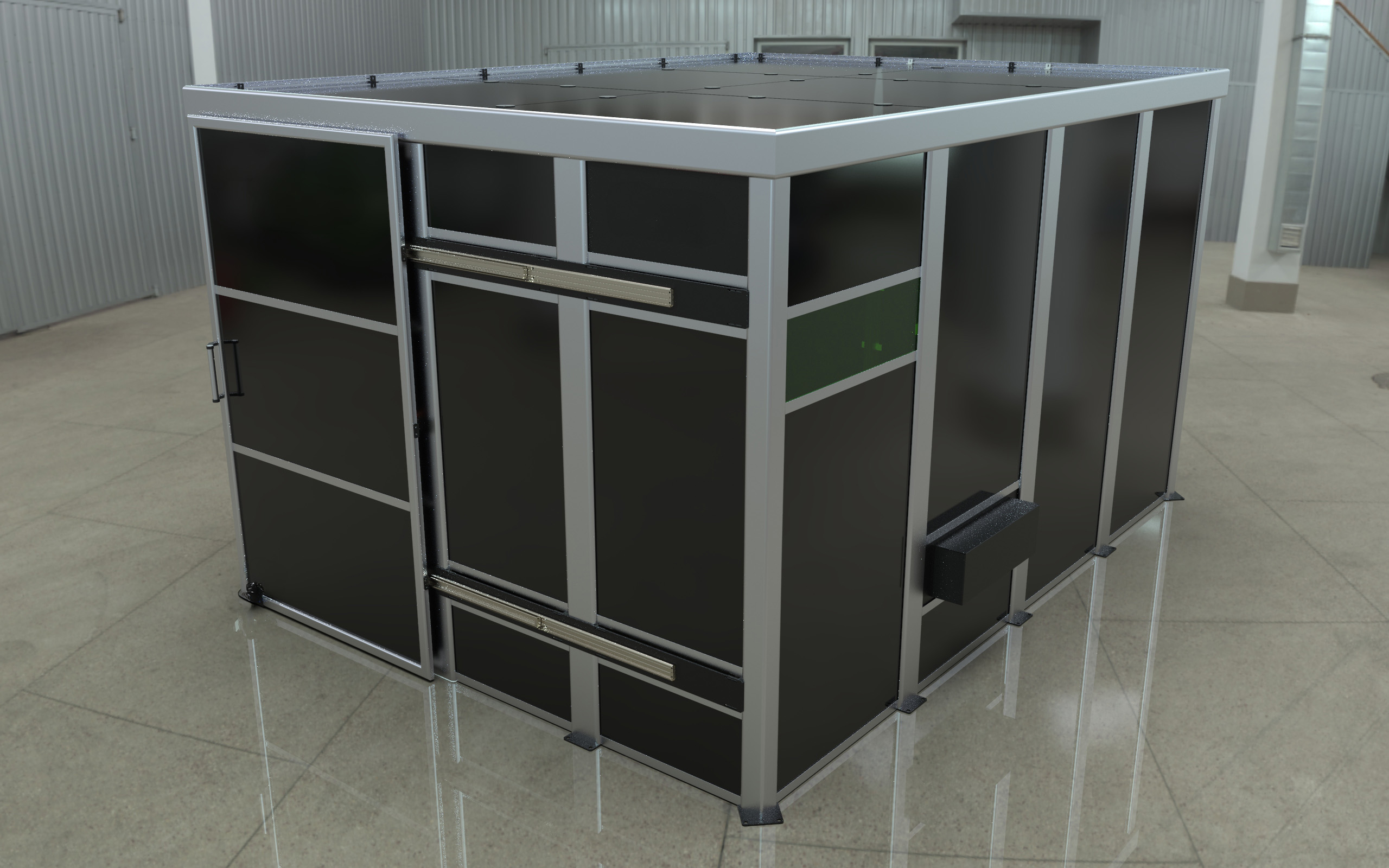
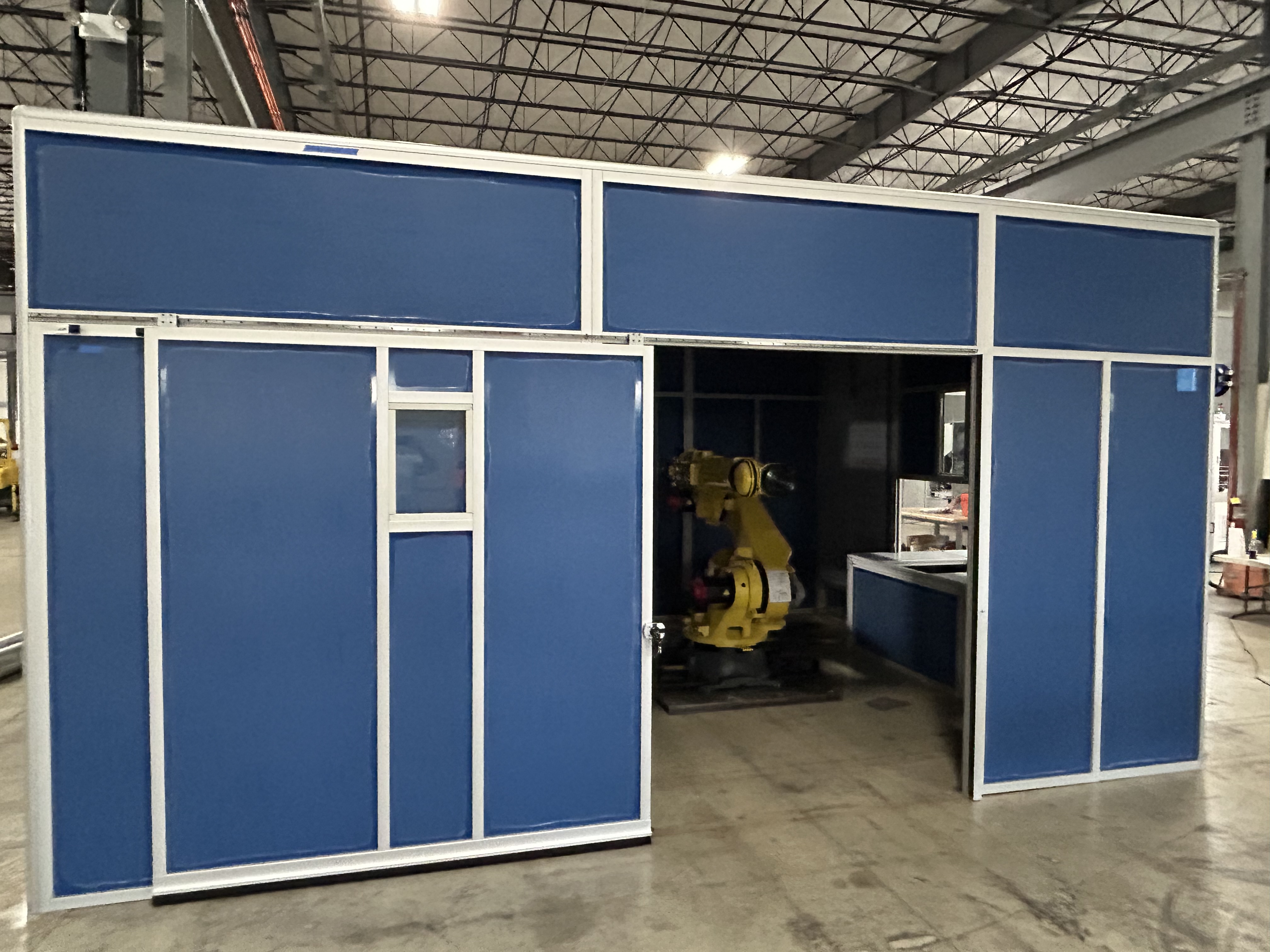
Robotic & Automation Enclosure Types
Nine focused enclosure categories covering the full range of modern industrial automation — each engineered for the specific containment, safety, and environmental demands of that process type.
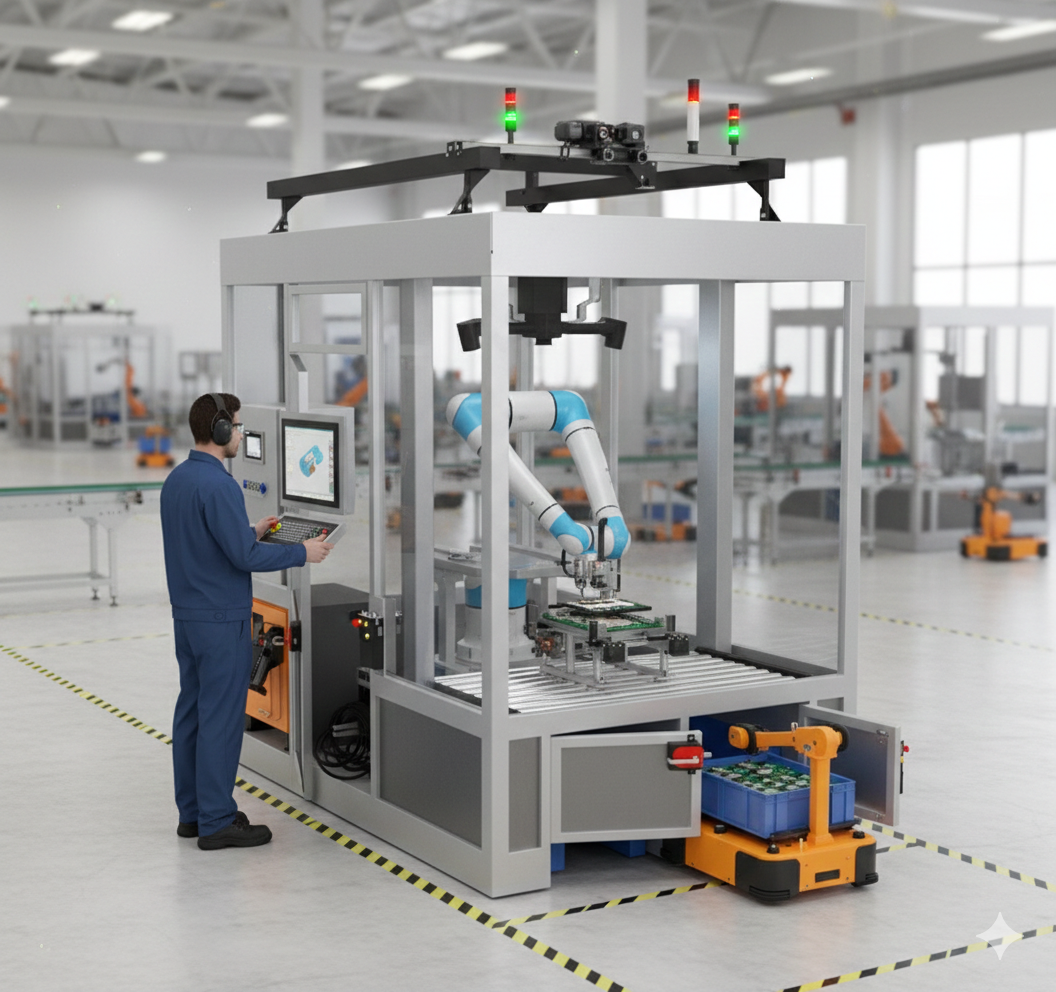
Cobot & Robotic Cell Enclosures
Safety-interlocked enclosures for collaborative robots and industrial robot cells — with clear sightlines, OSHA-compliant guarding, and integrated access doors for part setup and maintenance.
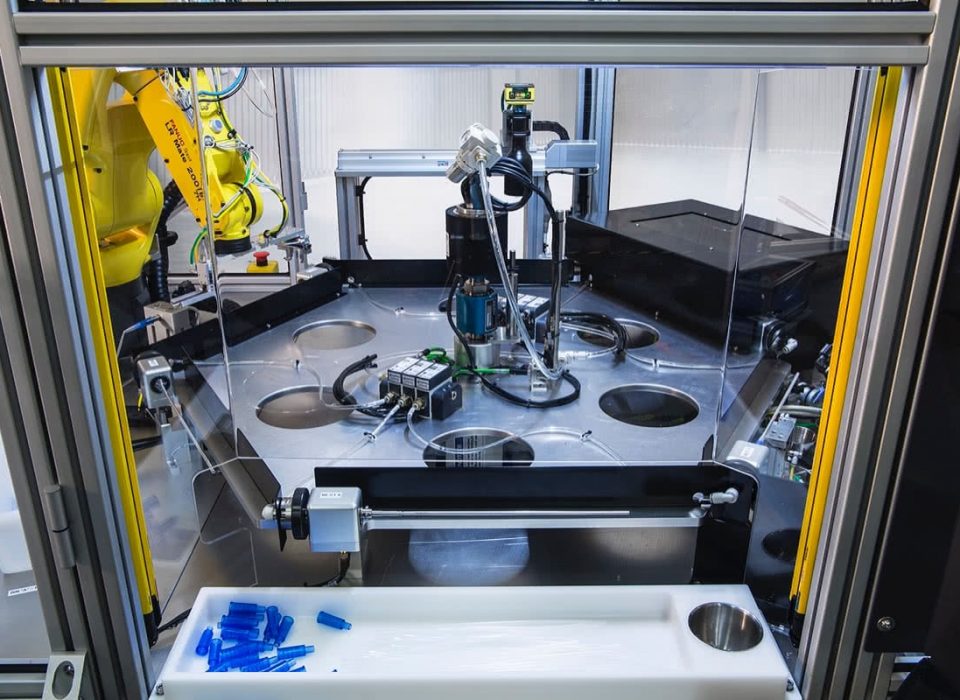
Laser Cutting Enclosures
Full light-containment enclosures for laser cutting systems with fume extraction integration, laser-rated viewing windows, and material loading access doors.
Laser Welding Enclosures
Thermal and light-containment enclosures for laser welding cells with temperature management, modular access panels for torch maintenance, and fixture changeover provisions.
Material Removal Enclosures
Debris and dust containment enclosures for robotic deburring, grinding, and finishing operations with dust collection integration and media change access.
Robotic Polishing Enclosures
Compound mist containment enclosures for robotic polishing, buffing, and burnishing cells with extraction integration, interlocked wheel-change access, and viewing panels.
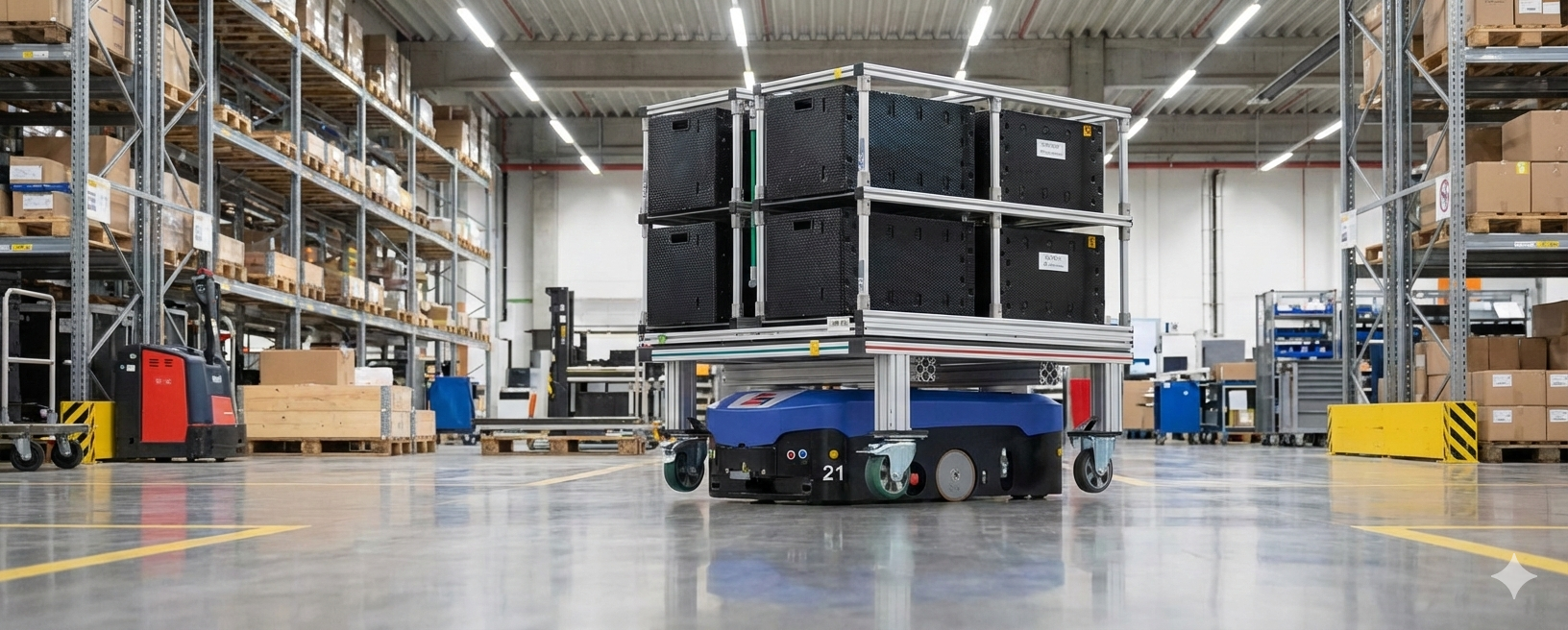
Mobile Robot & AMR Systems
Flexible enclosure zones for autonomous mobile robots and AMR systems with docking area guarding, safe operator interaction zones, and quick-release maintenance access.
Turntable & Rotary Cells
Enclosures engineered around rotary indexing systems and turntables with full clearances for equipment rotation, safety interlocks, and debris containment.
Vision System Enclosures
Stable enclosures for industrial machine vision with vibration-isolated camera mounting, ambient light elimination, chip and coolant protection, and conveyor pass-through integration.
3D Printing Enclosures
Additive manufacturing enclosures for FDM, SLA, and SLS systems with particulate and fume containment, thermal management, and HEPA/carbon filtration provisions.
Custom Enclosures
Bespoke enclosure solutions engineered for unique automation challenges, multi-station production lines, and industry-specific compliance requirements beyond standard types.
Engineering Features Across All Robotic Enclosure Types
Every robotic automation enclosure we build shares these core engineering capabilities — applied to the specific requirements of your process type and equipment layout.
OSHA-Compliant Safety Design
Enclosures support compliance with OSHA machine guarding requirements and ANSI/RIA R15.06 robot safety standards — including provisions for interlocked access doors, E-stop integration, light curtain mounts, and fixed guarding sized to OSHA minimum opening requirements.
Modular Reconfiguration
T-slot aluminum frame systems allow panels, doors, and openings to be relocated or resized after installation as robot cells are retooled, expanded, or reorganized — eliminating the cutting and welding required to modify conventional steel enclosures.
Process Containment & Control
Sealed aluminum panels and configurable infill options contain laser light, weld fumes, grinding sparks, coolant mist, abrasive dust, and UV radiation within the enclosure — protecting personnel, adjacent equipment, and facility infrastructure from process byproducts.
Safety Interlock Integration
Access door frames include standard provisions for magnetic or mechanical door safety switches, keyed access controls, and E-stop mounting hardware — engineered to integrate with your robot controller's safety circuit without field modification.
Fast Michigan Lead Time
Standard enclosures ship in 3 to 6 weeks from approved engineering drawings — faster than imported alternatives and without the logistics risk. Engineering drawings provided for customer approval before manufacturing begins.
Custom-Engineered to Your Cell
No catalog sizes. Every enclosure is dimensioned from your robot's reach envelope, fixture heights, conveyor widths, and access door placement requirements — designed around your actual cell layout, not a generic template.
Robotic Enclosure Applications
Modular Solutions builds robotic automation enclosures for every major automation process in industrial manufacturing — each engineered for the specific containment and safety demands of that application.
- Collaborative and Industrial Robot Cells — Complete enclosures around robot arms and cobots with safety interlocks, clear viewing panels for operator monitoring, integrated access doors for part setup, and openings for conveyors or automated part handling systems — sized from your robot's reach envelope and safety requirements.
- Laser Cutting Systems — Full containment around laser cutting tables with light shielding rated to your laser class, fume extraction integration, access doors for material loading, and ventilation ducting provisions — scalable from single-laser systems to multi-station configurations.
- Laser Welding Cells — Thermal and light-containment enclosures for laser welding automation with viewing windows, temperature management provisions, modular access panels for torch maintenance, and fixture changeover access points designed around your welding station footprint.
- Turntable and Rotary Indexing Systems — Enclosures sized around rotating equipment with clearances for 360-degree movement, integrated safety interlocks, operator access points between rotations, and containment for debris or process byproducts generated during the indexed cycle.
- Mobile Robot and AMR Systems — Enclosure zones around autonomous mobile robots and AMR systems with docking area protection, safe interaction zones for operator loading and unloading, quick-release maintenance panels, and load-handling penetrations sized to your payload envelope.
- Robotic Material Removal Cells — Debris, dust, and spark containment enclosures for automated deburring, grinding, and finishing operations — with dust collection ductwork integration, media change access, and sound-dampening panel options for high-noise abrasive processes.
- Machine Vision Inspection Lines — Stable, light-controlled enclosures for automated camera inspection integrated with production conveyor lines — eliminating ambient light interference, protecting camera optics from chips and coolant, and providing repeatable lighting conditions for reliable automated quality inspection.
- Additive Manufacturing Environments — Containment enclosures for industrial FDM, SLA, and SLS 3D printing with particulate and VOC containment, thermal management, filtration provisions, and safe resin handling access — for prototype operations, print farm arrays, and materials development labs.
Engineering & Specification Parameters
All robotic and automation enclosures are custom-engineered to your equipment, process, and compliance requirements. Common specification parameters across categories:
Frequently Asked Questions
Common engineering and procurement questions about robotic and automation enclosures.
What is the difference between a robot guard and a robotic cell enclosure?
A robot guard is perimeter fencing or fixed guarding that prevents personnel from entering a robot's work envelope. A robotic cell enclosure fully surrounds the robot and its work area on all six sides — containing chips, fumes, light, sound, and debris while providing controlled access doors, integrated safety interlocks, and managed openings for conveyors and part handling. Enclosures address both personnel safety and process environment control simultaneously.
Do modular aluminum robotic enclosures meet OSHA and ANSI robot safety standards?
Modular aluminum enclosures are engineered to support compliance with OSHA machine guarding requirements (29 CFR 1910.217) and ANSI/RIA R15.06 robot safety standards. Enclosures include provisions for interlocked access doors, E-stop integration, and fixed guarding that meets OSHA minimum opening size requirements. Final compliance determination remains the responsibility of the customer's safety engineer — we provide engineering documentation and can assist with compliance review.
How is a robotic cell enclosure sized for a specific robot model?
Enclosures are engineered around the robot's full reach envelope — the three-dimensional space the robot arm can occupy at maximum extension — plus required clearances from the enclosure walls, tooling swing radius, and fixture heights. We work from your robot model specifications, CAD data, or dimensional drawings to establish enclosure interior dimensions. Access door placement is coordinated with the robot's home and maintenance positions.
Can a robotic cell enclosure be reconfigured if the cell layout changes?
Yes. The T-slot aluminum frame system allows panels, access doors, and openings to be added, moved, or resized after initial installation. Modular enclosures are frequently reconfigured when robots are retooled, cells are expanded, or production layout changes. This reconfigurability is a key advantage over welded steel enclosures, which require cutting and welding to modify and rarely accommodate layout changes cleanly.
How long does it take to receive a custom robotic automation enclosure?
Standard lead time is 3 to 6 weeks from customer approval of engineering drawings. The engineering drawing process typically takes 1 to 2 weeks after receipt of robot and cell layout information. Complex multi-station enclosures or enclosures with specialized laser shielding or fume extraction provisions may require additional lead time — confirmed with your specific quote.
Ready to Engineer Your Robotic Cell?
Share your robot model, cell layout, and safety requirements — our engineers will design a compliant enclosure built around your process.