Robotic Polishing Enclosures
Modular aluminum enclosures engineered specifically for robotic polishing, buffing, burnishing, and compound finishing cells — providing compound mist containment, fine dust extraction integration, anti-overspray sealing, interlocked wheel-change access, and viewing windows for process monitoring. Designed around your robot model, part envelope, and compound type. Engineered and manufactured in Auburn Hills, MI.
Request a Quote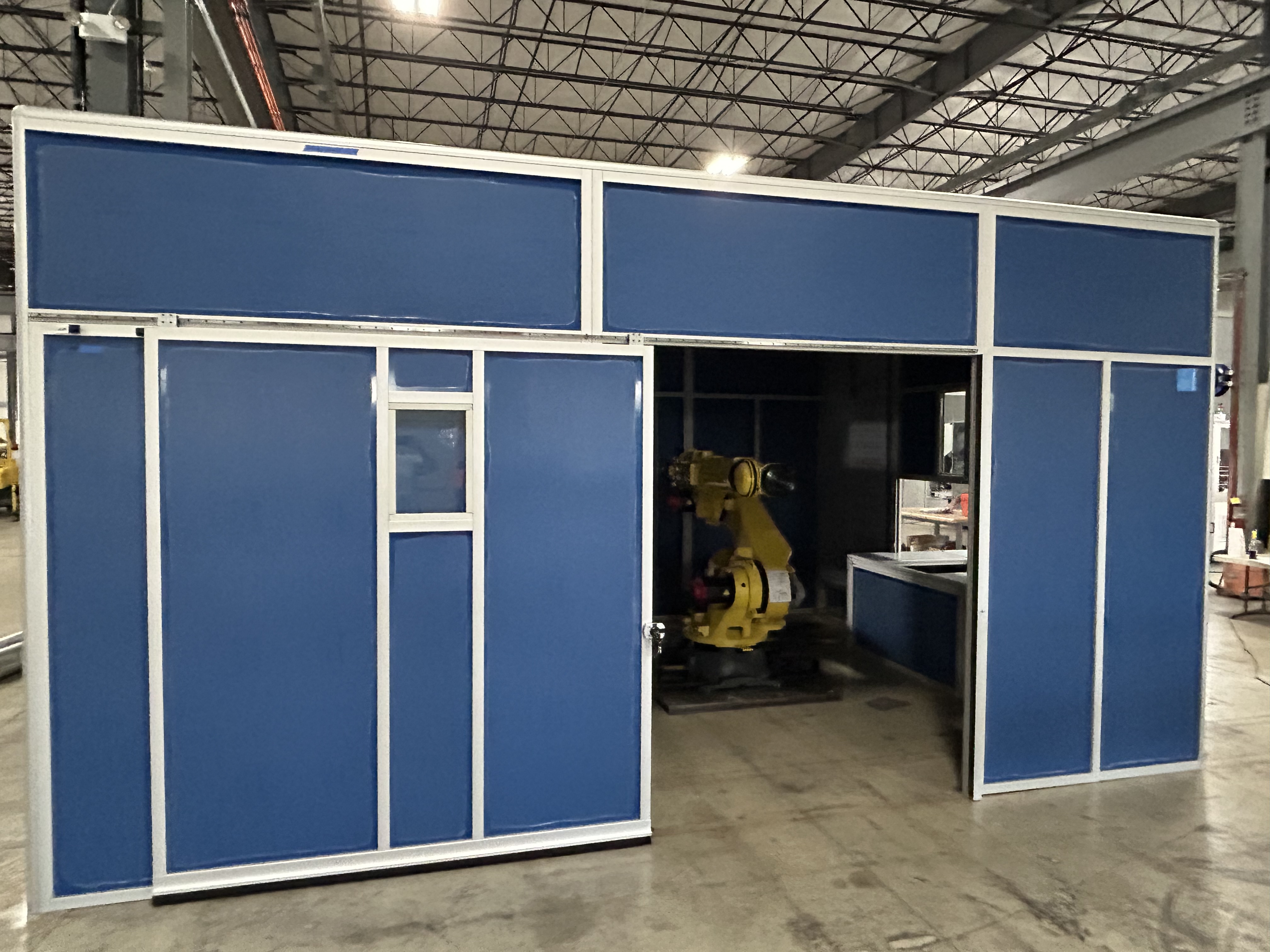
Key Features & Benefits
Robotic polishing enclosures engineered for compound containment, safe wheel access, and high-production cycle efficiency.
Compound Mist Containment
Sealed aluminum panel enclosures with continuous silicone gasket joints maintain negative pressure via integrated extraction ports — preventing polishing compound mist and fine abrasive dust from escaping into the facility environment.
Extraction & Ventilation Integration
Ducted extraction ports positioned at low-accumulation zones for dry dust and at drain-equipped sumps for wet compound operations — connecting directly to your dust collector or mist eliminator without field fabrication.
Interlocked Wheel-Change Access
Safety-interlocked service doors positioned at the robot’s tool-change location allow buffing and polishing wheel replacement without entering the full cell envelope — quick-release hardware enables access in under 2 minutes.
Viewing Panels
Polycarbonate viewing windows sealed against compound mist infiltration at operator eye level — with anti-fog coating and optional internal air-knife provisions for wet polishing operations where mist accumulates on glass.
Fast Cleanout Design
Smooth interior aluminum surfaces without ledges or particle traps, removable floor sections for compound collection, and quick-release panel hardware for full interior blowout between product colors or compound types.
Part Loading Access
Conveyor pass-through openings or interlocked load/unload doors sized and sealed to your part envelope and robot loading cycle — minimizing compound escape during the loading sequence.
Safety Interlock Integration
Access door frames include provisions for magnetic or mechanical safety switches, E-stop mounts, and keyed access controls — engineered to integrate with your robot controller’s safety circuit without field modification.
Modular Reconfiguration
T-slot aluminum frame allows panels, doors, and openings to be relocated or resized after installation as robot programs, part sizes, or production cell layouts change — without cutting or welding.
Common Applications
Robotic polishing enclosures across surface finishing and high-production manufacturing industries.
- Automotive Body & Trim Polishing — Enclosures for robotic compound polishing and paint correction of automotive exterior panels, bumpers, and trim components with mist containment and high-volume cycle throughput.
- Metal Mirror Finishing — High-containment enclosures for robotic mirror polishing of stainless steel, aluminum, and chrome surfaces requiring sequential compound stages and color changeover cleanout provisions.
- Aerospace Component Surface Finishing — Polishing enclosures for aerospace structural and cosmetic components with compound containment, contamination control, and documentation provisions for AS9100-regulated finishing processes.
- Medical Device Implant Finishing — Cleanroom-compatible polishing enclosures for orthopedic implant and surgical instrument surface finishing with particulate containment and ISO 13485 process documentation support.
- Plumbing & Fixture Buffing — High-production buffing enclosures for faucets, handles, and brass or chrome fixtures with continuous compound application, extraction, and part flow through the cell.
- Consumer Electronics Finishing — Robotic polishing enclosures for aluminum housings, display bezels, and decorative surfaces with compound mist containment and static-control provisions for ESD-sensitive assemblies.
- Jewelry & Precision Parts Finishing — Fine-tolerance polishing enclosures for small precision parts with compound recovery provisions, fine-particle filtration, and vibration-isolated frame options for delicate finishing operations.
- Plastic & Composite Surface Polishing — Enclosures for robotic polishing of thermoset and thermoplastic components with dry polishing compound containment and anti-static panel provisions for plastic dust management.
- Tool & Die Surface Finishing — Polishing cell enclosures for automated surface finishing of mold cavities, tool steels, and precision tooling with fine compound extraction and vibration isolation.
- Multi-Stage Compound Lines — Enclosures around multi-stage robotic polishing lines where cut, color, and finishing compound stages are performed in sequential cells — each cell sealed independently to prevent cross-contamination between compound stages.
Frequently Asked Questions
What polishing and buffing processes do these enclosures support?
Robotic polishing enclosures are designed for automated surface polishing, buffing, burnishing, and compound finishing operations on metal, plastic, composite, and ceramic parts. Processes include cut-and-color compound polishing, mirror finishing, intermediate abrasive polishing, and dry or wet buffing. Each process generates airborne compound mist, fine abrasive dust, and buffing debris — the enclosure construction and ventilation design are matched to the specific process and part material.
How is polishing compound mist and fine dust contained?
Polishing compound mist and fine abrasive dust are contained by sealed aluminum panel enclosures with continuous silicone gasket sealing at panel joints. Integrated extraction ports connect to a dust collector or mist eliminator to maintain negative pressure inside the enclosure, preventing airborne particulates from escaping into the facility. For dry polishing operations, extraction ports are positioned at low points where settled dust accumulates. For wet compound polishing, internal surfaces are sloped toward a drain or collection sump.
Can the enclosure accommodate polishing and buffing wheel changes?
Yes. Robotic polishing enclosures include interlocked service access doors positioned to give maintenance personnel clear access to the robot’s tool changer and spindle without entering the full cell envelope. Quick-release quarter-turn fastener doors on the wheel change face allow complete wheel access in under 2 minutes. Modular Solutions coordinates door placement with your robot’s home position and tool-change routine during the design phase.
Are viewing windows available for process monitoring?
Yes. Polycarbonate or tempered glass viewing panels are integrated into enclosure faces at operator eye level, allowing production personnel to monitor the polishing cycle without opening the enclosure. Panels are sealed against compound mist infiltration with continuous gasket frames. Anti-fog coatings and internal air-knife provisions are available for wet polishing cells where mist accumulation on windows is a concern.
How is the enclosure cleaned between product changeovers?
Robotic polishing enclosures are designed for rapid cleanout between compound types, colors, or product changeovers. Interior surfaces use smooth aluminum panels without ledges or crevices that trap compound residue. Removable floor sections provide access for compound collection and removal. Quick-release panel hardware allows full interior access for compressed-air blowout or wipe-down between runs. For color-critical applications, Modular Solutions designs dedicated cleanout access points that do not require robot repositioning to reach all interior surfaces.
Engineer Your Robotic Polishing Enclosure
Share your robot model, part envelope, compound type, and production cycle requirements — our engineers will design a polishing cell enclosure built around your process.
Request a Quote