Medical Device Assembly Tables
Modular aluminum assembly tables engineered for FDA-regulated and ISO 13485 medical device manufacturing environments — with stainless steel or electropolished work surfaces, cleanroom-compatible materials, validation documentation packages, ESD-safe options, and traceability provisions built into the station design. Designed and manufactured in Auburn Hills, MI.
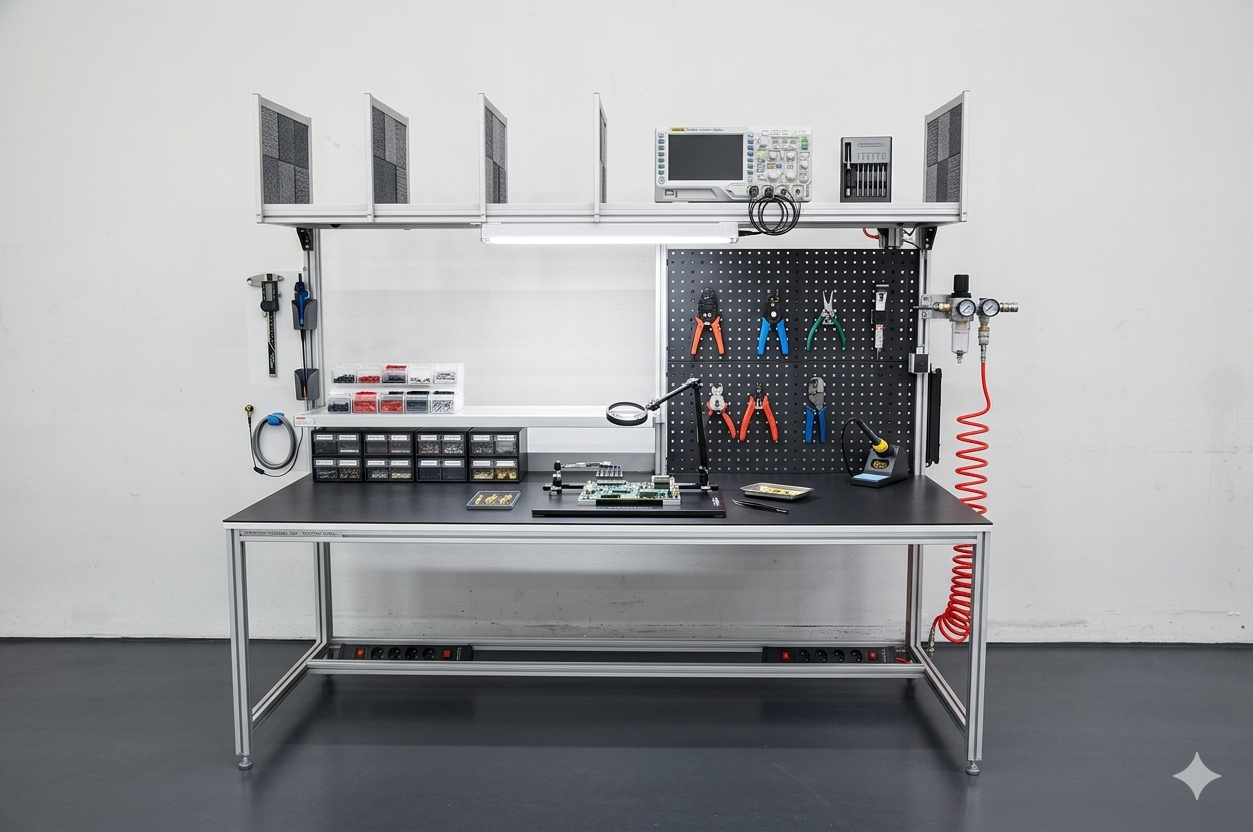
Why Choose Modular Solutions for Medical Device Assembly Tables?
Designed for regulatory compliance from the first drawing — material traceability, cleanroom compatibility, and validation documentation built into every station.
Modular aluminum T-slot workstations bolt together without welding and reconfigure without tools — giving you a purpose-engineered station today that adapts through every process change, product launch, and kaizen event without capital reinvestment in new furniture.
Validation Documentation
Material certificates, dimensional inspection reports, assembly drawings, and BOM with part numbers, materials, and finishes provided for IQ/OQ validation packages required for FDA 21 CFR and ISO 13485 quality systems.
Stainless Steel & Cleanroom Surfaces
304 or 316L stainless steel work surfaces in 2B mill, #4 brushed, or electropolished finishes — wipeable with IPA, 10% bleach, and common pharmaceutical disinfectants. Phenolic laminate also available.
Cleanroom-Compatible Frame
Clear anodized aluminum extrusion, stainless steel hardware, capped T-slot channels to prevent particle accumulation, and non-marking polyurethane casters for ISO Class 7/8 cleanroom delivery.
ESD-Safe Options
Static-dissipative work surface laminates, ESD mat provisions, conductive wrist strap snap points, and frame-to-ground bond lugs for device assembly involving electronics, implantable sensors, or PCBs.
Traceability Provisions
Barcode scanner mounts, monitor arms for MES or DHR terminal access, document holders for work instructions, and organized component storage with lot label positions built into the station structure.
Sterile Field Ergonomics
Work surface height, reach zones, and accessory positions engineered around gowned operator ergonomics — accounting for gloved dexterity and eye protection line-of-sight in controlled environments.
Medical Device Assembly Table Applications
Configured for the specific requirements of regulated medical device manufacturing environments.
- Implantable Device Assembly — Cleanroom assembly tables for cardiac, orthopedic, and neural implant manufacturing — electropolished stainless surfaces, full traceability documentation, and ESD control for device electronics.
- Sterile Disposable Assembly — ISO Class 7/8 assembly stations for sterile single-use device manufacturing with cleanroom-compatible materials, disinfection surface compatibility, and particle trap-free design.
- Diagnostic Instrument Assembly — Precision assembly tables for in-vitro diagnostic instruments and laboratory equipment with fixture mounting, ESD control, and documentation station integration.
- Combination Product Assembly — Assembly stations for drug-device combination products requiring both cleanroom compatibility and pharmaceutical-grade surface disinfection protocols.
- Surgical Instrument Kitting — Kitting and tray assembly stations for surgical instrument sets with organized component storage, work instruction display, and sterile barrier packing integration.
- Regulated Laboratory Workstations — Research and quality control laboratory tables for GLP/GMP-regulated testing environments with documented material traceability and calibration-ready flat surfaces.
Specifications & Configurations
Standard configurations available — all materials, finishes, and documentation packages are specified to your regulatory and process requirements.
| Specification | Detail |
|---|---|
| Frame Material | 6063-T5 aluminum, clear anodized; stainless steel hardware throughout; T-slot channels capped in work zone |
| Work Surface Options | 304 SS (2B or #4), 316L SS (2B or electropolished), phenolic laminate, ESD static-dissipative laminate |
| Casters | Non-marking polyurethane (cleanroom) or stainless steel swivel with locking brake |
| Documentation Package | Material certs, dimensional inspection report, assembly drawing with full BOM, IQ/OQ template (optional) |
| ESD Option | Static-dissipative surface (<10&sup9; Ω), wrist strap snap points, ground bond lug per ANSI/ESD S20.20 |
| Cleanroom Rating | Compatible with ISO Class 7 and Class 8; cleaned and wrapped for delivery on request |
| Lead Time | 4–6 weeks from approved drawings; documentation review included |
Frequently Asked Questions
Common questions about medical device assembly table design, materials, and regulatory documentation.
What documentation is provided for medical device assembly table validation?
Modular Solutions provides material certificates for aluminum extrusion alloy and temper, stainless steel surface material grade (304 or 316L), and all hardware components. A dimensional inspection report confirms as-built dimensions against the approved drawing. Assembly drawings with a full BOM identifying each component by part number, material, and finish are included. For customers requiring IQ/OQ validation, Modular Solutions provides installation and operational qualification templates based on the station specifications.
Are cleanroom-compatible medical device assembly tables available?
Yes. Cleanroom configurations use clear anodized aluminum extrusion with no exposed raw aluminum, stainless steel (304 or 316L) work surfaces, stainless steel hardware throughout, and no open T-slot channels in the work zone (channels are capped to prevent particle accumulation). Non-marking polyurethane casters are used if the table is mobile. The completed station is cleaned and wrapped for delivery to ISO Class 7 or Class 8 cleanroom environments.
Can ESD provisions be added to medical device assembly tables?
Yes. ESD-safe configurations combine cleanroom-compatible materials with static-dissipative work surface laminates or ESD mats, conductive wrist strap snap points, and an ESD ground bond connecting the aluminum frame to facility ground. This is common for medical device assembly involving electronics, sensors, or implantable device PCBs that require both cleanroom compatibility and ESD control.
How are traceability and documentation requirements met at the assembly table?
Traceability provisions include monitor arms or tablet holders for MES terminal or traveler access, barcode scanner mounts at the work point, document holders for work instructions and device history records, and organized component bin storage with lot identification labels. The station BOM is controlled under the customer’s change management system like any other equipment item in the device manufacturing process.
What surface finishes are available for medical device tables?
Work surface options include 304 or 316L stainless steel (2B mill finish, #4 brushed, or electropolished), phenolic laminate (cleanroom wipeable with IPA, 10% bleach, and common disinfectants), and ESD-safe static-dissipative laminate. Electropolished stainless steel provides the lowest particle adhesion surface and is specified for Class 7 cleanroom assembly of implantable devices.
Build Your Medical Device Assembly Table
Share your cleanroom class, regulatory framework, surface requirements, and documentation needs — our engineers will return a configured station proposal with material and validation options.