Reinforced Frame Dollies
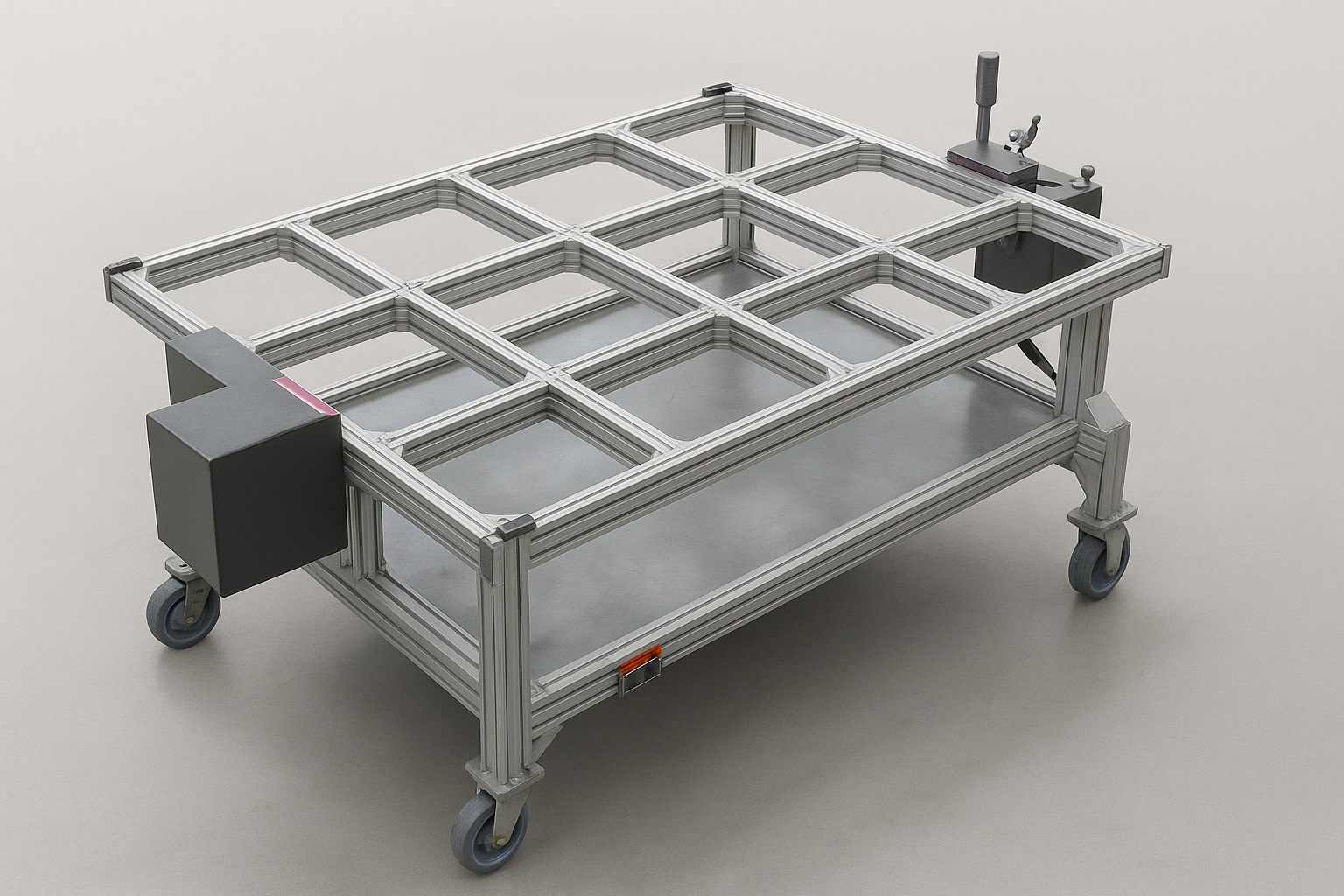
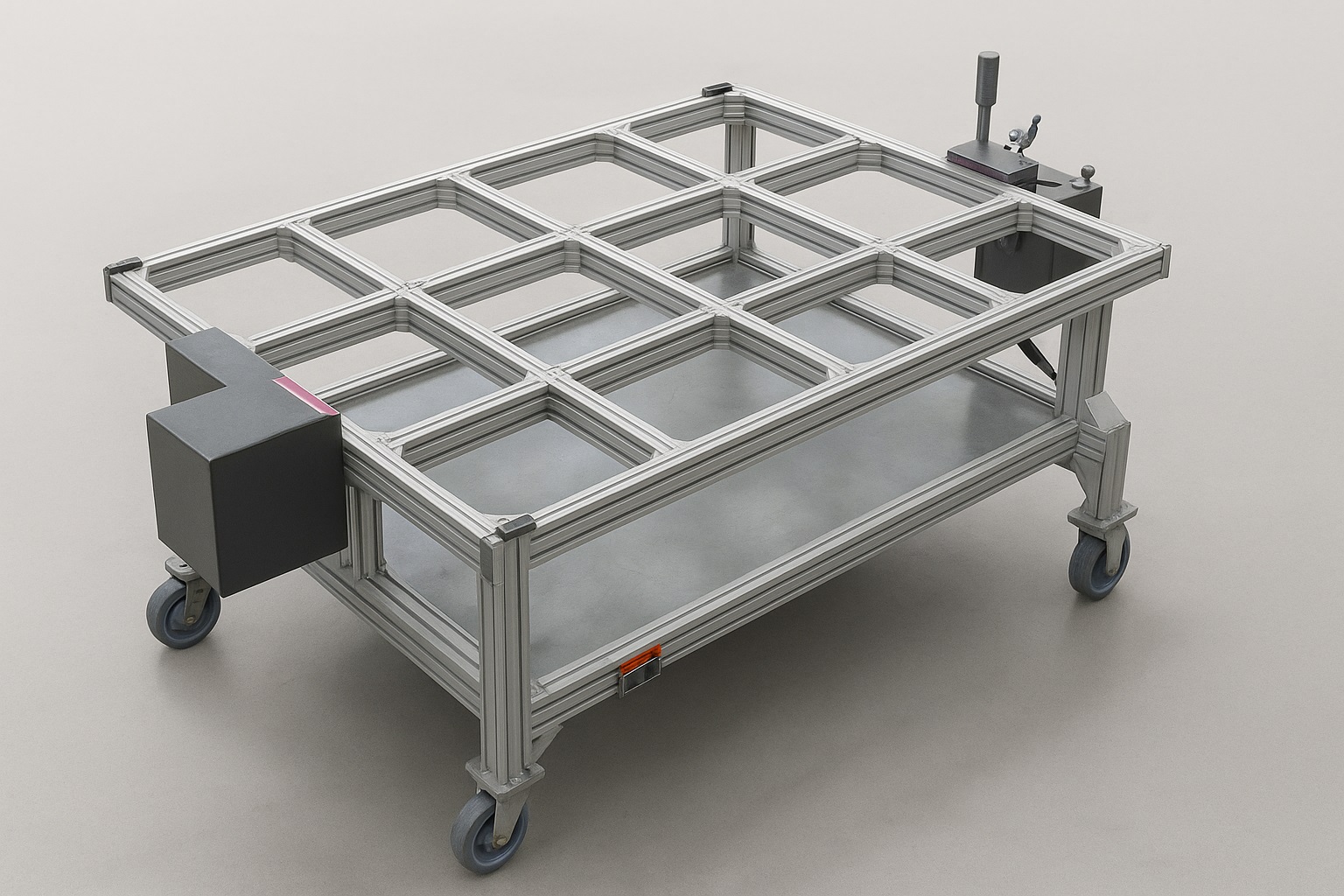
Multi-profile cross-braced T-slot aluminum dollies engineered for the heaviest structural loads — machine bases, large weldments, press beds, and oversized assemblies. Every frame is load-analyzed before fabrication to verify bending capacity, torsional stiffness, and caster load distribution under the specific payload geometry.
Why Choose Modular Solutions for Reinforced Frame Dollies?
Structurally engineered for the actual load — not selected from a catalog and hoped for the best.
Load Analysis Before Fabrication
Frame bending moment, torsional load, and caster distribution are calculated before any material is cut. This verifies that the frame will perform under the specific load geometry, including dynamic towing loads and off-center load placement.
90 Series and Structural Profile Selection
Reinforced frame dollies use 90 Series T-slot profiles, with multiple parallel profiles, structural cross members, and diagonal bracing selected based on the load analysis — not the heaviest profile available as a blanket approach.
Steel-Reinforced Hybrid Construction
For loads exceeding standard aluminum frame capacity, steel structural members are integrated into the T-slot framework. This hybrid construction maintains T-slot adjustability for accessory mounting while providing steel-level structural capacity at the primary load-bearing members.
Multi-Caster Load Distribution
Six and eight caster configurations are available for loads that would overload a four-caster arrangement. Caster patterns are designed to distribute load evenly while maintaining maneuverability in the available aisle width.
Overhead Lift and Forklift Interface
Lift lug provisions, forklift pocket cutouts, and crane rigging attachment points are load-rated and integrated into the structural frame. Lift geometry is verified to maintain load stability during overhead and forklift lift operations.
Bolt-Together Modular Construction
T-slot construction allows reinforced frame dollies to be partially disassembled for storage, transported through narrow doorways in sections, and reconfigured when the load family changes. No welding is required for field modification.
Key Features & Benefits
Structural design details that deliver reliable performance under heavy industrial loads.
Multi-Profile Parallel Rails
Two or three parallel 90 Series profiles per rail direction provide the bending capacity needed for large span-to-load ratios. Profile count and spacing are determined by the load analysis, not by visual inspection or rule-of-thumb sizing.
Diagonal Cross-Bracing Members
Diagonal aluminum or steel cross-bracing members resist the racking and torsional loads that occur during towing and floor navigation. Bracing geometry is designed for the specific load case of each dolly.
Heavy-Duty Caster Mounting Plates
Steel caster mounting plates are bolted to the aluminum base frame with load-distributing backing plates and hardened fasteners. Mounting plate geometry is designed to spread caster point loads across multiple profile cavities rather than single point attachment.
Platform Deck Surface Options
Deck surface options include aluminum checker plate, structural plywood with aluminum edge trim, UHMW-PE sheet for sensitive contact surfaces, and open T-slot top rail configurations that allow load-specific support blocks to be installed anywhere along the frame length.
Tow and Push Handle Provisions
Tow bar, push handle, and tugger hitch provisions are integrated into the structural frame ends. Tow point height and angle are designed to minimize caster lift during towing with the specific tow vehicle type used in the facility.
Optional Leveling Jack Integration
Hydraulic or screw leveling jacks can be integrated into the structural frame corners for applications where the load must be precisely leveled during staging, assembly, or inspection operations while on the dolly.
Common Applications
Deployed across heavy manufacturing, capital equipment relocation, and large-structure assembly environments.
- Machine Base Transport - Reinforced dollies sized to machine tool bases, assembly cell frames, and production equipment for facility rearrangements without crane-intensive disassembly.
- Large Weldment Staging - Structural dollies for transporting large fabricated weldments between welding, grinding, inspection, and paint operations in heavy fabrication shops.
- Press Bed and Bolster Movement - Heavy reinforced dollies for transporting press beds and bolster plates from maintenance and repair areas back to press positions.
- Generator and Power Equipment - Load-rated structural dollies for moving diesel generators, transformer skids, and large power distribution equipment during installation and maintenance.
- Aerospace Structural Components - Reinforced dollies for transporting large aerospace frames, wing sections, and structural subassemblies with FOD-controlled design and material traceability.
- Heavy Fabrication Kitting - Structural dollies that serve as kitting platforms for large fabrication assemblies, holding all components in a staged configuration for delivery to assembly stations.
Specifications & Configurations
Standard design ranges for reinforced frame dollies. All specifications are available custom to your load and application requirements.
| Specification | Detail |
|---|---|
| Frame Construction | Multi-profile 90 Series T-slot aluminum; steel-reinforced hybrid for extreme loads |
| Load Capacity | 2,000 lb to 10,000 lb; higher loads available with steel-reinforced hybrid design |
| Platform Size | Custom to load envelope; typical range 36 in. x 48 in. to 72 in. x 120 in. |
| Caster Configuration | 4, 6, or 8 caster patterns; 6 in. to 12 in. diameter; 1,500 lb to 3,500 lb per caster |
| Bracing Type | Diagonal, X-pattern, perimeter reinforcement, or combination per load analysis |
| Deck Surface | Aluminum checker plate, structural plywood, UHMW-PE sheet, or open T-slot rail |
| Lift Provisions | Lift lugs, forklift pockets, or crane rigging attachments; all load-rated |
| Tow Provisions | Tow bar, push handle, or tugger hitch; load-rated tow point positioning |
| Lead Time | 4 to 6 weeks from approved drawings |
Frequently Asked Questions
Common questions about reinforced frame dollies from Modular Solutions.
What frame profiles are used in reinforced frame dollies?
Reinforced frame dollies use 90 Series T-slot aluminum profiles as the primary structural members, with additional parallel profiles and cross-bracing members designed for the specific bending and torsion loads of each application. For loads exceeding standard aluminum capacity, a steel-reinforced hybrid construction is available where steel structural members are integrated into the aluminum T-slot framework.
How is cross-bracing designed for reinforced dollies?
Cross-bracing patterns are designed based on the load distribution and frame span of the specific application. Diagonal bracing, X-pattern cross members, and perimeter reinforcement channels are used individually or in combination depending on the bending moment and torsional load analysis. We model the frame load case in engineering before finalizing the bracing configuration.
Can reinforced frame dollies be disassembled for storage?
Yes. T-slot construction with bolt-together fasteners allows reinforced frame dollies to be partially or fully disassembled for storage when not in use. This is useful for seasonal or project-based applications where dolly storage space is a concern. Key alignment features such as locating pin positions are documented so the dolly can be reassembled to the original configuration.
What caster sizes are available for high-load reinforced dollies?
Reinforced frame dollies use casters from 6-inch to 12-inch diameter, rated from 1,500 lb to 3,500 lb per caster. For loads requiring more than four casters, six- or eight-caster arrangements are designed with a swivel configuration that distributes load evenly across all casters while maintaining maneuverability. Caster mounting plates are fabricated in structural steel and integrated into the aluminum base frame.
Are reinforced frame dollies suitable for outdoor or rough floor applications?
Reinforced frame dollies can be configured for outdoor or rough-floor use with pneumatic or semi-pneumatic tire casters, sealed bearings, and corrosion-resistant frame treatment. Outdoor applications typically require a load review for uneven ground travel, and caster suspension options are available for rough terrain paths. Consult our engineering team to review the specific travel path conditions.
Ready to Engineer Your Reinforced Frame Dolly?
Provide your load weight, dimensional envelope, floor travel path, and any lift or tow requirements. Our engineers will design a structurally verified dolly for your application.
Modular Solutions — 4280 Giddings Rd, Auburn Hills, MI 48326