Heavy-Duty & Structural Dollies
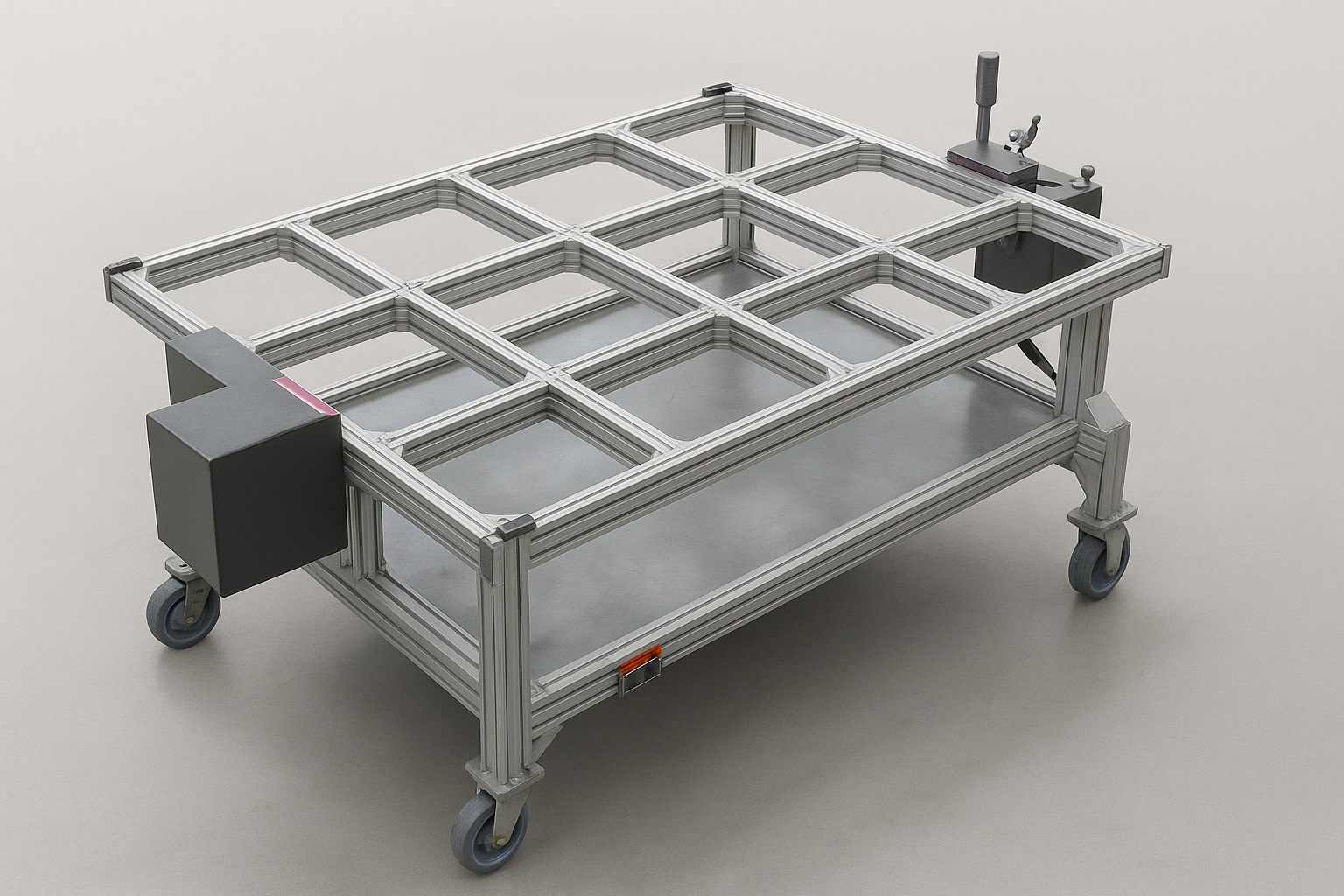
Structural fixture dollies and heavy-load transport frames engineered from T-slot aluminum for moving dies, fixtures, machine components, and large assemblies across production floors. Designed around verified load ratings, specific floor surface conditions, and the dimensional envelope of the load being transported.
Explore by Dolly Type
Select your specific dolly application below to see structural configurations, load specifications, and engineering details built for that transport requirement.
Fixture Dollies
Datum-matched locating pins, V-blocks, and nest pockets for tooling, die, and gauge transport from 500 lb to 8,000 lb.
Reinforced Frame Dollies
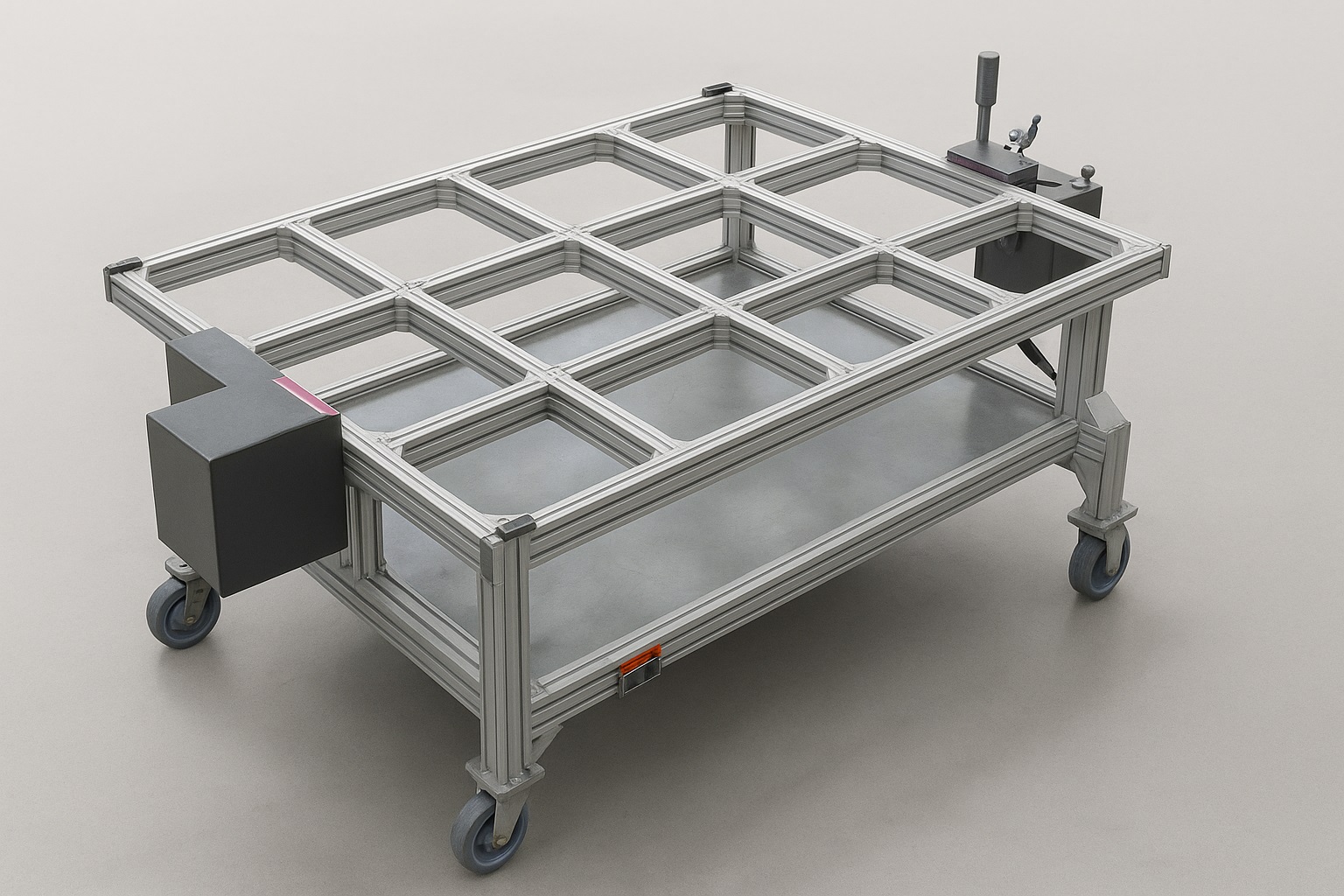
Multi-profile cross-braced T-slot aluminum construction rated to 10,000 lb for machine bases, weldments, and large assemblies.
Locking Wheel Dollies
Foot-operated brake and total-lock caster configurations for secure staging and assembly operations on the production floor.
High-Capacity Load Dollies
Steel-reinforced hybrid frames and multi-caster arrays engineered for 5,000 lb to 20,000 lb industrial payloads.
Equipment Dollies
Low-profile frames, integrated leveling feet, and forklift pockets for machine tool and capital equipment transport.
Custom Structural Dollies
Fully engineered custom dollies for unique payloads, special environments, and precision transport requirements. Any load, any configuration.
Why Choose Modular Solutions for Heavy-Duty and Structural Dollies?
Faster deployment, lower total cost, and the flexibility to reconfigure as your processes evolve.
Engineered for Verified Load Ratings
Heavy-duty dollies are designed to a verified structural load rating based on frame geometry, profile section, and caster specification. Load rating, safety factor, and caster selection are all part of the engineering review - not estimates from a catalog.
Built Around the Fixture or Die Dimension
Fixture dollies are sized to the specific fixture or die being transported. Locating pins, nest pockets, and support rail positions are designed to match the fixture interface rather than a generic platform that requires secondary blocking and shimming.
Low-Profile Frame Options
Low-profile dollies with 3-inch or 4-inch casters are available for use under large fixtures, machine bases, and palletized loads that have limited clearance beneath the bottom face. Frame height is specified based on load clearance and facility floor conditions.
V-Block and Saddle Support Options
Cylindrical and irregularly shaped loads require V-block, saddle, or cradle supports rather than flat platform decks. These are designed into the T-slot frame as integral structural elements, not bolted-on afterthoughts.
Steering Configurations for Tight Aisles
Heavy fixture dollies use specifically designed caster configurations to enable steering in tight aisles without jackknifing. Steerable caster arrangements, tow hitch positions, and tow bar configurations are specified based on your aisle geometry.
Reusable Across Multiple Fixture Families
T-slot frame construction allows locating pin positions, support rail heights, and nest pocket locations to be modified when the fixture family changes. The structural frame continues to serve as new tooling is introduced, protecting your investment.
Key Features & Benefits
Engineered details that separate T-slot aluminum carts from catalog alternatives and generic welded-steel options.
90 Series and Heavy Profile T-Slot Framing
Heavy-duty dollies use 90 Series aluminum profiles or larger structural T-slot sections selected for the specific load. Multiple parallel profiles and cross-bracing members are designed for the bending and torsion loads of the specific transport application.
Precision Locating Pins and Nest Pockets
Fixture-specific locating pins and nest pockets position the fixture on the dolly in the correct orientation for transport and staging. Locating features are designed to match your fixture or die datum scheme, eliminating secondary alignment operations.
High-Capacity Caster Packages
Heavy-duty casters from 6-inch to 12-inch diameter, rated from 1,000 lb to 3,500 lb per caster, are specified based on total load and floor surface. Caster mounting plates are fabricated in steel and bolted to the aluminum base frame with appropriate load distribution hardware.
V-Block and Cradle Supports
V-block, saddle, and cradle supports for cylindrical shafts, rolls, and irregularly profiled loads are fabricated from structural steel or aluminum and mounted to the T-slot frame uprights. Support positions are adjustable using T-slot bracket positions.
Tow Bar and Hitch Provisions
Tow bars, lift hitch points, and forklift pocket provisions are integrated into the structural frame. Tow points are load-rated and positioned to prevent tipping during towing. Forklift pockets are sized for your facility forklift tine width.
Optional Leveling and Locking Feet
For dollies used in staging positions, screw-adjustable leveling feet can replace or supplement casters. Leveling feet stabilize the load during fixture setup, machining operations, or assembly tasks where dolly movement is not desired.
Common Applications
Proven in manufacturing, warehousing, and distribution environments across multiple industries.
- Press Die and Mold Transport - Dollies sized to specific press die families for safe floor-level transport from die storage to press area without overhead crane dependency.
- Fixture and Tooling Staging - Precision fixture dollies that position tooling in the correct orientation and datum alignment for machine loading or assembly operations.
- Machine Base Positioning - Low-profile heavy dollies for moving machine tool bases, assembly cells, and capital equipment during facility rearrangements and installation.
- Large Fabrication Staging - Structural dollies for staging large weldments, frame assemblies, and fabricated structures between fabrication, inspection, and assembly operations.
- Coil and Roll Handling - V-block and saddle dollies for transporting cylindrical rolls, coils, and pipe sections across production floor surfaces without dedicated material handling equipment.
- Aerospace and Automotive Fixture Handling - Heavy-duty precision dollies for transporting large body fixtures, gauge fixtures, and checking fixtures in aerospace assembly and automotive stamping plants.
Specifications & Configurations
Standard design ranges. All specifications are available custom to your exact requirements.
| Specification | Detail |
|---|---|
| Frame Profile | 90 Series T-slot aluminum; larger structural profiles available for extreme loads |
| Load Capacity | 1,000 lb to 10,000 lb depending on frame and caster specification |
| Platform Size | Custom to fixture or die envelope; standard ranges 24 in. x 36 in. to 60 in. x 96 in. |
| Platform Height | Low-profile 6 in. to standard 12 in. at deck surface; custom heights available |
| Caster Capacity | 1,000 lb to 3,500 lb per caster; 6 in. to 12 in. diameter options |
| Caster Configuration | 4, 6, or 8 caster patterns depending on load and maneuverability |
| Locating Features | Precision pins, V-blocks, saddles, cradles, or flat platform per application |
| Tow Provisions | Tow bar, drawbar hitch, forklift pocket; load-rated per application |
| Lead Time | 4 to 6 weeks from approved drawings |
Frequently Asked Questions
Common questions about heavy-duty and structural dollies from Modular Solutions.
How is load capacity determined for a heavy-duty dolly?
Load capacity is determined by a combination of frame section size, frame geometry, and caster rating. We calculate the structural capacity of the frame under the specific load geometry, including overhang loads and dynamic towing forces. Casters are selected for total load divided by number of casters, with a safety factor applied. The result is a verified load rating, not a catalog estimate.
Can the dolly be designed to match our existing fixture locating datums?
Yes. We design locating pins, V-blocks, and nest pockets to match your fixture or die datum scheme. If you provide fixture drawings or tooling drawings with locating feature dimensions, our engineers will design the dolly interface to match. This eliminates secondary blocking, shimming, and manual alignment during fixture loading.
Do heavy-duty dollies require special floor preparation?
Standard industrial concrete floors in good condition are sufficient for most heavy-duty dolly applications. For very heavy loads or precision positioning applications, floor levelness and surface condition should be assessed during the design phase. We specify caster type and tread compound based on your floor surface to ensure adequate rolling resistance and load distribution.
Can these dollies be used with forklifts or overhead cranes?
Yes. Forklift tine pockets are a standard design option for dollies that need to be lifted and repositioned by forklift. Lift lug and rigging provisions are available for overhead crane lifts. All lift provisions are load-rated and positioned to ensure stable lift geometry. We document lift configurations in the delivered drawings.
What is the difference between a structural dolly and a standard platform cart?
A structural dolly is designed for a specific, often very heavy load with defined interface geometry. It prioritizes structural integrity, load stability, and precise positioning over shelf storage and general transport flexibility. A platform cart is designed for repeated general-purpose material transport with flexible shelf or deck configurations. Structural dollies typically have higher load ratings, more specific locating features, and heavier frame profiles than platform carts.
Ready to Engineer Your Fixture or Die Dolly?
Provide your load weight, fixture dimensions, floor path, and locating requirements. Our engineers will design a dolly that moves your tooling safely and precisely.
Modular Solutions - 4280 Giddings Rd, Auburn Hills, MI 48326