Industrial Machine Guarding Systems

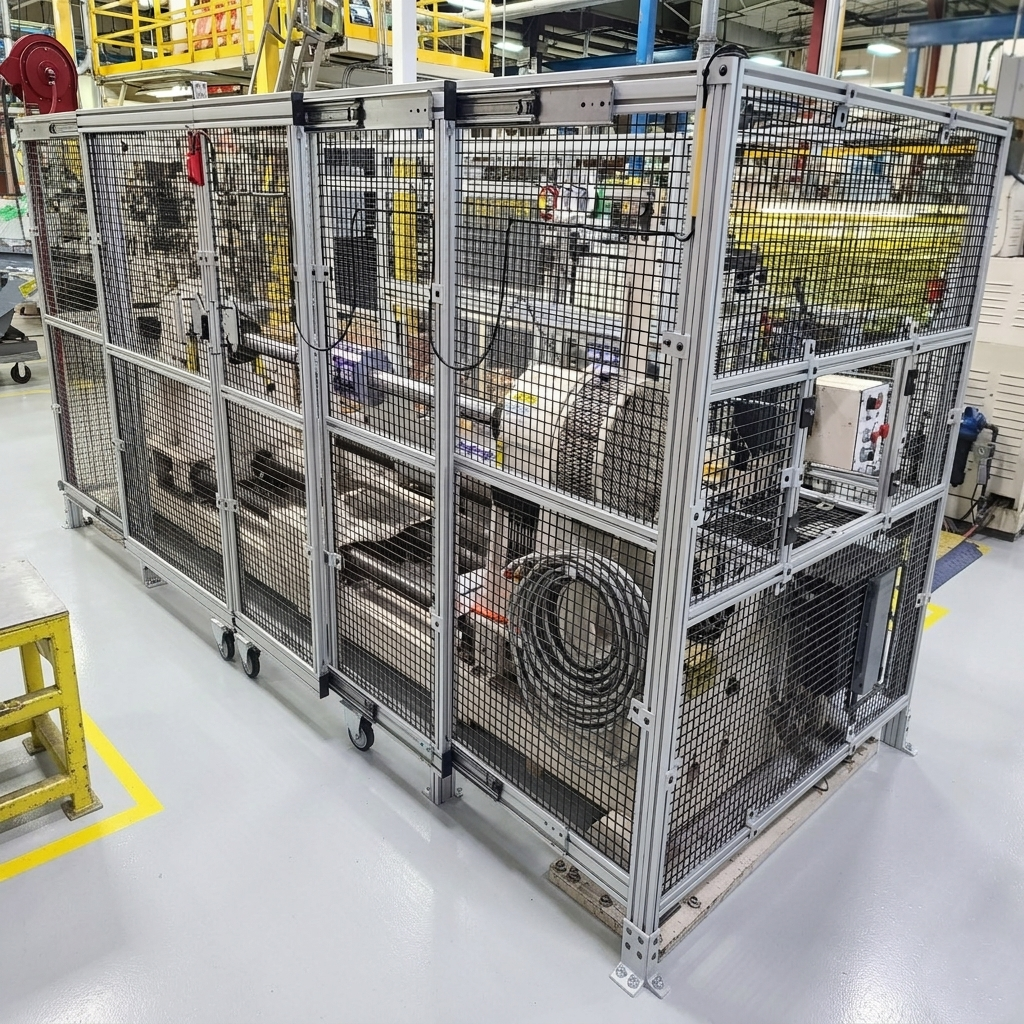
Custom-engineered modular aluminum machine guards for CNC machining centers, conveyor systems, press brakes, injection molding cells, packaging lines, and metal fabrication equipment. Designed to OSHA 29 CFR 1910.212 and applicable ANSI B11 standards — built modular so guards reconfigure as equipment changes.

Request a Quote

Machine Guarding Offerings

Select the machine type below to explore guarding systems engineered for your specific equipment and OSHA compliance requirements.

Conveyor

Conveyor Line Guarding

Interlocked perimeter guards for conveyor drives, nip points, belt junctions, and transfer zones. ASME B20.1 design reference.

CNC

CNC Machine Guards

Coolant-resistant guards for machining centers, lathes, mills, and turning centers with interlocked access doors and chip containment.

Press Brake

Press Brake Guarding

Rear, side, and front safeguarding for hydraulic and mechanical press brakes. ANSI B11.3 design reference.

Injection Molding

Injection Molding Machine Guards

Interlocked clamp zone guards for injection molding cells with robot integration and mold change provisions.

Packaging

Packaging Equipment Guards

Full perimeter guarding for packaging lines, case packers, and wrapping machinery. PMMI B155.1 design reference.

Metal Fab

Metal Fabrication Machine Guards

Guards for laser cutters, punch presses, shears, roll formers, and plate rolls in fabrication cells.

Custom

Custom Machine Guards

Custom-engineered guarding for unusual equipment, multi-machine cells, legacy machines, and non-standard applications.

Machine Guarding Applications

Modular Solutions designs machine guards engineered to the specific hazard profile of each machine type — not generic off-the-shelf panels. Our modular aluminum approach delivers OSHA-aligned, reconfigurable guards that adapt as your facility evolves.

Why Modular Solutions for Machine Guarding

From single-machine guards to full-cell perimeter systems, every guard is designed to the specific hazard profile and applicable OSHA and ANSI B11 standard.

OSHA 1910.212 & ANSI B11 Engineering

Every guard is designed to the applicable ANSI B11 machine-specific standard — B11.3 for press brakes, B11.19 for safeguarding devices, ASME B20.1 for conveyors. Barrier heights, opening sizes, and interlock provisions are calculated to standard, not estimated.

Modular Reconfigurability

Guards use 6000-series T-slot aluminum with bolted connections. When machines relocate, get replaced, or production layouts change, guards disassemble and rebuild in new configurations — no new purchase required.

Coolant & Chip Resistance

Guards for machining centers, lathes, and CNC equipment are designed with sealed joints, drip channels, and corrosion-resistant materials for coolant and chip ejection environments.

Integrated Access Provisions

Every guard includes interlocked access gates, removable panels, or hinged sections sized for your specific maintenance operations — die changes, belt replacements, mold changes — without defeating the guard system.

Full Engineering Documentation

CAD drawings, bill of materials, and interlock wiring diagrams provided with every order for your internal safety review and OSHA compliance file.

Auburn Hills, MI Build Facility

Designed and assembled in-house at our Auburn Hills, MI facility. Direct engineering access, fast revisions, and no offshore lead-time surprises.

Machine Guarding Specifications

Key engineering parameters for modular aluminum machine guarding systems.

Compliance StandardOSHA 29 CFR 1910.212 (primary); ANSI B11.3 (press brakes); ANSI B11.19 (safeguarding devices); ASME B20.1 (conveyors); PMMI B155.1 (packaging). Standard specified per machine type.
Frame Construction6000-series anodized aluminum T-slot extrusion. Coolant and chip-resistant. Modular bolted connections — fully reconfigurable without welding. Powder-coat options available.
Panel OptionsGalvanized wire mesh (ventilation, low cost); impact-rated polycarbonate (full visibility, IK08+); solid aluminum (opacity, chip containment); combinations within a single guard system.
Access ProvisionsInterlocked hinged safety gates; removable maintenance panels; sliding access sections; die change and mold change access frames per OSHA 1910.212 and applicable ANSI B11 standard.
Safety Interlock TypeTongue-and-groove safety switches for standard applications; coded RFID for Category 3/4 requirements. Wired to machine e-stop circuit — machine stops on any door-open event.
Barrier HeightMinimum per OSHA 1910.212 and ANSI B11 reach-distance tables. Standard: 48–72”. Custom heights for elevated hazard zones or overhead reach-over prevention.
Coolant & Environment RatingCoolant-rated joints and sealed channels for machining environments. Stainless hardware for food and pharmaceutical applications. Anodize or powder-coat finish options.
Lead TimeStandard machine guards: 3–5 weeks. Complex multi-machine cells: 5–8 weeks. Specialty coolant or high-temperature configurations: 6–10 weeks from approved drawings.
Frequently Asked Questions

What OSHA standard governs machine guarding?

OSHA 29 CFR 1910.212 sets the general machine guarding requirement. Machine-specific ANSI B11 standards also apply — B11.3 for press brakes, B11.19 for safeguarding methods, ASME B20.1 for conveyors, PMMI B155.1 for packaging. Modular Solutions designs to the applicable standard for your specific machine type.

Can machine guards be reconfigured when equipment changes?

Yes. Modular aluminum T-slot extrusion assembles with bolted connections — no welding. Individual panels, posts, and gate sections remove and reinstall in new locations when production layouts change or equipment is replaced.

What panel types work for CNC and coolant environments?

Coolant-rated polycarbonate panels for visibility; galvanized wire mesh for ventilation and chip containment; solid aluminum for full enclosure. Joints are sealed with drip channels to prevent coolant ingress. Hardware is selected for long-term corrosion resistance.

Do safety gate interlocks connect to the machine controller?

Yes. Safety gate interlock switches wire to the machine e-stop circuit — when any access gate opens, the machine stops. Dual-channel and PLr-rated interlock devices available to meet ISO 13849 safety function requirements.

How long does a custom machine guard take to build?

Standard single-machine guards: 3–5 weeks from approved drawings. Multi-machine cells and specialized applications: 5–8 weeks. Lead times are confirmed at the quoting stage based on your specific requirements.

Specify Your Machine Guarding System

Share your machine type, dimensions, hazard profile, and OSHA compliance requirements — our engineering team will design and quote a modular guard system meeting your exact specifications.

Email Us for a Quote Contact Form

Modular Solutions — 4280 Giddings Rd, Auburn Hills, MI 48326  |  248-625-1864